Hosts serving mixed preferences
If you do not know what everyone likes, a regular cola, a zero-sugar choice and an explicitly caffeine-free choice cover different requests without treating them as interchangeable.


For a summer BBQ with mixed preferences, start with a zero-sugar cola and add an explicitly caffeine-free option if anyone avoids caffeine; include regular cola for guests who prefer it. Choose 330ml cans for individual servings or larger bottles for sharing, allowing space to chill them and checking the ingredients on each variant’s pack.
If you do not know what everyone likes, a regular cola, a zero-sugar choice and an explicitly caffeine-free choice cover different requests without treating them as interchangeable.
Check sugars per 100ml when comparing regular and zero-sugar recipes. If ingredients matter to a guest, read the exact zero-sugar pack for sweeteners and caffeine too.
Individual 330ml cans and larger sharing bottles call for different fridge and serving arrangements. Think about how guests will take their drinks before choosing a pack format.
Decide which recipes to offer, then check the exact labels and choose pack sizes that suit your serving space.
| Priority | What to check | Your needs |
|---|---|---|
| Sugar and energy | Compare the same measure on each variant’s nutrition label, such as sugars per 100ml. Pepsi UK lists 0g sugars per 100ml for Pepsi MAX and 4.5g for Pepsi Classic; a Joybuy UK listing gives 10.6g for Coca-Cola Original Taste. | I want a zero-sugar option alongside regular cola if guests prefer different recipes. I can use the per-100ml labels to distinguish them rather than assuming all regular colas have the same sugar content. |
| Caffeine | Look for an explicitly caffeine-free product name and check the ingredient list. Coca-Cola Great Britain and Pepsi UK list separate caffeine-free zero-sugar variants; their standard zero-sugar colas list caffeine or caffeine flavouring. | If someone avoids caffeine, I need a separately labelled caffeine-free choice—not just a can marked zero sugar. |
| Sweeteners and PKU | Check the exact pack for aspartame, also called E951, and a phenylalanine statement. The NHS says aspartame is unsuitable for people with phenylketonuria (PKU). | For a guest with PKU, I cannot assume that a sugar-free cola is suitable. I need to check its ingredients before serving it. |
| Flavour | Read the full variant name rather than relying on the brand or the word ‘cola’. Check sugar, caffeine and sweeteners separately for a flavoured recipe. | A flavoured can could add variety when a classic cola is already on the table, but I still want its label to match guests’ requirements. |
| Pack format | Check can or bottle size, the number in the pack and the space available for chilling. Joybuy UK listings include 330ml can multipacks and a six-pack of 2-litre bottles. | For individual servings, cans make portions straightforward. If guests will share bottles at the table, I need room to chill and serve them. |
Coca-Cola Great Britain and Pepsi UK list caffeine in their standard zero-sugar colas, while their caffeine-free versions are separate variants.
If caffeine avoidance matters, choose a product explicitly labelled caffeine-free and check its pack.
The NHS notes that acids in carbonated drinks are associated with dental erosion, whether the drink contains sugar or sweeteners.
Make water available alongside cola rather than treating a zero-sugar fizzy drink as equivalent to water.
The NHS says aspartame is unsuitable for people with phenylketonuria because it contains phenylalanine. Coca-Cola Zero Sugar and Pepsi MAX list aspartame in their UK product information.
Check the exact pack for aspartame or E951 and a phenylalanine statement before serving it to a guest with PKU.
Sweetener details on a Coca-Cola Zero Sugar product-family page and a Joybuy UK listing are not identical, although both list zero sugars.
Use the ingredients on the physical pack when the precise formulation matters, and check the size and best-before date when the drinks arrive.
A brand name alone does not tell you whether a particular cola contains sugar, caffeine or sweeteners; compare the named variants.
The UK range includes Original Taste, Zero Sugar and Zero Sugar Caffeine Free.
The UK range includes Pepsi Classic, Pepsi MAX and Pepsi MAX No Caffeine, with flavoured MAX variants for a different taste.
RC Cola International describes a range of carbonated drinks, including cola.
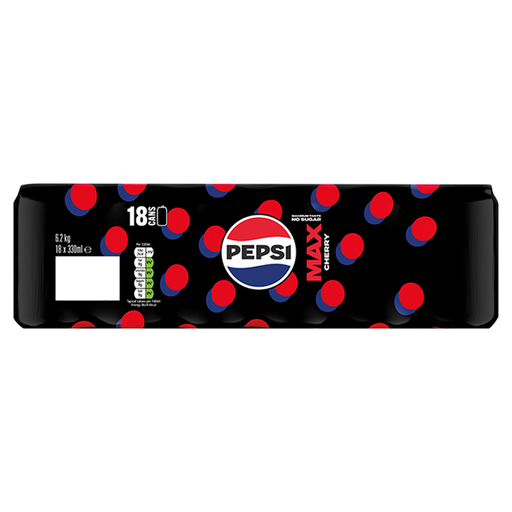
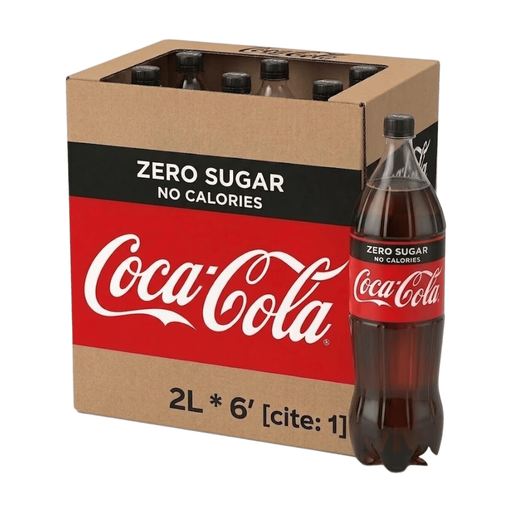
These packs cover individual cans of caffeine-free, classic zero-sugar and cherry-flavoured Pepsi MAX, plus Coca-Cola Zero Sugar bottles for sharing at a BBQ.
 No image available
The individually portioned cans suit a BBQ where guests want a zero-sugar cola without caffeine. Pepsi UK lists 0g sugars per 100ml for Pepsi MAX No Caffeine; check the pack for aspartame and its phenylalanine statement if serving someone with PKU.
 No image available
This can pack provides individual servings of standard Pepsi MAX. Pepsi UK lists 0g sugars per 100ml, caffeine in the ingredients and a phenylalanine statement; choose a separately labelled caffeine-free variant if a guest avoids caffeine.
 No image available
The cherry variant offers individually portioned cans when guests want a flavoured alternative to classic cola. Check this exact pack’s sugar, caffeine and phenylalanine information before serving guests with specific requirements.
 No image available
Six 2-litre bottles provide a sharing format, so allow room to store and chill them. The Joybuy UK listing gives 0g sugars per 100ml; standard Coca-Cola Zero Sugar lists caffeine, and the precise sweeteners should be checked on the delivered pack.
Offer both if guests prefer different recipes; a zero-sugar option does not replace regular cola for someone who specifically wants it. Compare labels on the same basis: Pepsi UK lists 0g sugars per 100ml for Pepsi MAX and 4.5g for Pepsi Classic, while a Joybuy UK listing gives 10.6g for Coca-Cola Original Taste.
It can. Coca-Cola Great Britain and Pepsi UK list caffeine or caffeine flavouring in standard Coca-Cola Zero Sugar and Pepsi MAX. If someone avoids caffeine, choose an explicitly named caffeine-free variant and check its pack.
Check the exact pack for aspartame or E951 and a phenylalanine statement. The NHS says aspartame is unsuitable for people with phenylketonuria (PKU); the UK Coca-Cola Zero Sugar and Pepsi MAX product information lists aspartame.
No. The NHS notes that acids in carbonated drinks are associated with dental erosion whether the drinks contain sugar or sweeteners. A zero-sugar label tells you about sugar, not acidity.
Make water readily available. NHS guidance says children should avoid sugary fizzy drinks, so do not treat regular cola as their everyday drink.