Shoppers comparing sugar content
If cola is part of your weekday breakfast routine, compare the ‘of which sugars’ figure per 100ml on the exact variant. A flavoured version need not have the same label as the plain one.


If you want sparkling cola at weekday breakfast, choose a zero-sugar variant explicitly labelled caffeine-free when you want to avoid both sugar and caffeine; standard zero-sugar cola is an option when caffeine is acceptable. Regular cola has a different sugar content, and zero-sugar fizzy drinks can still be acidic, so check the exact pack rather than treating any cola as equivalent to water or milk.
If cola is part of your weekday breakfast routine, compare the ‘of which sugars’ figure per 100ml on the exact variant. A flavoured version need not have the same label as the plain one.
Look for an explicit caffeine-free designation. ‘Diet’ or ‘zero sugar’ alone does not tell you whether a cola contains caffeine.
For drinks kept at home across the working week, compare the number of cans or the bottle volume with what your household is likely to use.
Decide whether sugar or caffeine changes your choice of cola first, then check the exact variant and a pack format that fits your routine.
Choose when: You want cola at breakfast while avoiding both sugar and caffeine.
Bear in mind: Caffeine-free, zero-sugar cola is still a fizzy drink; Norfolk and Suffolk NHS guidance warns that many fizzy drinks, including sugar-free ones, are acidic and can erode enamel.
Choose when: Sugar content matters to you and caffeine is acceptable.
Bear in mind: The standard Coca-Cola Zero Sugar and Pepsi Max variants contain caffeine; the name ‘zero sugar’ does not mean caffeine-free.
Choose when: You specifically prefer the original sugar-sweetened variant and have checked its sugar declaration.
Bear in mind: Coca-Cola Great Britain lists 10.6g sugars per 100ml for Coca-Cola Original Taste, rather than the 0g listed for its cited zero-sugar variants.
| Priority | What to check | Your needs |
|---|---|---|
| Sugar | Read ‘of which sugars’ per 100ml on the exact pack. Coca-Cola Great Britain lists 10.6g per 100ml for Original Taste and 0g per 100ml for its cited zero-sugar variants. | If I drink cola on several weekday mornings, I want to know how much sugar each serving contains. |
| Caffeine | Check for ‘caffeine-free’ or ‘no caffeine’ on the variant, then check its ingredients. Pepsi UK identifies Pepsi Max Caffeine Free separately from Pepsi Max, whose flavourings include caffeine. | I want to avoid caffeine at breakfast, not just choose a cola without sugar. |
| Acidity | Do not use sugar content as a measure of acidity. Norfolk and Suffolk NHS guidance says many fizzy drinks, including sugar-free ones, are acidic and can erode enamel. | Even if I choose zero sugar, I do not want to mistake fizzy cola for a tooth-neutral drink. |
| Pack size | Compare bottle volume or can size and the number of servings in the pack. Check whether that quantity fits your household’s weekday routine. | For several breakfasts at home, I would rather choose a usable pack size than rely on the word ‘multipack’ alone. |
Norfolk and Suffolk NHS guidance warns that many fizzy drinks, including sugar-free ones, are acidic and can erode enamel. Changing the sugar content does not settle that separate consideration.
If you choose cola for breakfast, consider whether water or milk would suit the mornings when you do not want a fizzy drink.
The cited standard Coca-Cola Zero Sugar and Pepsi Max variants contain caffeine; their caffeine-free variants are distinct products.
If avoiding caffeine is essential to your choice, look for ‘caffeine-free’ or ‘no caffeine’ on the exact pack and recheck its ingredients.
Coca-Cola Great Britain lists 10.6g sugars per 100ml for Original Taste. A larger serving contains more sugar than the per-100ml figure alone describes.
Compare the label and the serving you intend to pour; if reducing sugar is your priority, check a zero-sugar variant instead.
Coca-Cola Great Britain distinguishes Original Taste from Zero Sugar and Zero Sugar Caffeine Free, so the variant name matters as much as the brand.
Pepsi UK presents Pepsi Max and Pepsi Max Caffeine Free as separate zero-sugar variants.
Tesco Groceries lists caffeine-free cola in bottle formats, providing a retailer reference when comparing pack types for home use.
These canned multipacks cover caffeine-free cola, standard zero-sugar cola and a cherry-flavoured option. Choose by the exact variant before comparing pack quantities.
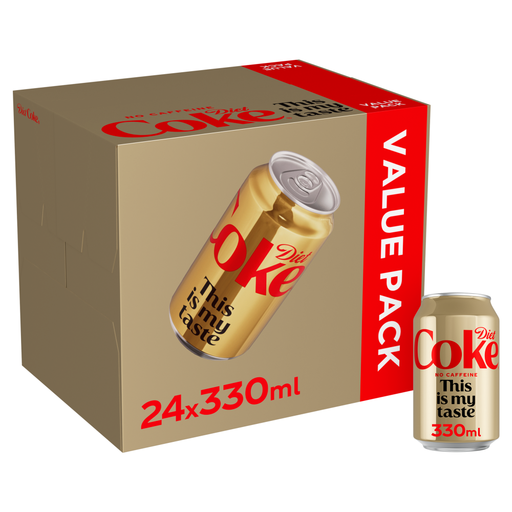 No image available
For a breakfast routine that avoids caffeine, this No Caffeine variant comes as 24 cans of 330ml. Check the exact pack’s ‘of which sugars’ figure if sugar content also determines your choice.
 No image available
For shoppers choosing a cola without sugar or caffeine at breakfast, Pepsi UK lists this caffeine-free variant at 0g sugars per 100ml. The pack contains 24 cans of 330ml; check the sweetener information on the exact pack if it matters to you.
 No image available
For breakfast shoppers comparing sugar content when caffeine is acceptable, Pepsi UK lists Pepsi Max at 0g sugars per 100ml and includes caffeine in its flavourings. This is a 24-can pack, with 330ml in each can; it is not the Caffeine Free variant.
 No image available
For a zero-sugar cola choice when caffeine is acceptable, Coca-Cola Great Britain lists 0g sugars per 100ml for this variant. The multipack contains 24 cans of 330ml; standard Coca-Cola Zero Sugar is not the caffeine-free version.
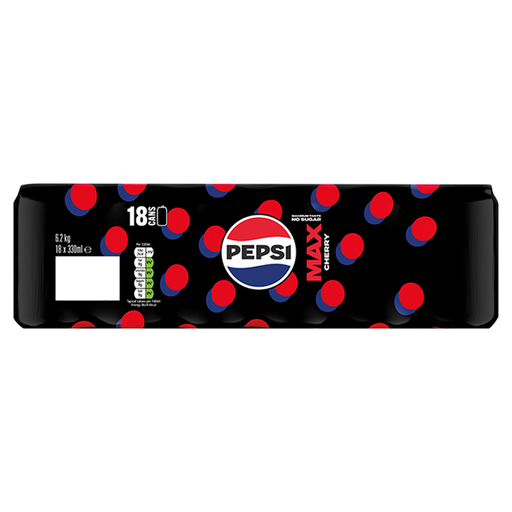 No image available
Choose this 18-can pack if you want the cherry-flavoured variant rather than plain cola and caffeine is acceptable. Each can is 330ml; check the exact variant’s nutrition and ingredient labels when comparing it with other colas.
No. The cited standard Coca-Cola Zero Sugar and Pepsi Max variants contain caffeine, while Coca-Cola Zero Sugar Caffeine Free and Pepsi Max Caffeine Free are presented as caffeine-free. Check the exact variant name and ingredients.
No. Norfolk and Suffolk NHS guidance says many fizzy drinks, including sugar-free ones, are acidic and can erode enamel. Sugar content and acidity are separate considerations when choosing a regular breakfast drink.
Coca-Cola Great Britain lists 10.6g sugars per 100ml for Original Taste and 0g per 100ml for its cited Zero Sugar and Zero Sugar Caffeine Free variants. Compare the per-100ml label and the serving size you intend to drink.
Read it on the exact pack if that ingredient information affects your choice. The cited zero-sugar Coca-Cola and Pepsi product information identifies sweeteners and a phenylalanine statement; do not assume every variant has the same ingredients.