Hosts serving several viewers
Individual cans are easy to hand out, while a larger bottle works when guests can share and pour. Count the servings you need and ask whether anyone wants a caffeine-free choice.


For a group watching the football, choose a zero-sugar cola multipack if individual cans are useful, or a larger bottle if everyone is happy to share and pour. Check the exact variant before buying: Coca-Cola GB and Pepsi UK list 0g sugars per 100ml for their standard zero-sugar colas, but those versions contain caffeine; their named caffeine-free versions serve a different preference.
Individual cans are easy to hand out, while a larger bottle works when guests can share and pour. Count the servings you need and ask whether anyone wants a caffeine-free choice.
Choose an explicitly named caffeine-free variant rather than relying on a zero-sugar claim. Coca-Cola Zero Sugar Caffeine Free and Pepsi MAX No Caffeine are distinct from the standard versions.
A 2-litre bottle offers a pour-to-share format instead of individual cans. Check that you have cups and follow the storage instructions once it is open.
Settle the sugar and caffeine requirements first, then choose a serving format and read the ingredients on the exact variant.
| Priority | What to check | Your needs |
|---|---|---|
| Sugars | Compare sugars per 100ml on the nutrition panel. Coca-Cola GB and Pepsi UK state 0g sugars per 100ml for Coca-Cola Zero Sugar and Pepsi MAX; Tesco lists less than 0.1g per 100ml for Diet Cola. | I want the sugar figure for the drink I will actually serve, rather than relying on its name or front-of-pack wording. |
| Caffeine | Read the exact variant name and ingredients. The standard Coca-Cola Zero Sugar and Pepsi MAX formulas list caffeine; the brands also offer separately named caffeine-free versions. | If a guest wants to avoid caffeine, I need a clearly labelled caffeine-free option, not just a zero-sugar one. |
| Ingredients | Check the sweeteners and any phenylalanine statement on the pack. Coca-Cola GB and Pepsi UK list different sweetener combinations for their standard zero-sugar colas. | Someone may need to check particular ingredients before I serve the drink, even when its sugar figure suits them. |
| Servings | Count guests and compare the number and size of cans with a bottle’s volume. Tesco lists Pepsi MAX in 330ml cans and Diet Cola in a 2-litre bottle. | Individual cans would make handing out drinks simpler; a shared bottle works if I have cups and space to refrigerate it. |
Standard Coca-Cola Zero Sugar and Pepsi MAX list caffeine, according to their UK brand pages. The caffeine-free alternatives are separate variants.
Look for an explicitly caffeine-free product and check the ingredients on the can or bottle.
Sweetener combinations vary between the Coca-Cola Zero Sugar, Pepsi MAX and Tesco Diet Cola formulations. Aspartame-containing products may also carry a phenylalanine statement.
Read the exact variant’s label before serving it to someone with an ingredient restriction.
Ingredients and nutrition information can change, so a previously viewed listing may not describe the pack in hand.
Check the physical label for sugars, caffeine, sweeteners and relevant allergy information before serving.
These brand examples show why the exact cola variant matters; they do not make every product from a brand interchangeable.
Coca-Cola Zero Sugar is the standard zero-sugar option, with Coca-Cola Zero Sugar Caffeine Free offered as a separate variant.
Pepsi MAX includes a standard cola, Pepsi MAX No Caffeine and flavoured Lime and Cherry variants.
Tesco Diet Cola is a no-added-sugar cola supplied in a 2-litre bottle for shared pouring.
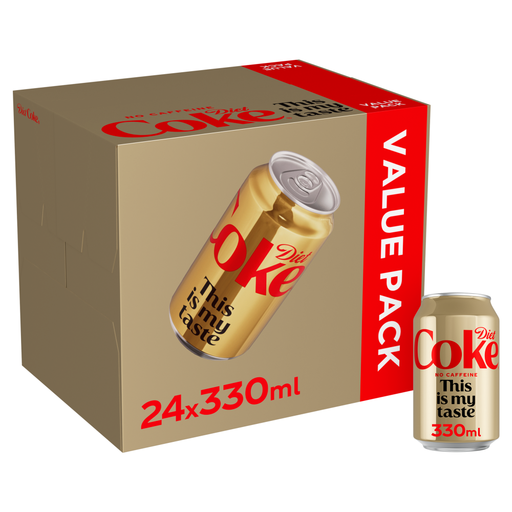
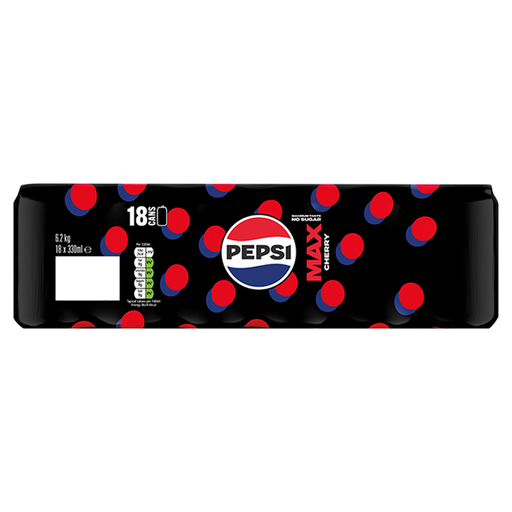
These can multipacks offer individual servings for a football gathering, including caffeine-free, standard and cherry-flavoured cola options. Check the variant as well as the pack size when choosing for guests.
 No image available
A caffeine-free choice when guests want individual cans rather than a shared bottle. The product description states 0g sugars per 100ml and specifies 24 cans of 330ml.
It lists aspartame and acesulfame K and carries a source-of-phenylalanine statement; check the pack against guests’ ingredient needs.
 No image available
This 24-can pack provides individual 330ml servings of the caffeine-free, zero-sugar Pepsi MAX variant.
Its description lists aspartame and acesulfame K and states that it contains a source of phenylalanine. Check the exact label before serving.
 No image available
For guests who want the standard Pepsi MAX variant, this pack contains 24 individual 330ml cans. Its nutrition information states 0g sugars per 100ml.
The ingredients include caffeine and sweeteners, and the description carries a source-of-phenylalanine statement.
 No image available
This standard Coca-Cola Zero Sugar multipack contains 24 individual 330ml cans. Its nutrition information states 0g sugars per 100ml.
It lists caffeine and sweeteners, and its description carries a source-of-phenylalanine statement. It is not the separately named caffeine-free variant.
 No image available
Choose this 18-can pack if the group specifically wants cherry-flavoured cola. Each can is 330ml, and the product information states 0g sugars per 100ml.
Its ingredients include caffeine and sweeteners, and its description carries a source-of-phenylalanine statement.
No: check the nutrition panel for the actual sugars figure. Tesco lists its no-added-sugar Diet Cola at less than 0.1g sugars per 100ml, while Coca-Cola GB and Pepsi UK list 0g per 100ml for Coca-Cola Zero Sugar and Pepsi MAX. In Great Britain, the Advertising Standards Authority and Committee of Advertising Practice say a ‘no added sugars’ claim is permitted only when no mono- or disaccharides, or other food used for its sweetening properties, have been added.
Choose an explicitly named caffeine-free variant, such as Coca-Cola Zero Sugar Caffeine Free or Pepsi MAX No Caffeine, and check its label. The standard Coca-Cola Zero Sugar and Pepsi MAX ingredient lists include caffeine, according to their UK brand pages.
The Coca-Cola Zero Sugar and Pepsi MAX formulas described by their UK brands do. Coca-Cola Zero Sugar lists aspartame, acesulfame-K and enzymatically produced steviol glycosides; Pepsi MAX lists aspartame and acesulfame K. Read the exact pack if particular ingredients matter to your guests.
Choose cans if you want to hand out individual servings; choose a bottle if guests are happy to share and pour. Count viewers and check the pack volume first, then make sure you have cups and somewhere to refrigerate an opened bottle.
Tesco instructs shoppers to refrigerate its Diet Cola 2 Litre Bottle after opening and consume it within 3 days. Follow the instructions on the exact bottle you buy.