Families comparing sugars
If you want a sparkling drink with no listed sugars, compare the nutrition panels of regular and zero-sugar variants. The brand name alone does not tell you which one you have picked.


For a school-holidays lunch, choose a zero-sugar cola if avoiding listed sugars is the priority, and an explicitly labelled caffeine-free variant if caffeine matters too. Regular cola remains an option for people who prefer the sweetened version, but check sugars for the exact drink and serving size rather than treating all colas from one brand alike.
If you want a sparkling drink with no listed sugars, compare the nutrition panels of regular and zero-sugar variants. The brand name alone does not tell you which one you have picked.
Look for a product specifically labelled caffeine-free. A zero-sugar name on its own does not establish whether the cola contains caffeine.
When guests have different sugar or caffeine preferences, check the variants before choosing drinks to share. Bottle and can sizes also affect how you will serve them.
Choose the sugar and caffeine combination first, then check ingredients and pack format for the people and lunch you are planning.
Choose when: You want cola with 0g listed sugars and caffeine is acceptable.
Check: Zero sugar does not mean caffeine-free; confirm the exact variant.
Choose when: You want both no listed sugars and a specifically caffeine-free drink.
Check: Similar-looking products can have different caffeine labelling.
Choose when: The original sweetened variant is the preference for this lunch.
Check: Its listed sugars vary by product and serving size.
| Priority | What to check | Your needs |
|---|---|---|
| Listed sugars | Read sugars per 100ml and for the can or bottle you plan to serve. PepsiCo UK lists 0g per 100ml for Pepsi MAX, compared with 4.5g per 100ml and 15g per 330ml can for Pepsi Classic. | I want to distinguish a zero-sugar variant from regular cola without overlooking the size of the serving. |
| Caffeine | Look for explicit caffeine-free wording on the exact variant, then check the pack. PepsiCo UK names Pepsi MAX No Caffeine separately from Pepsi MAX. | If the drinker avoids caffeine, a zero-sugar label alone is not enough for me to choose. |
| Ingredients | Read the sweetener list and any phenylalanine warning on the pack. Coca-Cola GB lists aspartame and acesulfame K among the ingredients of Coca-Cola Zero Sugar Zero Caffeine. | Our household needs to check the ingredients of the particular drink being served. |
| Serving format | Check the number and size of cans or bottles, and whether you will pour drinks or offer individual portions. | For a shared lunch, I want a format that works for the number of people I am serving. |
Standard zero-sugar and separately labelled caffeine-free colas are different variants.
If caffeine avoidance matters, choose one explicitly labelled caffeine-free and check the actual pack.
PepsiCo UK lists 15g sugars for a 330ml can of Pepsi Classic, while Pepsi MAX lists 0g sugars per 100ml. The variant and serving size change what the figures mean for your choice.
Compare the nutrition panel of each exact product, using the same volume where possible.
Department for Education guidance on school food in England addresses food and drink provided in state-funded schools; it does not, by itself, tell you the policy for a particular holiday activity.
If a school, club or organiser is involved, check its current drinks policy before packing cola.
These references help distinguish variants and labels; they are not a list of products available from any one retailer.
Regular, zero-sugar and explicitly caffeine-free zero-sugar variants need to be identified by their full names.
Pepsi Classic, Pepsi MAX and Pepsi MAX No Caffeine serve different sugar and caffeine preferences.
Tesco Groceries lists branded and Tesco-labelled caffeine-free cola variants.
A Sainsbury's listing identifies a Coca-Cola Zero Sugar 8 x 330ml multipack.
These cola multipacks cover regular and zero-sugar choices for a shared lunch, including an explicitly caffeine-free canned option. Check each listing and pack for the variant you intend to serve.
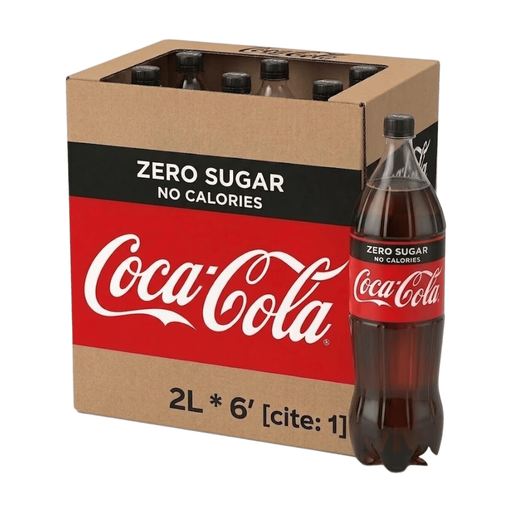 No image available
Six 2L bottles offer a format for pouring at a shared lunch. The listing describes the cola as zero sugar; check the exact pack for caffeine wording before choosing it for someone avoiding caffeine. Its product information identifies aspartame and a phenylalanine warning.
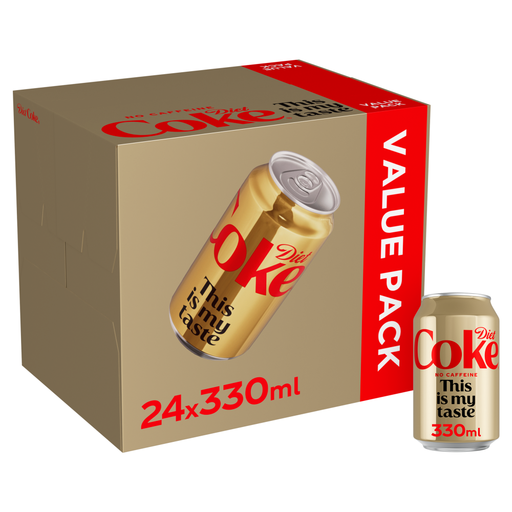 No image available
This zero-sugar, caffeine-free option comes as 24 individual 330ml cans for a shared lunch. The listing identifies sweeteners and a phenylalanine warning; check the pack where those details matter.
 No image available
For a zero-sugar cola when caffeine is acceptable, this pack contains 24 cans of 330ml. The listing reports 0g sugars per 100ml and includes caffeine, aspartame and a phenylalanine warning; it is not the No Caffeine variant.
 No image available
These 24 individual 330ml cans suit serving zero-sugar cola when caffeine is acceptable. The listing reports 0g sugars and identifies caffeine, sweeteners and a phenylalanine warning; check the pack if you need the caffeine-free variant.
 No image available
This regular sweetened cola comes as 24 cans of 330ml for individual portions. Its listing reports 10.6g sugars per 100ml and 35g per can, and identifies caffeine; it is neither a zero-sugar nor a caffeine-free option.
No. Zero-sugar and caffeine-free identify different characteristics. If caffeine avoidance matters, choose an explicitly caffeine-free variant and check the pack rather than relying on the words “zero sugar”.
Start with the can’s listed sugars: PepsiCo UK reports 15g per 330ml can of Pepsi Classic. NHS guidance gives a daily maximum of 30g of free sugars for people aged 11 and over, but a product’s total-sugars figure is not the same measure as free sugars or a calculation of the whole day’s intake.
Yes, particularly if sweeteners or a phenylalanine warning matter to your household. Coca-Cola GB lists aspartame and acesulfame K for Coca-Cola Zero Sugar Zero Caffeine; check the label of the actual variant you are serving.
Check the holiday club’s or organiser’s current drinks policy before packing it. Department for Education school-food guidance concerns food and drink provided in state-funded schools in England; it does not establish the policy for every holiday activity.