Hosts serving a mixed adult group
Individual cans make it straightforward to offer a choice of cola. If some guests avoid caffeine, keep a clearly labelled caffeine-free option distinct from standard cola.


Choose cans if guests will help themselves to individual servings, or a large bottle if you plan to pour drinks into cups. For guests avoiding caffeine, buy a clearly named caffeine-free variant rather than assuming that every zero-sugar cola is caffeine-free; check the exact label for sweeteners and any phenylalanine warning.
Start with how guests will serve themselves and whether anyone wants to avoid caffeine.
Individual cans make it straightforward to offer a choice of cola. If some guests avoid caffeine, keep a clearly labelled caffeine-free option distinct from standard cola.
Coca-Cola GB and Pepsi UK each identify a separate caffeine-free zero-sugar variant. Check the full variant name when shopping rather than relying on a zero-sugar label.
A large bottle suits a setup with cups for guests. Tesco labels its Diet Cola 2 Litre as no added sugar and advises consuming it within three days of opening.
Choose the serving format first, then check the exact variant’s sugar information, caffeine wording and ingredient label.
| Priority | What to check | Your needs |
|---|---|---|
| Sugars | Read the claim and sugars per 100ml on the exact variant. Coca-Cola GB lists 0g for Coca-Cola Zero Sugar; Pepsi UK lists 0g for Pepsi Max. Tesco lists less than 0.1g for its no-added-sugar Diet Cola. | I want a cola that fits a no-added-sugar shopping plan, without assuming every product in a brand’s range has the same label. |
| Caffeine | Check for a named caffeine-free variant. Coca-Cola GB and Pepsi UK list caffeine in their standard zero-sugar colas and market separate versions without it. | Some guests would rather have cola without caffeine late in the evening. |
| Ingredients | Read the sweetener list and any phenylalanine warning on the pack. The cited Coca-Cola and Pepsi zero-sugar variants carry that warning; Tesco Diet Cola also lists sweeteners. | If an ingredient or label warning matters to a guest, I need to check the drink I will actually serve. |
| Serving format | Compare individual cans with bottles that need cups for pouring. For Tesco Diet Cola 2 Litre, allow for Tesco’s guidance to consume it within three days of opening. | Cans suit a help-yourself setup; a shared bottle works when I am arranging cups and expect to use what I open. |
The standard Coca-Cola Zero Sugar and Pepsi Max products cited by their brands list caffeine. Their caffeine-free versions are separate variants.
Choose a product explicitly labelled caffeine-free when a guest wants to avoid caffeine, and keep its name clear when serving.
The cited branded zero-sugar colas contain sweeteners and carry a source-of-phenylalanine warning. Tesco Diet Cola also lists sweeteners; formulations should not be treated as interchangeable.
Read the ingredient list and warnings on the exact pack if these details matter to a guest.
A shared bottle needs cups, while cans provide individual servings. Tesco advises consuming its 2 Litre Diet Cola within three days of opening.
Match the pack to your self-service setup and the amount you expect to pour.
These brand and retailer ranges illustrate different variants to check; the details apply to the named products, not every cola each brand makes.
Coca-Cola GB identifies Coca-Cola Zero Sugar and a separate Coca-Cola Zero Sugar Caffeine Free variant.
Pepsi UK presents Pepsi Max and the separately named Pepsi Max No Caffeine.
Tesco Diet Cola 2 Litre is an own-label option for pouring into cups.
Sainsbury's lists Cola Zero 2L and Diet Cola 2L among its own-label drinks.
These are 24 × 330ml can multipacks for individual serving, including both standard and named caffeine-free colas.
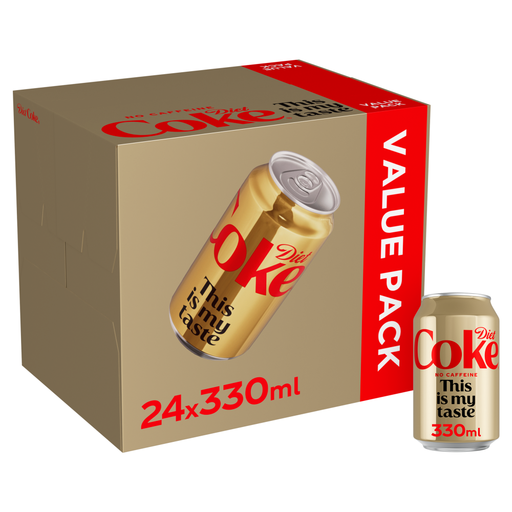 No image available
A named no-caffeine option in individual cans for guests who want to avoid caffeine. Check the exact pack label for sugars, sweeteners and any phenylalanine warning before serving.
 No image available
Individual cans offer a clearly named caffeine-free cola for a help-yourself party setup. Pepsi UK lists 0g sugars per 100ml for Pepsi Max No Caffeine and a source-of-phenylalanine warning; check the pack before serving.
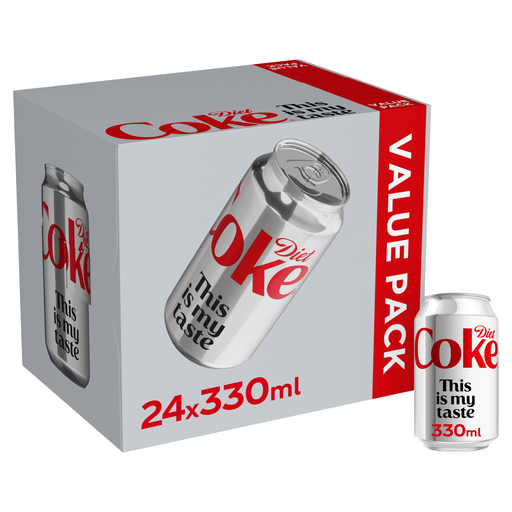 No image available
Individual cans suit a help-yourself drinks table. This is Diet Coke, not the separately named No Caffeine product; check its exact label if a guest is avoiding caffeine or needs to consider a phenylalanine warning.
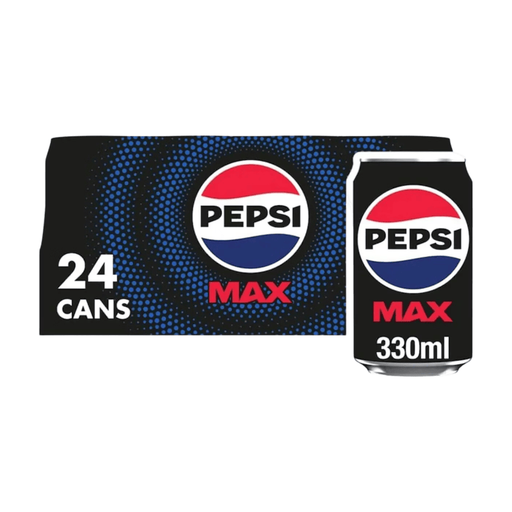 No image available
A standard Pepsi Max multipack for individual serving. Pepsi UK lists 0g sugars per 100ml for Pepsi Max, but its standard recipe includes caffeine and carries a source-of-phenylalanine warning.
 No image available
Individual cans suit a help-yourself setup. Coca-Cola GB lists 0g sugars per 100ml for Coca-Cola Zero Sugar; its standard variant lists caffeine flavouring and carries a source-of-phenylalanine warning.
Not necessarily: read the sugars figure for the exact product. Tesco lists less than 0.1g sugars per 100ml for its no-added-sugar Diet Cola, while Coca-Cola GB and Pepsi UK list 0g per 100ml for the cited Coca-Cola Zero Sugar and Pepsi Max variants.
No. Coca-Cola GB and Pepsi UK list caffeine in their standard Coca-Cola Zero Sugar and Pepsi Max products and identify separate caffeine-free variants. Choose a product with an explicit caffeine-free name when that distinction matters.
Read the exact ingredient list and warnings. The cited Coca-Cola and Pepsi zero-sugar variants contain sweeteners and carry a source-of-phenylalanine warning; do not assume another cola has the same formulation.
No. Department of Health and Social Care guidance concerns promotion and placement by relevant businesses operating in and selling to England, not drinks served by a private party host. A no-added-sugar claim alone also does not establish a product’s nutrient-profiling classification.