Hosts serving a mixed adult group
A mix of bottle and can formats lets guests choose between shared pouring and an individual serving. Ask whether anyone wants a caffeine-free cola before settling on the varieties.


For shared pouring, choose larger bottles if you can chill them, provide cups and expect guests to drink the cola soon after opening; choose cans when individual portions and a choice of varieties matter more. Include an explicitly caffeine-free option if guests avoid caffeine, and check the exact packs for sweeteners and phenylalanine statements. Zero sugar does not make fizzy cola a suitable drink for babies or young children, according to NHS guidance.
A mix of bottle and can formats lets guests choose between shared pouring and an individual serving. Ask whether anyone wants a caffeine-free cola before settling on the varieties.
Look for an explicitly labelled caffeine-free variant rather than relying on the words “diet” or “zero sugar”, particularly if drinks will be served later in the day.
Shared bottles call for enough chilling space and cups. Think about how much is likely to be poured before opening several bottles at once.
Start with how guests will be served, then check caffeine and ingredient labels for the particular varieties you plan to offer.
| Priority | What to check | Your needs |
|---|---|---|
| Cola variety | Check the exact variety and its sugars per 100ml. Coca-Cola GB lists 0g sugars per 100ml for Coca-Cola Zero Sugar; Pepsi UK lists the same for Pepsi Max. | I want a zero-sugar cola alongside the other drinks, without assuming every guest prefers the same brand or flavour. |
| Caffeine | Read the variant name and ingredients. Standard Coca-Cola Zero Sugar and Pepsi Max list caffeine flavouring; Pepsi UK identifies Pepsi Max No Caffeine as a separate caffeine-free product. | Some guests avoid caffeine, so I need a clearly labelled alternative to the standard varieties. |
| Sweeteners | Check each pack for its ingredients and phenylalanine statement. Coca-Cola GB and Pepsi UK list aspartame and a phenylalanine statement for the cited zero-sugar products, including Pepsi Max No Caffeine. | If a guest needs to avoid phenylalanine, I will ask what drink is suitable for them rather than judging by “diet” or “zero sugar” on the front of a pack. |
| Serving format | Compare bottle volume with can size, chilling space and the need for cups. Tesco advises consuming its 2-litre Diet Cola within three days of opening. | Bottles work for pouring into cups; cans make it easier for guests to take an individual portion or choose another variety. |
| Young children | Plan separate drinks for babies and young children. The NHS says fizzy drinks are acidic and does not recommend diet or reduced-sugar drinks for this age group. | If young children are coming, I need water and age-appropriate drinks rather than treating diet cola as their party drink. |
Coca-Cola GB and Pepsi UK list caffeine flavouring in standard Coca-Cola Zero Sugar and Pepsi Max. Either choice could leave guests who avoid caffeine without their preferred cola option.
If caffeine avoidance matters, add a variant explicitly labelled caffeine-free and check its pack before serving.
The NHS says fizzy drinks are acidic and does not recommend diet or reduced-sugar drinks for babies and young children.
Provide water and suitable drinks for young children separately from the cola.
Large bottles need chilling space and cups; opened cola may also be left over after a smaller gathering.
Use bottles when shared pouring is practical, and consider cans when guests are more likely to take individual portions. Follow the storage guidance on the bottle.
The cited Coca-Cola Zero Sugar and Pepsi Max varieties contain aspartame and carry a phenylalanine statement. A caffeine-free label does not remove this consideration: Pepsi UK lists the statement for Pepsi Max No Caffeine too.
Check the exact pack and ask affected guests what they can drink; keep another suitable option available.
These examples show how particular varieties differ; a brand name alone does not establish a drink’s caffeine or sweetener content.
Coca-Cola Zero Sugar is a branded zero-sugar option; Tesco also lists caffeine-free Coca-Cola and Diet Coke varieties in its UK diet-cola range.
Pepsi Max and Pepsi Max No Caffeine provide distinct options when choosing whether to serve cola with caffeine.
Tesco Diet Cola is a 2-litre own-label bottle for shared pouring.
These bottle and can packs offer shared-pouring, individual-serving and caffeine-free choices for a street party. Check the exact pack when a guest has an ingredient requirement.
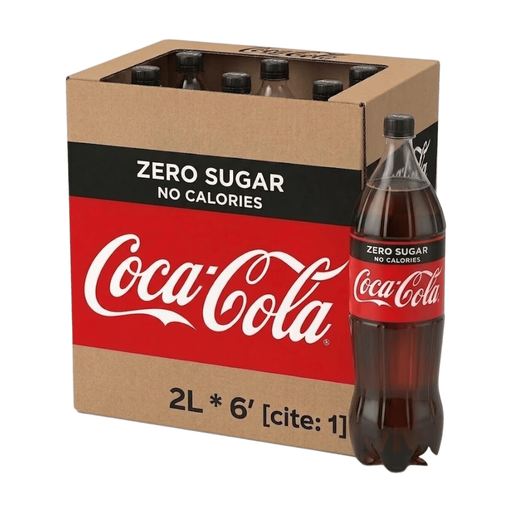 No image available
Six 2-litre bottles suit shared pouring if you have chilling space and cups. Coca-Cola GB lists 0g sugars per 100ml for Coca-Cola Zero Sugar; the standard variety contains caffeine flavouring and carries a phenylalanine statement.
 No image available
A caffeine-free option in 24 individual 330ml cans, useful when guests will choose their own drinks. Check the exact pack for its sugar, sweetener and other ingredient information.
 No image available
Twenty-four 330ml cans provide individual portions for guests choosing a caffeine-free cola. Pepsi UK’s Pepsi Max No Caffeine information lists no sugar or caffeine, but does list aspartame and a phenylalanine statement; check the exact pack.
 No image available
This 24-pack gives guests individual 330ml servings of Pepsi Max. Pepsi UK lists 0g sugars per 100ml for the standard variety, which contains caffeine flavouring and carries a phenylalanine statement.
 No image available
Twenty-four 330ml cans provide individual servings instead of shared pouring. Coca-Cola GB lists 0g sugars per 100ml for Coca-Cola Zero Sugar; its standard variety contains caffeine flavouring and carries a phenylalanine statement.
Choose large bottles if you can chill them, provide cups and expect guests to drink the cola soon after opening. Cans make individual portions and a choice of varieties simpler. For its 2-litre Diet Cola, Tesco advises consumption within three days of opening.
No. Coca-Cola GB and Pepsi UK list caffeine flavouring in standard Coca-Cola Zero Sugar and Pepsi Max. If a guest avoids caffeine, choose an explicitly labelled caffeine-free variety and check its pack.
Check the exact drink’s ingredients and phenylalanine statement, and ask the guest which alternative is suitable for them. Coca-Cola GB and Pepsi UK list aspartame and a source-of-phenylalanine statement for the cited Coca-Cola Zero Sugar, Pepsi Max and Pepsi Max No Caffeine varieties.
The NHS does not recommend diet or reduced-sugar drinks for babies and young children. It also says fizzy drinks are acidic and can damage tooth enamel, so provide water and age-appropriate drinks separately.