Gym-goers cutting back on sugary cola
If you like taking a cola with a snack, compare sugars per 100ml on the exact drink rather than relying on a diet-style name.


Choose a cola whose nutrition panel matches your sugar preference, then check caffeine separately: a zero-sugar label does not mean caffeine free. Coca-Cola Zero Sugar and Pepsi Max list 0g sugars per 100ml, while Pepsi Max No Caffeine is explicitly labelled caffeine free; for a gym bag, the can size and ingredients on the exact pack also matter.
If you like taking a cola with a snack, compare sugars per 100ml on the exact drink rather than relying on a diet-style name.
Look for an explicitly caffeine-free version. Standard zero-sugar colas can still contain caffeine.
Supermarket colas offer different ingredient lists and sugar figures, so compare the individual products rather than treating own-label recipes as interchangeable.
Start with the nutrition panel and caffeine label, then choose a pack format you are happy to carry or store.
| Priority | What to check | Your needs |
|---|---|---|
| Sugars | Read sugars per 100ml and the exact label wording. Coca-Cola GB and Pepsi UK list 0g sugars per 100ml for Coca-Cola Zero Sugar and Pepsi Max; Tesco lists less than 0.1g for Tesco Diet Cola. | I want cola with a stated sugar figure, rather than assuming that every drink labelled diet, zero or no added sugar has the same value. |
| Caffeine | Check for an explicit caffeine-free designation and read the ingredients. Pepsi UK labels Pepsi Max No Caffeine as caffeine free; standard Pepsi Max and Coca-Cola Zero Sugar list caffeine or caffeine flavouring. | For a time when I am avoiding caffeine, sugar status alone will not tell me which can to pack. |
| Sweeteners | Compare the exact ingredient lists. Some colas list aspartame and a source of phenylalanine; the NHS states that aspartame is unsuitable for people with phenylketonuria (PKU). | If a particular sweetener or a phenylalanine warning matters to me, I need the ingredients on the actual pack. |
| Acidity | Do not use sugar content as a measure of acidity. The NHS says carbonated drinks are associated with dental erosion because of their acid content, whether or not they contain sugar. | If I tend to sip a drink repeatedly between meals, I want to take that distinction into account. |
| Pack format | Check the number of cans and volume per can. The Joybuy options below include 330ml cans in packs of 8, 18 or 24. | A single can may fit alongside a snack, while the full pack still needs to suit the space I have at home. |
Coca-Cola Zero Sugar and standard Pepsi Max list caffeine or caffeine flavouring; caffeine-free Pepsi Max is a separate version.
Choose a pack explicitly labelled caffeine free if that distinction matters, and check its ingredients.
The NHS associates acidic carbonated drinks with dental erosion regardless of their sugar or sweetener content.
Keep the sugar figure and the drink’s acidity as separate considerations, particularly if you plan to sip it over a long period.
Some aspartame-containing colas identify a source of phenylalanine. The NHS states that aspartame is unsuitable for people with PKU.
Read the ingredient list and warning on the exact can rather than assuming all no-sugar colas use the same sweeteners.
Tesco Diet Cola and Sainsbury’s Cola Zero have different listed sugar figures, even though both are alternatives to standard sugary cola.
Compare each drink’s current nutrition panel and ingredients before choosing.
Coca-Cola GB describes Zero Sugar as closer in taste to Coca-Cola Original Taste than Diet Coke. That is the manufacturer’s flavour description, not a taste test of the drinks here.
Pepsi UK lists standard Pepsi Max and a separately labelled Pepsi Max No Caffeine version.
Tesco Diet Cola is an own-label, no-added-sugar option for comparing supermarket recipes.
Sainsbury’s Cola Zero provides another own-label cola to compare by its own nutrition panel and ingredients.
These are canned Diet Coke, Coca-Cola Zero Sugar and Pepsi Max options, including explicitly caffeine-free versions. Compare the named version and pack size before choosing one to take with a gym-bag snack.
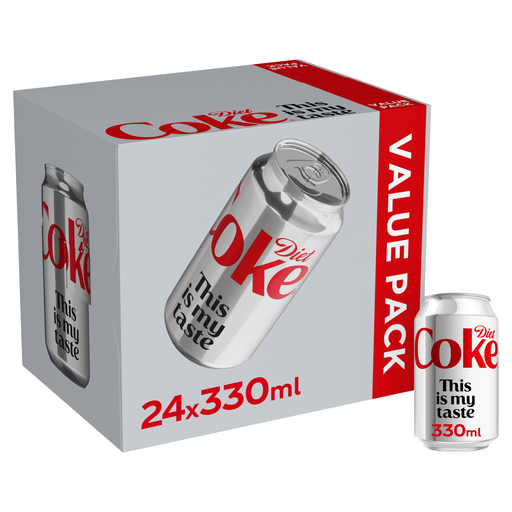 No image available
The 330ml cans provide individual portions to pack with a snack. This is the standard Diet Coke pack, not the separately named caffeine-free version; check the can’s ingredients if caffeine matters.
 No image available
This explicitly caffeine-free Pepsi Max version suits a choice where the standard caffeinated version does not. Pepsi UK lists 0g sugars per 100ml for Pepsi Max No Caffeine; this pack contains 24 individual 330ml cans.
 No image available
Choose the standard Pepsi Max version if caffeine is acceptable. Pepsi UK lists 0g sugars per 100ml and caffeine among its ingredients; this pack contains 24 individual 330ml cans.
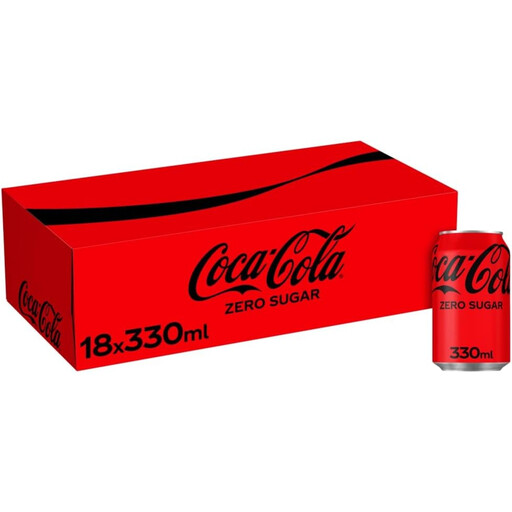 No image available
For a Coca-Cola Zero Sugar choice in individual cans, this pack contains 18 × 330ml. Coca-Cola GB lists 0g sugars per 100ml for Zero Sugar and includes caffeine flavouring in its ingredients.
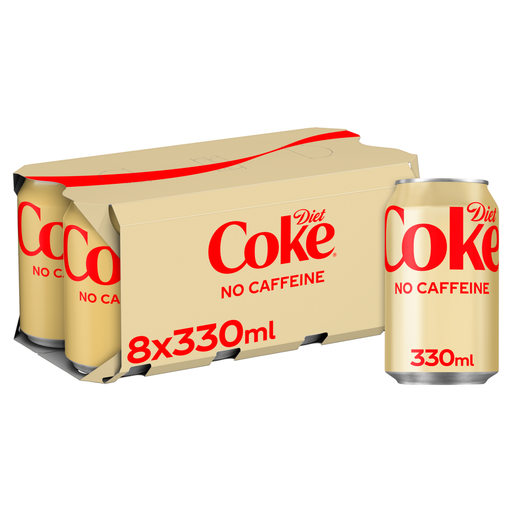 No image available
This separately named caffeine-free Diet Coke comes in an 8 × 330ml can pack. Check the exact can’s nutrition panel and ingredients if its sugar figure or sweeteners are decisive.
Check the figure on the exact nutrition panel rather than treating the phrases as interchangeable. Coca-Cola GB and Pepsi UK list 0g sugars per 100ml for Coca-Cola Zero Sugar and Pepsi Max; Tesco lists less than 0.1g for Diet Cola, while Sainsbury’s lists less than 0.5g for Cola Zero.
Yes, if the version is explicitly labelled caffeine free. Pepsi UK identifies Pepsi Max No Caffeine as caffeine free and no sugar, whereas standard Pepsi Max lists caffeine; Coca-Cola Zero Sugar lists caffeine flavouring.
Read the exact pack’s ingredient list, as sweeteners differ between colas. The NHS says approved sweeteners are considered acceptable alternatives to sugar, but aspartame is unsuitable for people with phenylketonuria (PKU) because it contains phenylalanine.
No. The NHS says carbonated drinks are associated with dental erosion because of their acid content, regardless of whether they contain sugar or sweeteners. Sugar content and acidity are separate things to consider when choosing a drink to carry and sip.