For a workplace canteen lunch, choose a drink labelled zero sugar if your aim is a sweet fizzy option without drink sugar; check the individual label rather than assuming every diet drink has the same ingredients. If you also want to avoid caffeine, choose an explicitly caffeine-free variant, or consider a non-cola option for a different flavour. The NHS notes that carbonated drinks remain associated with dental erosion because of their acid content, whether or not they contain sugar.
Who these choices suit
Lunch diners looking to reduce drink sugar
A zero-sugar fizzy drink offers a sweet option with lunch. Check the nutrition panel for the particular drink; the NHS also notes that carbonated drinks are associated with dental erosion because of their acid content, regardless of sugar content.
Cola drinkers avoiding caffeine
A diet or zero-sugar label does not mean caffeine-free. Look for an explicitly caffeine-free variant and check its ingredient list: the standard Diet Coke and Pepsi Max formulations listed by their manufacturers include caffeine flavouring.
Workplace canteen buyers
Clearly distinguishing standard zero-sugar cola, caffeine-free cola and a non-cola option helps diners choose by flavour and ingredients. In Great Britain, the Workplace (Health, Safety and Welfare) Regulations 1992 also require an adequate supply of wholesome drinking water that is readily accessible.
What to check before choosing
Start with the drink's sugar information, then check caffeine, flavour and ingredients for the particular variant. For canteen supplies, compare the number and size of servings as well as the per-100ml panel.
| Priority | What to check | Your needs |
|---|
| Sugar and serving size |
Check sugars per 100ml on the individual product label. Check the can size and number of cans when choosing a canteen pack. |
I want a sweet fizzy drink with lunch without sugar from the drink, and a serving size that suits the canteen. |
| Caffeine |
Look for an explicitly caffeine-free variant; do not rely on a diet or zero-sugar name. Check the ingredient list for the exact drink. |
If I am avoiding caffeine at lunch, I need the caffeine-free version rather than a standard diet cola. |
| Flavour |
Distinguish cola from lemon-and-lime or lemonade options. Check sugar and caffeine information separately from flavour. |
Cola is not the flavour I want, but I would still like a fizzy lunch drink. |
| Acidity and water |
The NHS associates carbonated drinks with dental erosion because of acid content, regardless of sugar or sweeteners. Keep drinking water readily accessible in a Great Britain workplace, as required by the Workplace (Health, Safety and Welfare) Regulations 1992. |
I want to distinguish cutting drink sugar from avoiding the acidity of a fizzy drink. |
| Aspartame warning |
Check each variant's ingredients for aspartame and its statement about a source of phenylalanine. Do not assume ingredients are identical across a brand's range. |
For someone with phenylketonuria (PKU), I need to check the particular drink's ingredients and warning before choosing it. |
Common label mistakes
-
Assuming zero sugar also means no caffeine
Standard Diet Coke and Pepsi Max list caffeine flavouring, so their sugar claims do not answer a caffeine-avoidance need.
Choose a variant explicitly labelled caffeine-free and check the ingredients on the current pack.
-
Equating sugar-free with tooth-neutral
The NHS says carbonated drinks are associated with dental erosion because of their acid content, whether they contain sugar or sweeteners.
Describe zero-sugar drinks by their sugar content without presenting them as a replacement for accessible drinking water.
-
Overlooking a phenylalanine warning
Some aspartame-sweetened variants in these ranges declare that they contain a source of phenylalanine, a material consideration for people with PKU.
Keep the ingredient list and pack warning available to diners, and check the exact variant rather than relying on the brand name.
Relevant brand ranges
These brand examples help distinguish drink types; a brand name alone does not establish the ingredients of every variant.
Coca-Cola
Its UK range includes Diet Coke and Coca-Cola Zero Sugar Caffeine Free for diners comparing standard and caffeine-free cola variants.
- Coca-Cola GB lists 0g sugars per 100ml for Diet Coke and Coca-Cola Zero Sugar Caffeine Free.
- The listed standard Diet Coke ingredients include caffeine flavouring; choose an explicitly caffeine-free product if avoiding caffeine.
Pepsi
Pepsi Max, Diet Pepsi and Pepsi Max Caffeine Free provide distinct cola variants for a canteen menu.
- Pepsi UK lists 0g sugars per 100ml for these named variants.
- The listed Pepsi Max and Diet Pepsi ingredients include caffeine; Pepsi Max Caffeine Free is the separately identified caffeine-free variant.
Sprite
Sprite Zero is a lemon-and-lime alternative for diners who do not want a cola flavour.
- Coca-Cola GB lists 0g sugars and 1 kcal per 100ml for Sprite Zero.
- Its listed ingredients include citric and tartaric acids and aspartame; check the pack warning where PKU suitability matters.
Tesco
Tesco Groceries lists own-label Tesco Xero Cola alongside branded diet and sugar-free cola packs, giving canteen buyers another pack format to compare.
- The Tesco Groceries category listed Tesco Xero Cola in an 8 × 330ml pack on 2 October 2026.
- Check the particular pack's nutrition and ingredients before treating it as equivalent to a named branded variant.
Joybuy canteen drink options
These canned options cover caffeine-free cola, standard zero-sugar cola and a non-cola lemonade for workplace lunch choices. Check each product's current pack label for the ingredients and nutrition information relevant to your diners.
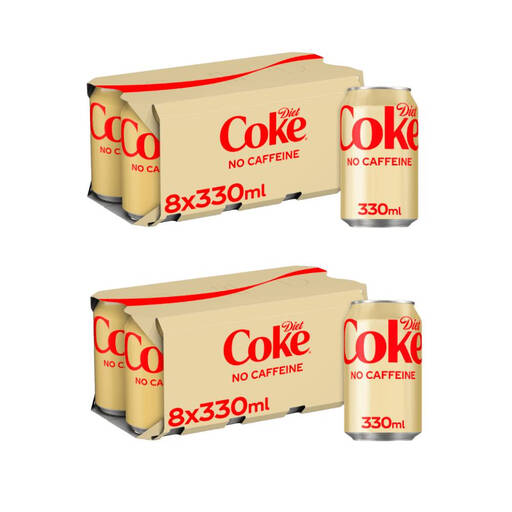 Image unavailable
Diet Coke Caffeine Free, 2 × 8 × 330ml
A caffeine-free cola option for lunch in two packs of eight 330ml cans. Check the individual pack's sugar information, ingredients and phenylalanine warning when those affect the choice.
View on Joybuy
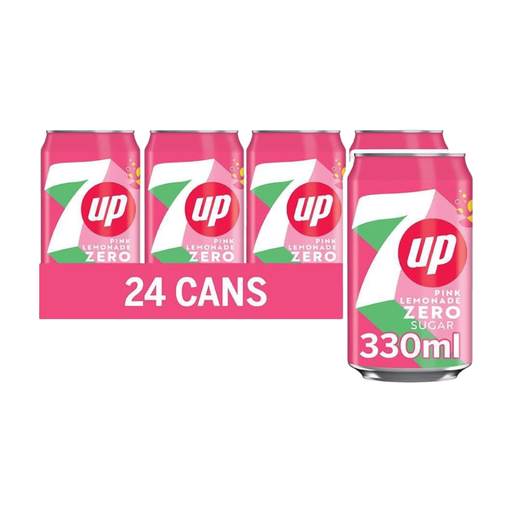 Image unavailable
7 Up Lemonade Zero, 24 × 330ml
A non-cola lemonade option in 24 individual 330ml cans. Check the pack's nutrition, caffeine information and ingredient warning if any of these determine suitability.
View on Joybuy
 Image unavailable
Pepsi Max Caffeine Free, 24 × 330ml
A caffeine-free cola for diners who want that choice at lunch. The Joybuy product information specifies 24 × 330ml cans, 0g sugars per 100ml and a source-of-phenylalanine warning.
View on Joybuy
 Image unavailable
Pepsi Max, 24 × 330ml
A standard zero-sugar cola option when caffeine is acceptable. Joybuy lists 24 × 330ml cans, 0g sugars per 100ml and flavourings including caffeine; this is not the caffeine-free variant.
View on Joybuy
 Image unavailable
Coca-Cola Zero Sugar, 24 × 330ml
A cola option in 24 individual 330ml cans. This is the standard Zero Sugar variant, not the separately named caffeine-free version; check its current nutrition panel and ingredients for your canteen's requirements.
View on Joybuy
Questions about canteen drinks
Does zero sugar make a fizzy drink tooth-neutral?
No. The NHS says no-calorie sweeteners can help reduce tooth-decay risk when a drink contains no sugars, but carbonated drinks are still associated with dental erosion because of their acid content.
Is a diet cola automatically caffeine-free?
No. The standard Diet Coke and Pepsi Max formulations listed by their manufacturers include caffeine flavouring. If avoiding caffeine, choose a specifically labelled caffeine-free variant and check its current ingredients.
What should someone with PKU check on a zero-sugar drink?
Check the exact variant for aspartame and a source-of-phenylalanine warning rather than relying on its zero-sugar name. The listed ingredients and warnings can differ between drinks.
What drinking water must a workplace make accessible?
In Great Britain, regulation 22 of the Workplace (Health, Safety and Welfare) Regulations 1992 requires an adequate supply of wholesome drinking water for people at work, readily accessible at suitable places. Fizzy drink choices in a canteen do not replace that provision.


