For exam revision, check caffeine as well as sugar: if avoiding caffeine matters, particularly later in the day, choose a cola explicitly labelled caffeine-free and check its sugars declaration. Standard Diet Coke, Diet Pepsi, Coca-Cola Zero Sugar and Pepsi Max list 0g sugars per 100ml but contain caffeine; the word “diet” or “zero” alone does not settle both questions. Great Ormond Street Hospital guidance advises children and young people who consume caffeine to avoid it after lunchtime because it can make sleep harder.
Who is choosing the drink?
The useful distinction is whether the cola is for a daytime break, a later revision session or a drink supplied at school.
Students revising later in the day
If caffeine could interfere with your sleep routine, look for a variant explicitly labelled caffeine-free rather than relying on “diet” or “zero sugar”. Great Ormond Street Hospital guidance advises children and young people who consume caffeine to avoid it after lunchtime.
Daytime cola drinkers checking sugar
If you want a cola with 0g sugars per 100ml during a study break, check the nutrition panel on the particular variant. Standard sugar-free lines may still contain caffeine.
People planning school-provided snacks in England
Parents, staff and caterers need to distinguish a retail product label from the rules for drinks supplied to pupils. Department for Education guidance covers food and drink provided in state-funded schools in England; check the applicable requirements and school arrangements before choosing a drink for that setting.
What should you check?
Start with when the drink will be consumed, then read the sugar declaration and ingredients on the exact variant. A diet-labelled cola and a zero-sugar cola can both contain caffeine.
| Priority | What to check | Your needs |
|---|
| Caffeine |
Look for “Caffeine Free” or “No Caffeine” if avoiding caffeine matters; check whether the ingredients of a standard variant list caffeine. Great Ormond Street Hospital advises children and young people who consume caffeine to avoid it after lunchtime. |
For a later revision session, I want to know whether this particular cola contains caffeine, not just whether it contains sugar. |
| Sugars |
Compare the sugars figure per 100ml on the exact pack. Coca-Cola Great Britain and Pepsi UK list 0g sugars per 100ml for the named diet, zero-sugar and caffeine-free examples; the variant name alone is not a substitute for its label. |
I would like a cola labelled with 0g sugars per 100ml for a study break. |
| Sweeteners |
Read the ingredients and any phenylalanine statement. The NHS says aspartame is unsuitable for people with phenylketonuria (PKU); do not assume all sugar-free drinks use the same ingredients. |
If I need to avoid aspartame because of PKU, the ingredients of this specific drink matter more than “diet” or “zero sugar” on the front. |
| Drink choice |
Consider whether you want cola or water for the session. The NHS notes that removing sugar does not remove the dental-erosion consideration associated with carbonated drinks. |
I may want cola for its flavour, but I do not want to treat a sugar-free label as meaning it is equivalent to water. |
| School setting |
For a drink supplied to pupils, check the requirements for the relevant UK nation and the school or caterer. Department for Education school-food guidance applies to state-funded schools in England; proposed changes for September 2027 remain subject to Parliamentary approval. |
When arranging school-provided revision snacks, I need to check the rules for that school rather than rely on a retail cola label. |
Common label mistakes
-
Assuming “zero sugar” means no caffeine
Standard Coca-Cola Zero Sugar and Pepsi Max list caffeine in their ingredients, while separately named caffeine-free variants are available. That distinction matters when choosing a drink for later revision.
If avoiding caffeine is the aim, find “Caffeine Free” or “No Caffeine” on the exact variant and check its ingredients.
-
Treating sugar-free cola like water
The NHS says lower- or no-calorie sweeteners can help reduce sugar intake when replacing sugary drinks, but they do not automatically make the drink healthy. Carbonated drinks are also associated with dental erosion regardless of sugar content.
Keep water as a straightforward option for revision, and choose cola on its own label and ingredients rather than on a broad health assumption.
-
Overlooking aspartame and phenylalanine
Some of the named sugar-free colas list aspartame or carry a phenylalanine statement. The NHS says aspartame is unsuitable for people with PKU.
If you have PKU, check the ingredients of the exact product and follow your prescribed dietary advice rather than choosing by the words “diet” or “zero sugar”.
-
Applying one school-food assumption across the UK
Department for Education guidance addresses food and drink provided in state-funded schools in England. A general HFSS description does not establish whether a particular cola can be supplied in every school or UK nation.
For school-provided snacks, check the rules that apply where the school is located and the school’s current arrangements.
Relevant cola ranges
Coca-Cola and Pepsi each have named UK variants that illustrate why the full product name matters more than “diet” or “zero” alone.
Coca-Cola
The UK range includes standard and caffeine-free sugar-free colas, as well as a separate Diet Coke line.
- Coca-Cola Great Britain lists 0g sugars per 100ml for Coca-Cola Zero Sugar and Coca-Cola Zero Sugar Caffeine Free; the standard version lists caffeine flavouring.
- Diet Coke lists 0g sugars per 100ml and caffeine flavouring; Diet Coke No Caffeine is a separately identified variant.
- Check the exact variant’s ingredients and phenylalanine statement where these affect your choice.
Pepsi
The UK range offers Pepsi Max, a separately named caffeine-free Pepsi Max variant and Diet Pepsi.
- Pepsi UK lists 0g sugars per 100ml for Pepsi Max and Pepsi Max No Caffeine; standard Pepsi Max lists caffeine in its flavourings.
- Diet Pepsi is listed with 0g sugars per 100ml, but its standard ingredients include caffeine.
- Read the ingredients and any phenylalanine statement on the variant you intend to buy.
Joybuy cola options
These multipacks cover caffeine-free cola for when avoiding caffeine matters, alongside standard zero-sugar and diet-labelled colas that contain caffeine. Choose by the exact variant and your intended revision time.
 No image available
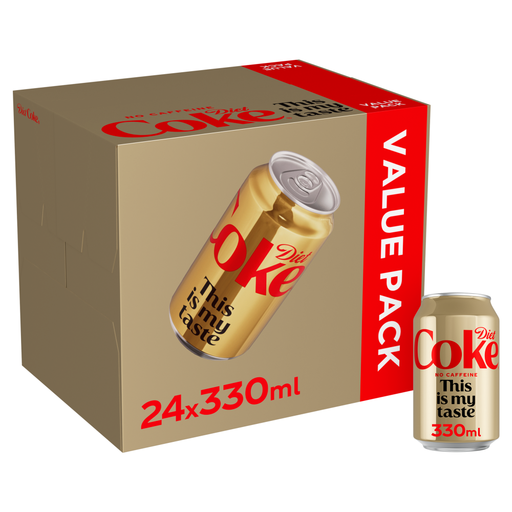
Diet Coke No Caffeine, 24 × 330ml
A caffeine-free Diet Coke variant to consider when avoiding caffeine during later revision. The listed format is 24 × 330ml cans; the product information lists 0g sugars per 100ml and identifies aspartame and a source of phenylalanine. The NHS says aspartame is unsuitable for people with PKU.
View on Joybuy
 No image available
Pepsi Max Caffeine Free, 24 × 330ml
This caffeine-free Pepsi Max variant fits a choice to avoid caffeine during a later study session. The listed format is 24 × 330ml cans; the product information lists 0g sugars per 100ml and identifies aspartame and a source of phenylalanine. The NHS says aspartame is unsuitable for people with PKU.
View on Joybuy
 No image available
Pepsi Max, 24 × 330ml
A standard zero-sugar cola for a daytime break if you are not avoiding caffeine. The listed format is 24 × 330ml cans; the product information lists 0g sugars per 100ml, caffeine, aspartame and a source of phenylalanine. Great Ormond Street Hospital advises children and young people who consume caffeine to avoid it after lunchtime; the NHS says aspartame is unsuitable for people with PKU.
View on Joybuy
 No image available
Coca-Cola Zero Sugar, 24 × 330ml
A standard zero-sugar cola for a daytime study break if caffeine is not being avoided. The listed format is 24 × 330ml cans; the product information lists 0g sugars per 100ml, caffeine, aspartame and a source of phenylalanine. Great Ormond Street Hospital advises children and young people who consume caffeine to avoid it after lunchtime; the NHS says aspartame is unsuitable for people with PKU.
View on Joybuy
 No image available
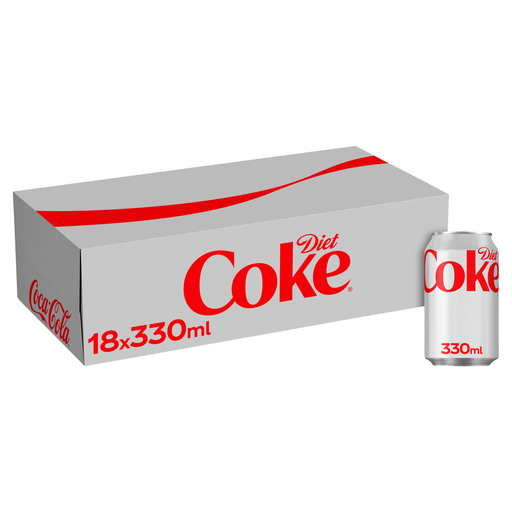
Diet Coke, 18 × 330ml
A diet-labelled cola for a daytime break if you are not looking for a caffeine-free variant. The listed format is 18 × 330ml cans; the product information lists 0g sugars per 100ml, caffeine, aspartame and a source of phenylalanine. Great Ormond Street Hospital advises children and young people who consume caffeine to avoid it after lunchtime; the NHS says aspartame is unsuitable for people with PKU.
View on Joybuy
Questions about revision-time cola
Does “zero sugar” mean a cola has no caffeine?
No. Coca-Cola Great Britain and Pepsi UK list caffeine in the standard Coca-Cola Zero Sugar and Pepsi Max variants. If avoiding caffeine matters, choose a product explicitly labelled “Caffeine Free” or “No Caffeine” and check the exact pack.
What should I choose for a later revision session?
If avoiding caffeine is the priority, choose water or a cola explicitly labelled caffeine-free rather than a standard diet or zero-sugar variant. Great Ormond Street Hospital guidance says caffeine in cola can make sleep harder and advises children and young people who consume it to avoid it after lunchtime.
What if I have phenylketonuria (PKU)?
Check the ingredients and phenylalanine statement on every variant rather than relying on “diet” or “zero sugar”. The NHS says aspartame is unsuitable for people with PKU; follow your prescribed dietary advice when choosing a drink.
Can a diet cola be supplied with school revision snacks?
Check the requirements for the relevant UK nation and the particular school before selecting a drink to supply to pupils. Department for Education guidance covers food and drink provided in state-funded schools in England; its proposed changes for September 2027 remain subject to Parliamentary approval. A retail “diet” or “zero sugar” label does not establish whether a particular product meets the applicable school-food rules.
Is sugar-free cola equivalent to water for a study break?
No. The NHS says lower- or no-calorie sweeteners can help reduce sugar intake when replacing sugary drinks, but they do not automatically make the drink healthy. It also notes the dental-erosion consideration associated with carbonated drinks regardless of their sugar or sweetener content.


