Hosts choosing cola without sugar
If cola is part of a shared curry meal, check the sugars line per 100ml and the ingredients rather than relying on a diet-style name alone.


For curry night, start with a cola whose label confirms zero sugar or no added sugar, then choose a format that suits the number of diners. Standard Coca-Cola Zero Sugar and Pepsi Max contain caffeine; if caffeine avoidance matters, Pepsi Max Caffeine-Free is described by Pepsi as containing zero caffeine and zero sugar. Check sweeteners and phenylalanine warnings on the pack before serving anyone who needs to avoid them.
The useful distinction is not just which cola to serve, but whether guests need to avoid sugar, caffeine or particular ingredients.
If cola is part of a shared curry meal, check the sugars line per 100ml and the ingredients rather than relying on a diet-style name alone.
A zero-sugar label does not establish caffeine status. Pepsi identifies Pepsi Max Caffeine-Free as containing zero caffeine and zero sugar; check that the pack is the caffeine-free variant.
Consider whether individual 330ml cans or a shared 2-litre bottle better suit the number of diners and how the drinks will be served.
Check the formulation first, then the caffeine and sweetener information, before deciding how much cola to put on the table.
| Priority | What to check | Your needs |
|---|---|---|
| Sugar information | Read the pack’s claim, sugars figure per 100ml and ingredient list. Coca-Cola and Pepsi report 0g sugars per 100ml for Coca-Cola Zero Sugar and Pepsi Max; Tesco describes its Diet Cola as no added sugar. | I want cola without sugar for the meal, rather than choosing by a diet-style name alone. |
| Caffeine | Check the exact variant and its ingredients. Standard Coca-Cola Zero Sugar, Pepsi Max and Tesco Diet Cola contain caffeine; Pepsi describes Pepsi Max Caffeine-Free as containing zero caffeine. | For an evening meal, I may need a cola explicitly labelled caffeine-free. |
| Sweeteners and warnings | Read the ingredients and safety information on the pack. The listed Coca-Cola Zero Sugar and standard Pepsi Max products contain aspartame and carry a phenylalanine warning. | If a guest has phenylketonuria (PKU) or needs to avoid aspartame, I need to check the specific drink before serving it. |
| Serving format | Check the number and size of containers, then calculate the total volume. The Joybuy options below include 24 × 330ml cans and six 2-litre bottles; Tesco lists its Diet Cola in a 2-litre bottle. | Individual cans may suit guests serving themselves; for drinks poured at the table, I would check whether the bottles provide enough for everyone. |
Standard Coca-Cola Zero Sugar and Pepsi Max contain caffeine, despite their zero-sugar descriptions.
If caffeine avoidance matters, check the exact variant for an explicit caffeine-free designation.
The listed Coca-Cola Zero Sugar and standard Pepsi Max products contain aspartame and state that they are a source of phenylalanine, which matters for people with PKU.
Read the ingredients and warning on the pack before serving it to someone who needs to avoid phenylalanine.
A 2-litre bottle and a multipack of 330ml cans serve a group differently; the number of containers does not tell you the total volume.
Compare the stated volumes with the number of diners and decide whether guests will pour drinks or take individual cans.
The product in hand is the one guests will drink, so its label is the practical place to confirm the current ingredients and nutrition information.
Before serving, check the pack’s sugars line, ingredient list, relevant warnings and best-before date.
These references describe the named cola lines, not every drink made by each brand.
Coca-Cola Zero Sugar is an option for hosts who want a Coca-Cola-branded cola without sugar; the listed 24 × 330ml format provides individual cans.
The distinction within the Pepsi Max line matters here: standard Pepsi Max contains caffeine, while Pepsi describes Pepsi Max Caffeine-Free as containing zero caffeine and zero sugar.
Tesco Diet Cola is an own-label, no-added-sugar option listed in a 2-litre bottle for drinks poured and shared at the table.
These Joybuy options cover a caffeine-free Pepsi Max can pack and standard zero-sugar Coca-Cola and Pepsi Max formats for sharing at curry night. Check the exact pack if an ingredient restriction applies.
 No image available
For guests avoiding caffeine, Pepsi describes this variant as containing zero caffeine and zero sugar. The pack has 24 individual 330ml servings; check its ingredients and warnings if a guest has PKU.
 No image available
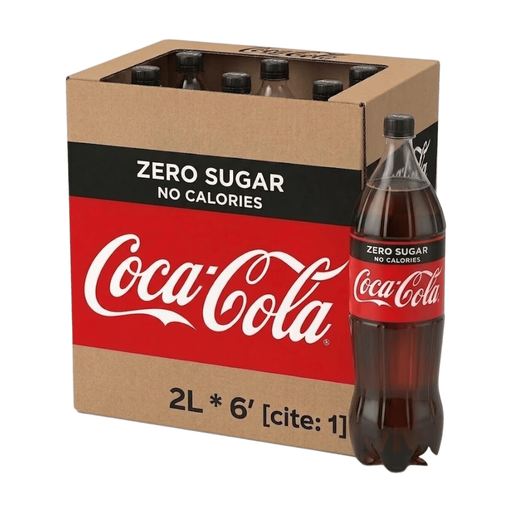
Six 2-litre bottles offer a format for pouring drinks at a group meal. Coca-Cola Zero Sugar contains caffeine; check the pack’s ingredients and phenylalanine warning before serving anyone with PKU.
 No image available
This standard Pepsi Max pack provides 24 individual 330ml cans for a shared meal. Standard Pepsi Max contains caffeine; check the ingredients and phenylalanine warning when those details matter for guests.
 No image available
Individual 330ml cans make this format straightforward to serve to a group. The Joybuy listing reports 0g sugars per 100ml and identifies caffeine and aspartame; read its phenylalanine warning if serving someone with PKU.
No. ‘No added sugar’ concerns what has been added to a drink, while the sugars figure tells you what the nutrition panel reports. Coca-Cola and Pepsi report 0g sugars per 100ml for Coca-Cola Zero Sugar and standard Pepsi Max; Tesco describes its Diet Cola as no added sugar. Check both the claim and the current pack information.
Look for an explicitly caffeine-free variant. Pepsi describes Pepsi Max Caffeine-Free as containing zero caffeine and zero sugar, whereas the standard Coca-Cola Zero Sugar, Pepsi Max and Tesco Diet Cola products discussed here contain caffeine.
The pack lets you confirm the ingredients, sugars figure and warnings for the drink you will serve. Check its best-before date as well, particularly when buying ahead for a group meal.
Check the specific pack’s ingredients and phenylalanine warning. The listed Coca-Cola Zero Sugar and standard Pepsi Max products contain aspartame and state that they are a source of phenylalanine; the Coca-Cola listing says it is not suitable for people with phenylketonuria (PKU).