Buyers stocking a shared snack area
If several colleagues use the same supply, consider cola and non-cola drinks as well as a plain sparkling choice instead of assuming one case will suit everyone.


For a shared office snack area, choose a mix rather than relying on one cola: a zero-sugar option, a clearly labelled caffeine-free drink, a non-cola flavour and plain sparkling water serve different preferences. Check sugars per 100ml and the exact pack’s caffeine and ingredient information, because zero sugar does not mean caffeine free or sweetener free.
A shared fridge needs more than a choice of flavours if colleagues also differ on sugar, caffeine or ingredients.
If several colleagues use the same supply, consider cola and non-cola drinks as well as a plain sparkling choice instead of assuming one case will suit everyone.
Compare the nutrition panels of drinks served alongside snacks. The NHS suggests water or sugar-free, diet or no-added-sugar drinks in place of sugary fizzy drinks.
A zero-sugar cola may still contain caffeine. Look for a separately labelled caffeine-free variant or another suitable sparkling drink, and check its other ingredients too.
Choose the kinds of drink the office needs, then compare exact variants and pack formats. A flavour name or a zero-sugar label cannot answer every ingredient question.
| Priority | What to check | Your needs |
|---|---|---|
| Sugars | Compare sugars per 100ml on the exact variant, then consider the serving size. Coca-Cola GB lists 4.5g sugars per 100ml for Fanta Orange; its Sprite Zero Sugar page lists 0g per 100ml. | I want a fizzy choice alongside snacks without making a sugary drink the only option. |
| Caffeine | Check for an explicit caffeine-free designation and read the ingredients. Pepsi UK lists caffeine for Pepsi Max but identifies Pepsi Max No Caffeine as a separate variant. | Some colleagues may want cola or another fizzy drink without caffeine. |
| Flavour range | Check whether the selection includes cola, a non-cola flavour and plain sparkling water. For example, Coca-Cola GB identifies Sprite Zero Sugar as lemon-and-lime flavoured. | If cola is not to everyone’s taste, I want a distinct alternative rather than another similar case. |
| Ingredients | Read the current ingredient list and any phenylalanine statement on each sweetened variant. Check plain sparkling water separately rather than assuming all unflavoured products have identical ingredients. | I need colleagues to be able to identify a drink that fits their ingredient requirements. |
| Pack format | Compare the number of servings and container size, then check how the drinks will be stored and served. Individual cans and larger shared bottles call for different arrangements. | For a shared snack area, I want a pack that works with the available fridge space and serving setup. |
Coca-Cola Zero Sugar and Pepsi Max are not the same products as their separately named caffeine-free variants. Buying only standard zero-sugar cola can leave no cola choice for colleagues avoiding caffeine.
Include a drink explicitly labelled caffeine free and check the current pack’s ingredients before ordering.
Coca-Cola GB describes Fanta Orange as caffeine free but lists 4.5g sugars per 100ml. Neither its flavour nor its caffeine status establishes its sugar content.
Compare sugars per 100ml and the intended serving size; offer a zero-sugar or plain sparkling choice alongside a regular fruity drink.
Several zero-sugar flavoured drinks list sweeteners, so replacing regular cola with zero-sugar cola alone does not provide an unsweetened choice.
Consider plain sparkling water and keep ingredient information accessible for flavoured drinks.
The Department for Education’s school-food guidance concerns food and drink provided in state-funded schools in England. England’s separate high-fat, salt or sugar promotion guidance addresses in-scope retailer promotions, not a general ban on office fizzy drinks.
Choose ordinary office refreshments according to the drinks and ingredients needed. If the purchase is for school food provision, check the applicable school-food requirements for that setting.
These named variants illustrate different ways to build a range; details for one drink should not be assumed to apply to every product from its brand.
The Zero Sugar range includes a standard cola and a separately named caffeine-free variant.
Pepsi Max and Pepsi Max No Caffeine provide two distinct zero-sugar cola choices.
Sprite Zero Sugar offers a lemon-and-lime flavour for a range that is not solely cola.
Fanta Orange is a fruity, caffeine-free choice when the range also includes alternatives with different sugar content.
Dr Pepper Zero adds a fruit-flavoured zero-sugar option outside the cola and citrus choices.
Tesco Soda Water is an example of a plain sparkling drink rather than a flavoured soft drink.
These options cover zero-sugar cola, non-cola flavours and plain sparkling water for an office snack area. Compare their exact labels and serving formats when deciding which combination to order.
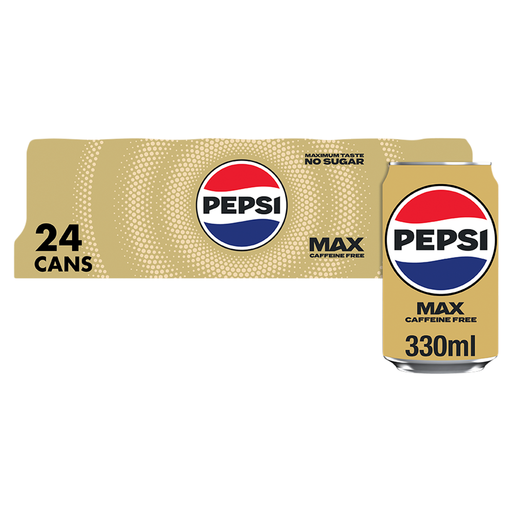 Image unavailable
A cola option to consider when shared stock needs a caffeine-free choice. This pack contains 24 individual 330ml cans; check the exact pack’s sweeteners and phenylalanine statement for ingredient suitability.
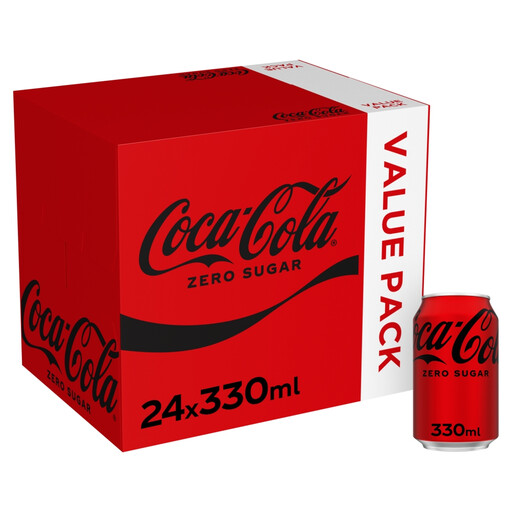 Image unavailable
A zero-sugar cola in 24 individual 330ml cans. This variant lists caffeine and sweeteners and carries a phenylalanine statement, so it does not replace a caffeine-free or unsweetened option.
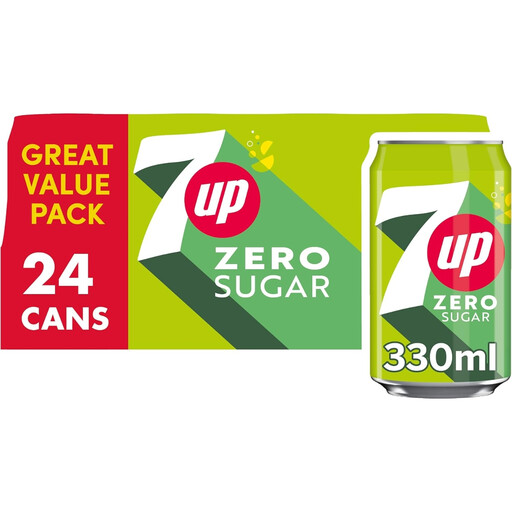 Image unavailable
A lemon-and-lime alternative when the office wants a non-cola fizzy drink. The pack has 24 individual 330ml cans; check its caffeine designation, sweeteners and phenylalanine statement against colleagues’ requirements.
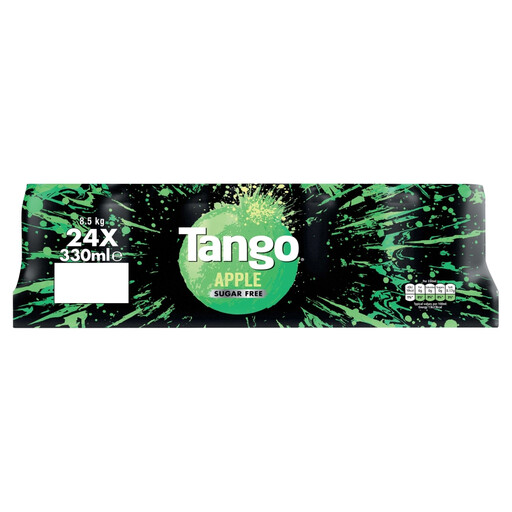 Image unavailable
An apple-flavoured alternative to cola in 24 individual 330ml cans. Its ingredients list sweeteners; if this case needs to serve as the caffeine-free choice, confirm the caffeine information on the exact pack.
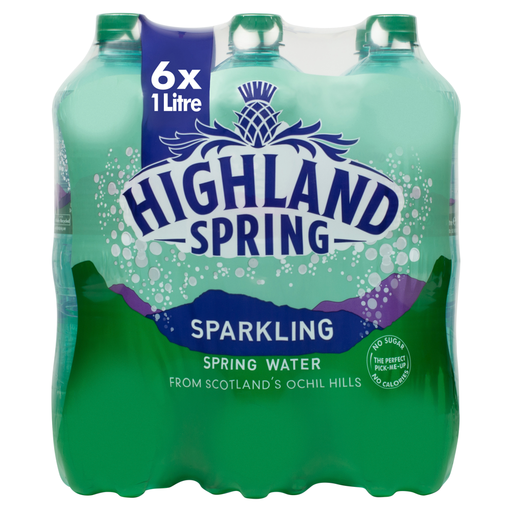 Image unavailable
A plain sparkling-water option for colleagues who do not want a flavoured soft drink. The six 1-litre bottles are larger than individual cans, so check whether they suit the office’s storage and serving setup; consult the pack nutrition panel if a stated sugar value is needed.
No. Coca-Cola Zero Sugar and Pepsi Max list caffeine, while Coca-Cola Zero Sugar Caffeine Free and Pepsi Max No Caffeine are separate variants. Check the exact name and ingredient panel rather than relying on the zero-sugar wording.
Not if colleagues also need a caffeine-free or unsweetened choice. A mix can include zero-sugar cola, a clearly labelled caffeine-free drink and plain sparkling water; check the ingredients of flavoured options, including sweeteners and any phenylalanine statement.
No. Coca-Cola GB describes Fanta Orange as caffeine free but lists 4.5g sugars per 100ml. Compare the nutrition panel per 100ml and the serving size rather than judging sugars by flavour or caffeine status.
The Department for Education’s school-food guidance applies to food and drink provided in state-funded schools in England, not ordinary adult-office refreshments. England’s high-fat, salt or sugar promotion guidance addresses a separate regulated retailer-promotion setting. If the drinks are being bought for school food provision, check the requirements for that setting separately.