What matters when choosing?
At the canteen, start with the serving you intend to drink, then check caffeine and sweeteners separately: none of those details can be settled by the word ‘diet’ alone.
| Priority | What to check | Your needs |
|---|
| Sugar and energy |
Read sugars and energy per 100ml and per serving, then check the can or bottle size. Coca-Cola GB lists 10.6g sugars and 42 kcal per 100ml for Original Taste, versus 0g sugars and 0.3 kcal per 100ml for Zero Sugar. |
If cola is part of my usual lunch, I want to know what the whole drink contributes. The NHS advises adults to have no more than 30g of free sugars a day. |
| Caffeine |
Check the exact variant name and ingredients. Pepsi UK lists caffeine in standard Pepsi Max and identifies Pepsi Max No Caffeine as a separate variant. |
I want a cola without caffeine, rather than assuming every zero-sugar can qualifies. During pregnancy, the NHS advises no more than 200mg of caffeine a day from all sources. |
| Sweeteners |
Look for aspartame and a source-of-phenylalanine declaration. Pepsi UK lists both for Pepsi Max No Caffeine, so caffeine-free and aspartame-free are different checks. |
If I have PKU, I need to check ingredients even on a caffeine-free, zero-sugar cola. The NHS says aspartame is unsuitable for people with PKU. |
| Purpose of the drink |
Distinguish a sugar-free lunch drink from a sugary drink used as fast-acting carbohydrate. Check the sugars on the specific pack and follow an individual hypo-treatment plan. |
For an ordinary lunch, I want a drink choice that fits my routine; if I need to treat a hypo, I cannot assume diet cola supplies the carbohydrate my plan calls for. Diabetes UK makes this distinction. |
Brand ranges to compare
These manufacturer ranges illustrate different label checks; a brand name alone does not establish the nutrition or ingredients of every variant.
Coca-Cola
Coca-Cola GB provides nutrition and ingredient information for both Original Taste and Zero Sugar.
- Original Taste lists 10.6g sugars and 42 kcal per 100ml; Zero Sugar lists 0g sugars and 0.3 kcal per 100ml.
- Coca-Cola Zero Sugar lists caffeine flavouring and aspartame and declares a source of phenylalanine. Its zero-sugar name does not establish caffeine-free or PKU suitability.
Pepsi
Pepsi UK lists regular Pepsi, Pepsi Max, Diet Pepsi and Pepsi Max No Caffeine as distinct drinks.
- Pepsi UK lists 15g sugars per 330ml can of regular Pepsi and 0g per 330ml serving of Pepsi Max, Diet Pepsi and Pepsi Max No Caffeine.
- Pepsi Max and Diet Pepsi list caffeine. Pepsi Max No Caffeine is the caffeine-free variant, but it still lists aspartame and a source of phenylalanine.
Cola options on Joybuy
These multipacks offer caffeine-free Diet Coke and several diet or zero-sugar cola varieties for a workplace lunch. Check the individual can before drinking, particularly if caffeine, aspartame or sugars affect your choice.
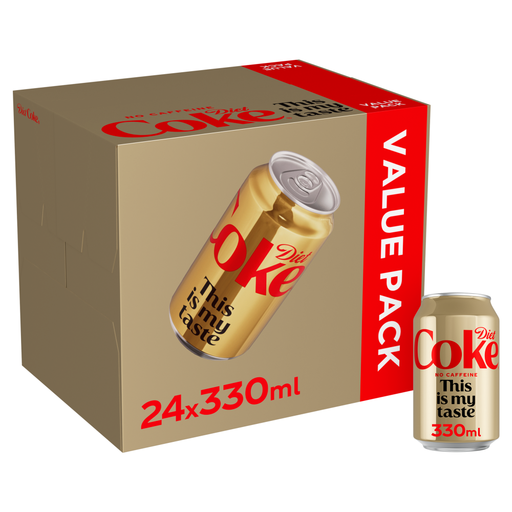 Image unavailable
Diet Coke No Caffeine, 24 × 330ml
The explicitly named no-caffeine variant is the one to examine if caffeine avoidance matters at lunch. Check the pack’s sugars, sweeteners and phenylalanine declaration separately; caffeine-free wording does not answer those questions.
View on Joybuy
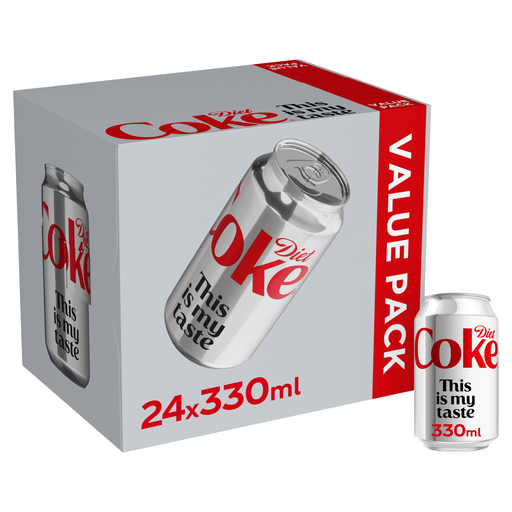 Image unavailable
Coca-Cola Diet Coke, 24 × 330ml
For a diet-cola lunch choice, compare sugars per 330ml can and read the ingredients before buying. Do not treat the Diet Coke name as confirmation that this variant is caffeine-free or suitable for someone avoiding aspartame.
View on Joybuy
 Image unavailable
Pepsi Max, 24 × 330ml
Pepsi UK lists 0g sugars per 330ml serving of Pepsi Max. Its ingredients include caffeine and aspartame, with a source-of-phenylalanine declaration, so check a different variant if you require caffeine-free cola and check ingredients if you have PKU.
View on Joybuy
 Image unavailable
Coca-Cola Zero Sugar, 24 × 330ml
Coca-Cola GB lists 0g sugars and 0.3 kcal per 100ml for Zero Sugar. It also lists caffeine flavouring and aspartame and declares a source of phenylalanine; check the can if either ingredient affects your choice.
View on Joybuy
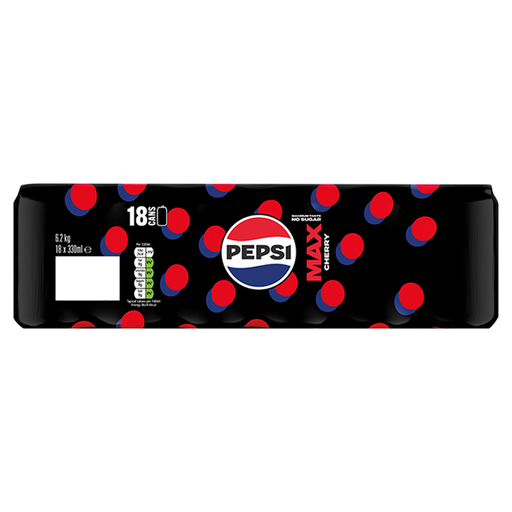 Image unavailable
Pepsi Max Cherry, 18 × 330ml
This 330ml-can multipack is the cherry-flavoured option. Check its own nutrition panel and ingredients rather than applying the figures for standard Pepsi Max to a different variant; caffeine and aspartame matter as separate checks.
View on Joybuy
Questions about lunch-time cola
Is zero-sugar cola the all-round choice for lunch?
Not necessarily. It is an option when you want cola while reducing sugar compared with a regular variety, but Diabetes UK identifies water as the all-round drink choice. Check caffeine and sweeteners on the exact zero-sugar pack.
Can someone with diabetes choose diet cola?
Diabetes UK includes sugar-free soft drinks among drink options outside hypo treatment. Do not substitute diet cola for fast-acting carbohydrate when an individual hypo-treatment plan calls for it; follow that plan and check the drink’s carbohydrate information.
Does zero sugar mean caffeine-free?
No. Coca-Cola GB lists caffeine flavouring in Coca-Cola Zero Sugar, and Pepsi UK lists caffeine in standard Pepsi Max; Pepsi Max No Caffeine is a separate variant. Check the name and ingredients, especially if you are tracking caffeine from other drinks. The NHS advises a total limit of 200mg a day during pregnancy.
Why does a cola mention phenylalanine?
A source-of-phenylalanine declaration appears on the aspartame-containing Coca-Cola Zero Sugar, Pepsi Max, Diet Pepsi and Pepsi Max No Caffeine product information. The NHS says aspartame is unsuitable for people with PKU because it contains phenylalanine; caffeine-free does not mean aspartame-free.
What should I check if the canteen stocks a different variant?
Check the exact product name, serving size, sugars and energy on the nutrition panel, then read the ingredients and any phenylalanine declaration. A familiar brand or similar-looking can does not establish that two variants have the same sugar, caffeine or sweetener content.


