Lunch drinkers comparing sugar
If you want cola with lunch but are looking at zero-sugar options, check the sweeteners and caffeine as well as the sugar figure. Those details vary by variant.


Choose a zero-sugar cola if sugar is your main consideration and its sweeteners suit your requirements; choose a variant explicitly labelled caffeine-free if caffeine matters too. If you prefer regular cola, compare the sugar in the whole can with what else you plan to have that day. Check the exact product label: zero sugar does not necessarily mean caffeine-free, and pack sizes differ.
If you want cola with lunch but are looking at zero-sugar options, check the sweeteners and caffeine as well as the sugar figure. Those details vary by variant.
Look for a cola specifically labelled caffeine-free. A diet or zero-sugar name alone does not establish whether the drink contains caffeine.
If the regular recipe is what you prefer, use the sugar amount for the can you will drink, not just the figure per 100ml, when considering the rest of your day.
Start with sugar and caffeine, then check ingredients and whether the pack size works for an individual lunch.
| Priority | What to check | Your needs |
|---|---|---|
| Sugar per can | Compare sugars per serving on the same volume basis. If only a per-100ml figure is shown, use the container volume to work out the amount you would drink. | I prefer regular cola, but want to know the sugar amount in my lunch can. Coca-Cola GB lists 10.6g per 100ml for Original Taste, or about 35g in 330ml; the NHS advises adults to have no more than 30g of free sugars a day. |
| Caffeine | Check the exact variant name and ingredients for caffeine. Do not treat a zero-sugar or diet label as a caffeine-free label. | I want cola later in the day without caffeine. Pepsi UK lists caffeine in Pepsi Max, while its Pepsi Max Caffeine-Free variant is explicitly caffeine-free. |
| Sweeteners | Read the ingredients for specific sweeteners and any source-of-phenylalanine statement on the exact pack. | If an ingredient matters to me, I need more than a zero-sugar label. Pepsi UK lists sweeteners for Pepsi Max, and the product carries a source-of-phenylalanine statement. |
| Pack format | Check the volume you intend to drink and any storage instructions after opening a larger bottle. | For an occasional desk lunch, I may find an individual can simpler to portion than an opened bottle. Sainsbury's instructs buyers to refrigerate its Diet Cola 2L after opening and consume it within three days. |
A zero-sugar cola can still contain caffeine: Pepsi UK lists it in Pepsi Max.
If you want to avoid caffeine, choose a variant explicitly labelled caffeine-free and check its ingredients.
A per-100ml figure is not the amount in a full can. Coca-Cola GB lists 10.6g sugars per 100ml for Original Taste, which is about 35g in 330ml; the NHS adult daily free-sugar guideline is 30g.
Use the per-can figure when available, or calculate it from the labelled volume before comparing regular colas.
Storage instructions can matter if you only want one drink. Sainsbury's says its Diet Cola 2L should be refrigerated after opening and consumed within three days.
Compare that storage window with how often you would use the bottle; an individual can may be more practical for an occasional lunch.
These examples show why the exact variant matters; a brand name alone does not tell you its sugar, caffeine or sweetener content.
Coca-Cola GB lists Original Taste and a separate Zero Sugar Caffeine Free variant.
Pepsi UK lists regular Pepsi, Pepsi Max and Pepsi Max Caffeine-Free as distinct cola variants.
Tesco lists own-label Classic Cola and Diet Cola in its grocery range.
Sainsbury's lists Diet Cola in a 2L bottle, a different format from an individual lunch can.
These multipacks contain individual 330ml cans for a desk lunch. They include regular, zero-sugar and caffeine-free variants; check the exact pack when sugar, caffeine or sweetener ingredients determine your choice.
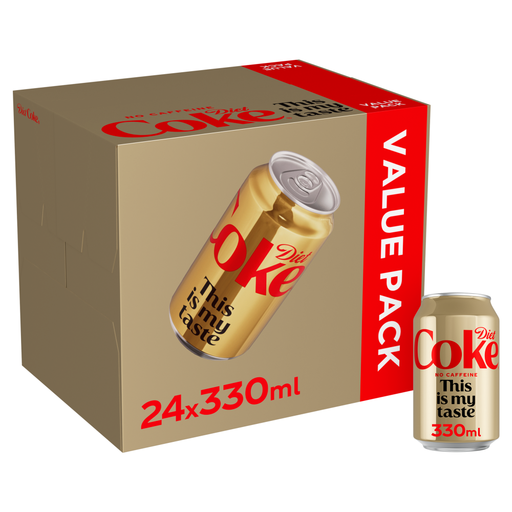 No image available
A caffeine-free variant in individual cans for lunch. Check the current pack for its sugar figure, sweeteners and ingredient statements if these affect your choice.
 No image available
For a lunch can when both sugar and caffeine matter: Pepsi UK describes this variant as zero sugar and caffeine-free. Check the current pack's sweeteners and source-of-phenylalanine statement if relevant to you.
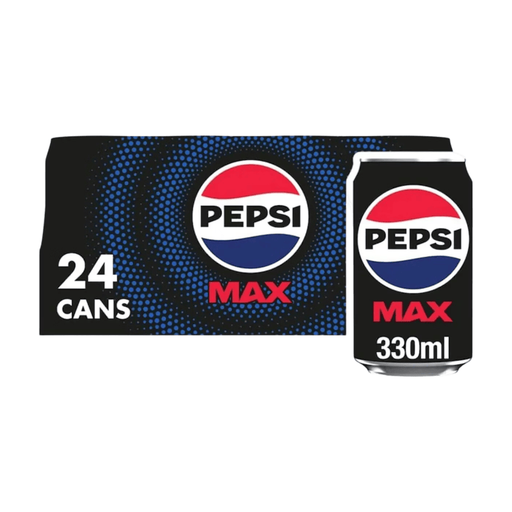 No image available
A zero-sugar option if caffeine is acceptable: Pepsi UK lists caffeine in Pepsi Max's ingredients. Its individual 330ml cans make the serving volume clear; check the pack for sweeteners and ingredient statements.
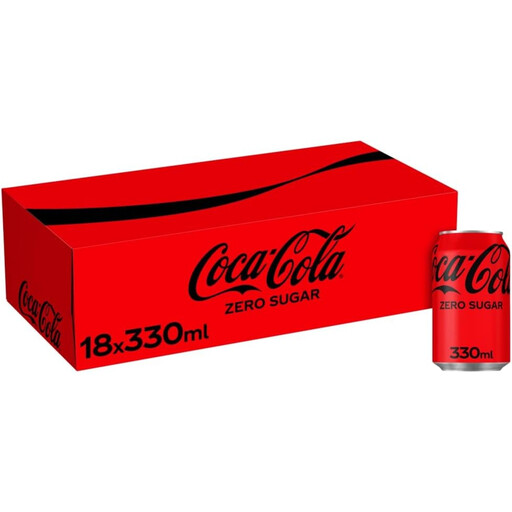 No image available
A zero-sugar variant in individual 330ml cans. If you also want to avoid caffeine, check the exact pack rather than confusing it with Coca-Cola's separately named Zero Sugar Caffeine Free variant.
 No image available
A regular-cola choice in individual cans. Coca-Cola GB lists 10.6g sugars per 100ml for Original Taste, equivalent to about 35g in a 330ml can; consider that amount alongside the NHS adult daily free-sugar guideline of 30g.
No. Pepsi UK lists caffeine in Pepsi Max despite its zero-sugar description. If you want to avoid caffeine, look for an explicitly caffeine-free variant, such as Pepsi Max Caffeine-Free, and check the exact pack.
Yes. Coca-Cola GB lists 10.6g sugars per 100ml for Original Taste, or about 35g in 330ml. The NHS advises adults to have no more than 30g of free sugars a day, so check the can volume and consider other food and drinks that day.
The named zero-sugar and diet examples here do: Pepsi UK lists sweeteners for Pepsi Max, and Sainsbury's lists acesulfame K and sucralose for its Diet Cola. Read the exact product's ingredients if a particular sweetener or source-of-phenylalanine statement matters to you.