For summer holidays, choose a diet or zero-sugar cola by checking the sugars on the exact pack, then choose a specifically caffeine-free variant if you also want to avoid caffeine. Taste preference, sweetener ingredients and pack size can settle the choice between otherwise similar options; zero sugar does not remove the dental considerations of frequently sipping acidic fizzy drinks.
Who is choosing?
Holiday drinkers cutting back on sugar
If you want cola with a picnic or barbecue without the sugars listed for regular cola, compare the nutrition panels of the drinks you are considering. Flavour still matters: a pack is only a useful choice if you like the particular cola.
Shoppers avoiding caffeine
For an evening drink or a household member who avoids caffeine, look for a specifically named caffeine-free variant. A diet or zero-sugar label alone does not tell you whether a cola contains caffeine.
Families buying for several holiday occasions
Consider how many cans you will use and store, as well as the ingredients on each variant. UK government Eatwell guidance includes sugar-free drinks among fluids; NHS dental guidance notes that acidic diet fizzy drinks can still wear enamel.
What should you check?
Start with the exact variant and its nutrition and ingredient labels. Then choose a pack that fits the people, occasions and storage space you have in mind.
| Priority |
What to check |
Your needs |
| Sugars |
Read sugars per 100ml and per serving on the exact pack. Coca-Cola GB lists 0g sugars per 100ml for Coca-Cola Zero Sugar and Diet Coke; Pepsi UK lists 0g per 100ml for Pepsi Max. Tesco lists less than 0.1g per can for its 8 × 330ml Xero Cola pack. |
I want a cola for holiday meals while reducing the sugar I buy in drinks. The label lets me compare the variants I might actually serve. |
| Caffeine |
Check the full variant name and ingredients, not just “diet” or “zero sugar”. Coca-Cola GB identifies Diet Coke No Caffeine separately from standard Diet Coke; Pepsi UK likewise lists Pepsi Max No Caffeine separately from Pepsi Max. |
For an evening gathering, I would rather pick a cola explicitly labelled caffeine-free than assume a sugar-free one is. |
| Sweeteners |
Read the ingredients and any phenylalanine warning on each variant. The NHS says aspartame is unsuitable for people with phenylketonuria (PKU) because it contains phenylalanine. |
Where PKU is relevant in my household, I need to check the exact drink against the person’s dietary guidance before buying it. |
| Drinking habits |
Consider when and how often the cola will be drunk. NHS dental guidance says acidic diet fizzy drinks can wear enamel, despite containing no sugar. |
If drinks will be available throughout the day, I do not want to treat sugar-free cola as tooth-neutral or make it the default drink between meals. |
| Pack format |
Check the number and size of cans against the group, length of the trip and available storage. Compare the current label when switching between standard and caffeine-free variants. |
For a short break, I want a quantity we can use and carry comfortably; for a larger gathering, a multipack may be more practical. |
Common buying mistakes
-
Assuming “diet” means caffeine-free
Standard Coca-Cola Zero Sugar, Diet Coke and Pepsi Max list caffeine or caffeine flavouring in their UK product information.
If caffeine avoidance matters, choose an explicitly named No Caffeine or Caffeine Free variant and check its current ingredients.
-
Treating sugar-free fizz as tooth-neutral
NHS dental guidance says the acidity of diet fizzy drinks can wear enamel. Removing sugar does not remove that consideration, particularly with frequent sipping.
Keep water available between meals rather than relying on cola throughout the day. Seek advice from a dental professional if you have concerns about tooth sensitivity or erosion.
-
Overlooking the phenylalanine warning
Several Coca-Cola and Pepsi diet or zero-sugar variants contain aspartame. The NHS says aspartame is unsuitable for people with PKU.
When PKU is relevant, check the exact variant’s ingredients and warning information against the person’s clinical dietary guidance; front-of-pack diet wording is not a suitability check.
-
Choosing a multipack without planning its use
A larger pack may be awkward for a short holiday or limited storage, even if several people will share it.
Count the occasions and people you are buying for, then check the can count and size before choosing a pack.
Brand references
These ranges illustrate different sugar, caffeine and sweetener choices; check the label of the particular variant you buy.
Coca-Cola
The UK range includes Coca-Cola Zero Sugar, Diet Coke and Diet Coke No Caffeine. Coca-Cola describes Zero Sugar as aiming for an Original Taste-style flavour; that is the brand’s description, not a taste comparison.
- Coca-Cola GB publishes sugar and ingredient information for these variants, making the caffeine-free distinction checkable.
- The listed Zero Sugar and Diet Coke formulations contain aspartame and a source-of-phenylalanine warning. Standard variants list caffeine; Diet Coke No Caffeine is the separately named alternative.
Pepsi
Pepsi UK lists Pepsi Max and Pepsi Max No Caffeine as separate zero-sugar cola variants.
- The variant names and published ingredients help distinguish the standard caffeinated drink from the no-caffeine version.
- Both listed variants contain aspartame and carry a phenylalanine statement. Check each variant’s own nutrition panel rather than assuming their values are identical.
Tesco
Tesco Xero Cola provides an own-label sugar-free cola option in an 8 × 330ml pack.
- Tesco lists less than 0.1g sugars per can for this pack.
- The listed drink contains caffeine and uses acesulfame K and sucralose. Check the current pack if either caffeine or a particular sweetener matters to you.
Cola multipacks on Joybuy
These can multipacks include standard and caffeine-free Coca-Cola and Pepsi variants for holiday meals and sharing. Choose the variant before deciding whether its pack size suits your plans.
 No image available
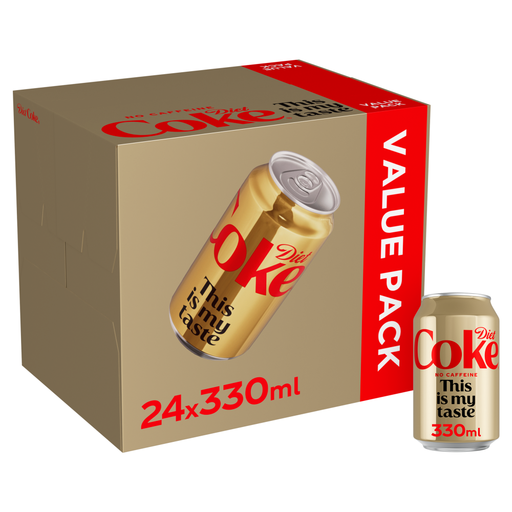
Diet Coke No Caffeine 24 × 330ml
Consider this separately named no-caffeine variant when caffeine avoidance matters for a shared holiday pack. It contains 24 × 330ml cans; Coca-Cola GB states that Diet Coke No Caffeine contains a source of phenylalanine, so check the ingredients if PKU is relevant.
View on Joybuy
 No image available
Pepsi Max Caffeine Free 24 × 330ml
This caffeine-free Pepsi Max variant offers a 24 × 330ml can format for a group. Pepsi UK lists its no-caffeine variant as zero sugar; its published ingredients include sweeteners, so check the current pack where a particular ingredient matters.
View on Joybuy
 No image available
Pepsi Max 24 × 330ml
For sharing when caffeine avoidance is not required, this is a 24 × 330ml pack of standard Pepsi Max. Pepsi UK lists 0g sugars for the drink; the ingredients include caffeine and aspartame, which matters when checking suitability for someone with PKU.
View on Joybuy
 No image available
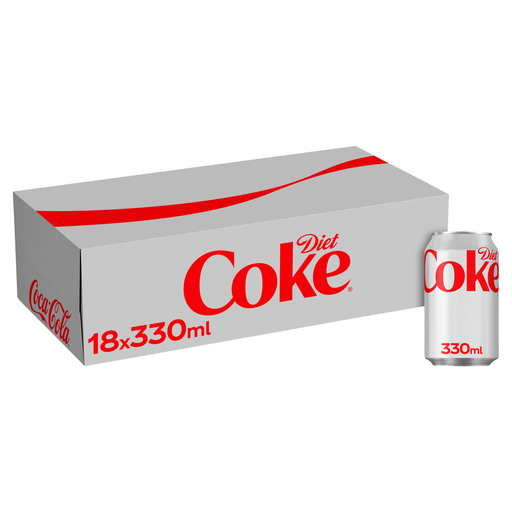
Diet Coke 18 × 330ml
This 18 × 330ml pack suits a plan centred on standard Diet Coke rather than its No Caffeine variant. Coca-Cola GB lists 0g sugars per 100ml for Diet Coke; standard Diet Coke contains caffeine and a source of phenylalanine.
View on Joybuy
 No image available
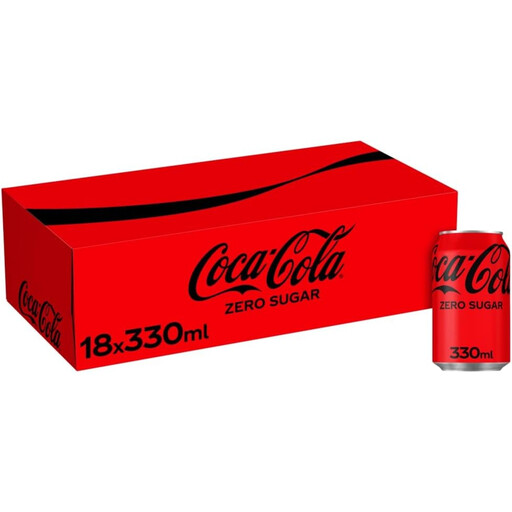
Coca-Cola Zero Sugar 18 × 330ml
This 18 × 330ml pack is an option for sharing Coca-Cola Zero Sugar at holiday meals. Coca-Cola GB lists 0g sugars per 100ml for the drink; its standard formulation lists caffeine and sweeteners, including aspartame.
View on Joybuy
Frequently asked questions
Is zero-sugar cola automatically caffeine-free?
No. Coca-Cola GB lists caffeine for standard Coca-Cola Zero Sugar and Diet Coke, while Pepsi UK lists it for standard Pepsi Max. Choose a specifically named caffeine-free variant and check its current ingredients if you want to avoid caffeine.
What should someone with PKU check on a diet cola?
Check for aspartame, also called E951, and a source-of-phenylalanine warning on the exact variant. The NHS says aspartame is unsuitable for people with phenylketonuria (PKU); follow the person’s clinical dietary guidance when choosing a drink.
Does sugar-free fizzy cola avoid dental concerns?
No. NHS dental guidance says diet fizzy drinks are acidic and that the acid can wear enamel. That remains relevant when deciding how often to drink or sip a zero-sugar cola.
Can sugar-free cola count towards fluid intake?
Sugar-free drinks can count towards fluid intake under UK government Eatwell guidance. That does not remove the dental consideration for acidic fizzy drinks, so keep water available as a straightforward between-meal option.


