For a pantry stock-up, choose by the requirement that matters most to your household: check the nutrition panel if you want to reduce sugar, and choose a specifically labelled caffeine-free variant if you need to avoid caffeine. Then compare the ingredients and pick a can or bottle format you have room for and are likely to use. Zero sugar does not remove the acidity consideration associated with fizzy drinks, according to the NHS.
Who is stocking the pantry?
Households choosing cola with less sugar
If cola is a regular pantry item, compare the sugar figure on each exact variant rather than assuming that every diet and zero-sugar formula is identical. Flavour preference still matters when choosing a pack the household will use.
People avoiding caffeine
A diet or zero-sugar name does not establish caffeine status. Look for a specifically labelled caffeine-free variant if someone in the household needs to avoid caffeine.
Households choosing a multipack
Compare the total volume, individual can or bottle size, available storage space and best-before date. A large pack is useful only if its format fits how the household drinks cola.
What should you check before choosing?
Start with sugar, caffeine and ingredient requirements; use pack format to narrow the remaining choices.
| Priority | What to check | Your needs |
|---|
| Sugar and energy |
Read sugars and energy per 100ml on the exact variant. If comparing cans or bottles, account for the amount in each serving. |
I want to keep cola in the pantry while reducing sugar, so the figure for the drink I actually buy matters more than the words “diet” or “zero” alone. |
| Caffeine |
Check the variant name and ingredient list. Standard Diet Coke, Coca-Cola Zero Sugar, Pepsi MAX and Diet Pepsi list caffeine or caffeine flavouring; their caffeine-free alternatives have distinct names, according to Coca-Cola and Pepsi. |
Someone in my household avoids caffeine, so I need the specifically labelled caffeine-free version rather than a standard sugar-free cola. |
| Sweeteners |
Compare ingredient lists on the exact packs. Coca-Cola and Pepsi list aspartame in the standard examples; Tesco lists acesulfame K and sucralose for its Diet Cola. Check any phenylalanine warning. |
When several people will share the stock, I want to check that the chosen formula fits their ingredient requirements, particularly if PKU is relevant. |
| Pack format |
Compare total volume and can or bottle size, then check storage instructions and the best-before date. Consider whether a larger bottle will suit shared use or whether individual cans are more practical. |
We have limited pantry space, and I want a format the household is likely to finish before its best-before date. |
| Acidity |
Do not treat “zero sugar” as meaning acid-free. The NHS notes that carbonated drinks are associated with dental erosion because of their acid content, regardless of sugar or sweetener status. |
I am choosing a lower-sugar cola, but I do not want its sugar label to obscure this separate consideration. |
Common stocking mistakes
-
Assuming “diet” means caffeine-free
The standard Diet Coke, Coca-Cola Zero Sugar, Pepsi MAX and Diet Pepsi formulas list caffeine or caffeine flavouring, according to their manufacturers. A case of the standard version may not meet a household member’s caffeine requirement.
Check the full variant name and ingredients before buying a multipack; choose a version explicitly labelled caffeine-free when needed.
-
Assuming every sugar-free cola has the same sweeteners
Ingredients vary: the branded standard formulas listed here contain aspartame, while Tesco Diet Cola lists acesulfame K and sucralose. Aspartame-containing products carry phenylalanine information relevant to people with PKU.
Read the ingredient panel and warnings on the exact variant, especially for cola that several people will share.
-
Choosing a pack by size alone
An eight-can pack, a 24-can pack and large bottles place different demands on storage and suit different ways of serving cola.
Check the total volume, container size and best-before date against the household’s likely use and available space.
-
Equating zero sugar with no dental consideration
The NHS notes that the acid content of carbonated drinks is associated with dental erosion whether or not the drink contains sugar.
Keep sugar content and acidity as separate considerations when choosing what to stock.
Brand and own-label references
These examples show why the exact formula matters; a brand name alone does not establish its caffeine or sweetener content.
Coca-Cola
Coca-Cola lists both Coca-Cola Zero Sugar and Diet Coke, alongside separately named caffeine-free variants.
- The company states 0g sugars per 100ml for both standard products; it lists 0.3 kcal per 100ml for Coca-Cola Zero Sugar and 0.4 kcal per 100ml for Diet Coke.
- The standard versions list caffeine and aspartame. Check the variant name when caffeine avoidance matters.
Pepsi
Pepsi lists Pepsi MAX and Diet Pepsi as distinct no-sugar formulas and names caffeine-free alternatives.
- Pepsi states 0g sugars per 100ml for both standard products, with 0.4 kcal per 100ml for Pepsi MAX and 0.6 kcal per 100ml for Diet Pepsi.
- The standard formulas list caffeine and aspartame. Pepsi directs shoppers avoiding caffeine to Pepsi MAX No Caffeine or Diet Pepsi Caffeine Free.
Tesco
Tesco Diet Cola is an own-label option listed in an 8 × 330ml can pack.
- Tesco lists less than 0.1g sugars per 100ml and names acesulfame K and sucralose as its sweeteners.
- The listed formula contains caffeine; do not assume an own-label diet cola is caffeine-free or ingredient-identical to a branded one.
Cola options on Joybuy
These Coca-Cola and Pepsi packs cover standard zero-sugar or diet colas in cans and bottles, plus a specifically named caffeine-free Diet Coke multipack. Compare the exact variant before choosing for a shared pantry.
 No image available
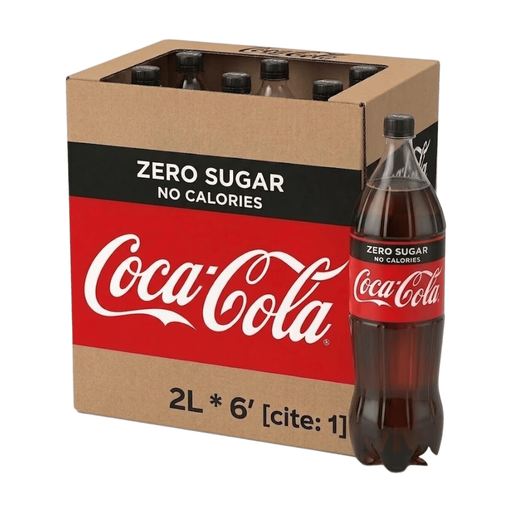
Coca-Cola Zero Sugar 2L × 6
Six 2L bottles provide a large-format option for household sharing. The product information states 0g sugars per 100ml and lists caffeine and aspartame; check the label if caffeine avoidance or PKU is relevant.
View on Joybuy
 No image available
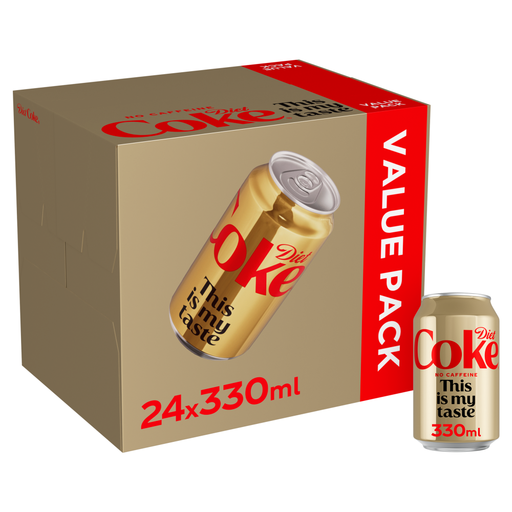
Diet Coke No Caffeine 24 × 330ml
This specifically named caffeine-free variant comes in 24 individual 330ml cans for portioned pantry stock. Its product information states 0g sugars per 100ml and lists aspartame and a source of phenylalanine; check the label if PKU is relevant.
View on Joybuy
 No image available
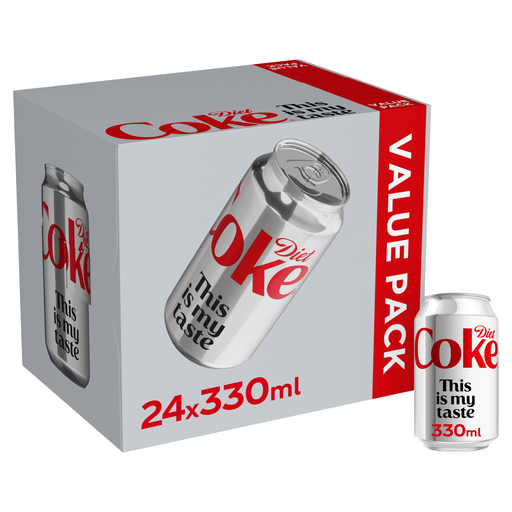
Coca-Cola Diet Coke 24 × 330ml
This standard Diet Coke pack contains 24 individual 330ml cans. Its product information states 0g sugars per 100ml and lists caffeine and aspartame; it is not the No Caffeine variant.
View on Joybuy
 No image available
PEPSI Max 24 × 330ml
For households choosing PEPSI Max in individual cans, this pack contains 24 × 330ml. Its product information states 0g sugars per 100ml and lists caffeine and aspartame; check the exact label for ingredient requirements.
View on Joybuy
 No image available
Coca-Cola Zero Sugar 24 × 330ml
This Coca-Cola Zero Sugar option provides 24 individual 330ml cans rather than large bottles. Its product information states 0g sugars per 100ml and lists caffeine and aspartame; it is not the Zero Caffeine variant.
View on Joybuy
Questions about pantry cola
Is every diet or zero-sugar cola caffeine-free?
No. Coca-Cola and Pepsi list caffeine or caffeine flavouring in their standard Coca-Cola Zero Sugar, Diet Coke, Pepsi MAX and Diet Pepsi formulas. If caffeine avoidance matters, choose a specifically named alternative such as Diet Coke No Caffeine, Coca-Cola Zero Sugar Zero Caffeine, Pepsi MAX No Caffeine or Diet Pepsi Caffeine Free, and check the exact pack.
Does zero-sugar cola remove dental concerns?
No. The NHS notes that carbonated drinks are associated with dental erosion because of their acid content, regardless of whether they contain sugar or sweeteners. Consider acidity separately from the sugar figure when deciding what to keep in the pantry.
How should I choose and store a cola multipack?
Choose a can or bottle size that fits your storage space and how the household serves cola, then follow the instructions and best-before date on that exact pack. Tesco’s Diet Cola listing, for example, says to keep its cans cool and out of sunlight and not to freeze them; wording may differ on another product.


