Who is this choice for?
The useful distinction is whether you want a cola to drink around cycling or a source of carbohydrate for the ride itself.
Cyclists choosing cola for its flavour
If you want a diet or zero-sugar cola before or after a ride, check its sugar and carbohydrate values per 100ml. The reviewed Diet Coke, Pepsi MAX and Tesco Diet Cola products contain negligible carbohydrate, so they should not stand in for planned ride fuel.
Riders avoiding caffeine
A late ride, an evening drink or a preference to avoid caffeine makes the exact variant important. Coca-Cola, Pepsi and Tesco have specifically named caffeine-free colas; a diet or zero-sugar name by itself does not mean caffeine-free.
Endurance cyclists planning their fuelling
If your ride calls for carbohydrate intake, choose and practise a separate carbohydrate source. A 2023 review in Nutrients discusses carbohydrate foods, drinks and supplements for endurance exercise and recommends trying food sources in training before competition.
What should you check?
Decide what the drink needs to do during your cycling plans, then compare the nutrition panel and ingredients on the exact pack.
| Priority | What to check | Your needs |
|---|
| Ride fuelling |
Read carbohydrate and sugars per 100ml, and decide separately what carbohydrate source your ride requires. The reviewed Diet Coke, Pepsi MAX and Tesco Diet Cola labels list 0g or less than 0.1g carbohydrate per 100ml; a 2023 Nutrients review discusses carbohydrate sources for endurance exercise. |
I may want cola for its flavour, but I need to plan food or a carbohydrate drink separately when the ride calls for fuel. |
| Caffeine |
Check whether the exact variant names caffeine in its ingredients or is explicitly labelled caffeine-free. If caffeine intake matters to you, check the amount where stated and consider other drinks or products you use. |
For an evening ride, I might prefer a caffeine-free cola. If I choose a caffeinated one, I do not want to mistake its presence in the ingredients for a measured cycling dose. |
| Ingredients |
Compare sweeteners and any phenylalanine statement on the actual pack. Do not assume that different brands or variants use the same recipe; Tesco advises that food products may be reformulated. |
I want to know what is in the particular cola I am buying, especially if a stated ingredient or phenylalanine warning matters to me. |
| Drinking pattern |
Consider how often you would sip the cola. Oxford Health NHS Foundation Trust guidance identifies fizzy drinks as acidic and advises reducing how often they are consumed. |
If I tend to sip throughout a ride or across the day, I would rather keep cola as an occasional choice than use it as my routine drink. |
Relevant cola ranges
These UK product ranges illustrate the choices between sugar content and caffeine status; a brand name alone does not identify the ingredients of every variant.
Coca-Cola
Coca-Cola Great Britain lists Diet Coke and Coca-Cola Zero Sugar alongside named caffeine-free versions. The brand describes the distinction between Diet Coke and Coca-Cola Zero Sugar principally in terms of flavour.
- Its published Diet Coke information lists 0g carbohydrate and 0g sugars per 100ml; its Coca-Cola Zero Sugar Caffeine Free page also lists 0g for both.
- Check the precise variant for caffeine and ingredients. Neither of those stated carbohydrate values makes the drink a substitute for carbohydrate fuelling.
Pepsi
PepsiCo UK lists Pepsi MAX and the specifically named Pepsi MAX No Caffeine as distinct cola choices.
- Pepsi MAX lists 0g carbohydrate and 0g sugars per 100ml. Pepsi MAX No Caffeine lists less than 0.1g carbohydrate and 0g sugars per 100ml.
- Select the named no-caffeine version if caffeine is unwanted, and check the pack’s sweeteners and ingredient statements.
Tesco
Tesco lists Diet Cola and a separate Caffeine Free Diet Cola in 2-litre bottles.
- Tesco’s information lists less than 0.1g carbohydrate and sugars per 100ml for both reviewed products and identifies the caffeine-free version explicitly.
- Tesco notes that recipes and nutrition information can change, making the label on the bottle the check for the product you buy.
Cola options on Joybuy
These canned diet and zero-sugar colas offer a choice between named caffeine-free packs and other variants. Compare the exact label for caffeine and ingredients, and make a separate fuelling plan if your ride requires carbohydrate.
 Image unavailable
Pepsi MAX Caffeine Free, 24 × 330ml
A named caffeine-free cola for someone who wants the flavour around a ride without choosing a caffeinated variant. The pack contains 24 × 330ml cans; PepsiCo UK lists 0g sugars and less than 0.1g carbohydrate per 100ml for Pepsi MAX No Caffeine. Use a separate carbohydrate source when the ride requires fuelling, and check the pack for ingredients that matter to you.
View on Joybuy
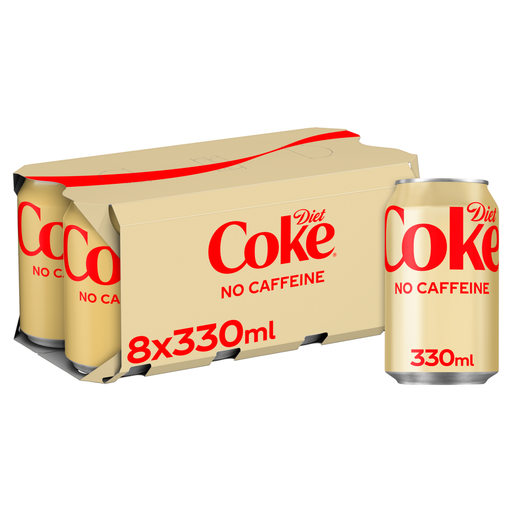 Image unavailable
Diet Coke Caffeine Free, 8 × 330ml
This explicitly caffeine-free Diet Coke variant suits a cola preference when you do not want caffeine, including around an evening ride. The pack contains 8 × 330ml cans. Check its exact nutrition panel and ingredients, and do not count a diet cola as the carbohydrate source for a ride that needs fuelling.
View on Joybuy
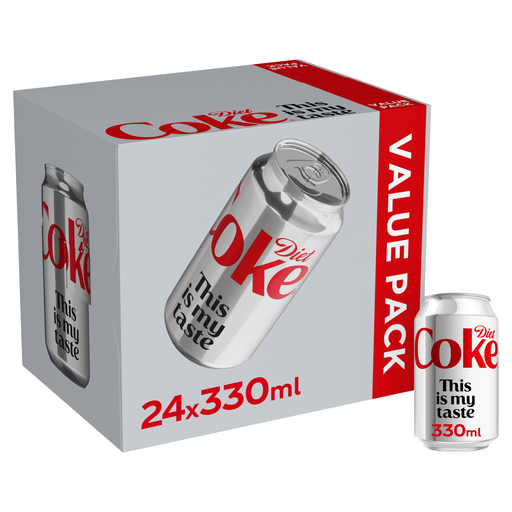 Image unavailable
Coca-Cola Diet Coke, 24 × 330ml
This Diet Coke pack is a cola-flavour choice rather than a carbohydrate-fuelling drink. It contains 24 × 330ml cans; Coca-Cola Great Britain lists 0g carbohydrate and 0g sugars per 100ml for Diet Coke and identifies caffeine flavouring. If caffeine intake matters to you, check the amount on the exact pack and account for other sources.
View on Joybuy
 Image unavailable
Pepsi MAX, 24 × 330ml
Choose this cola for its flavour if you are content with a caffeinated variant, not to supply ride carbohydrate. The pack contains 24 × 330ml cans; PepsiCo UK lists 0g carbohydrate and 0g sugars per 100ml for Pepsi MAX and includes caffeine among its flavourings. Check the exact pack if you are assessing caffeine intake.
View on Joybuy
 Image unavailable
Coca-Cola Zero Sugar, 24 × 330ml
This zero-sugar cola is a flavour choice around cycling, not a replacement for planned carbohydrate fuel. The pack contains 24 × 330ml cans. Coca-Cola Great Britain describes Coca-Cola Zero Sugar as sugar-free; check the exact pack for carbohydrate, caffeine and ingredients rather than assuming it is the separately named caffeine-free version.
View on Joybuy
Questions about cola and cycling
Can diet or zero-sugar cola replace a carbohydrate drink on a long ride?
No, not when the ride requires carbohydrate fuelling. The reviewed Diet Coke, Pepsi MAX and Tesco Diet Cola products list 0g or less than 0.1g carbohydrate per 100ml. A 2023 review in Nutrients discusses carbohydrate foods, drinks and supplements for endurance exercise; choose and practise a separate fuelling source.
Which of the reviewed colas are caffeine-free?
The explicitly named options include Diet Coke No Caffeine, Coca-Cola Zero Sugar Caffeine Free, Pepsi MAX No Caffeine and Tesco Caffeine Free Diet Cola. Check the exact pack: “diet” and “zero sugar” describe neither the caffeine status nor every ingredient.
Does caffeine in a diet cola make it a cycling-performance drink?
No performance effect follows simply from caffeine appearing in the ingredients. A 2021 position stand in the Journal of the International Society of Sports Nutrition reports benefits in many, but not all, exercise studies and commonly discusses doses of 3–6mg per kg of body mass. A cola ingredient list alone does not establish its serving dose or how it fits your total intake.
Does zero sugar remove the concern about frequent sipping?
No. Oxford Health NHS Foundation Trust guidance identifies fizzy drinks as acidic and explains that acid can wear away tooth enamel. It advises reducing how often fizzy drinks are consumed, so sugar content is not the only consideration if you sip cola repeatedly.
What should I read on a UK cola label?
Check the exact pack’s ingredients, carbohydrate and sugars per 100ml, caffeine status, sweeteners and any phenylalanine statement. UK food-labelling guidance from the Department for Environment, Food & Rural Affairs and the Food Standards Agency also requires a high-caffeine warning for drinks containing more than 150mg caffeine per litre; the absence of that warning does not prove a drink is caffeine-free.


