Hikers comparing sugar content
If you want cola with a snack but do not want the sugar in regular cola, compare the exact drink's nutrition panel. Pack water separately for the walk.


For a hiking snack break, a diet or zero-sugar cola can be an optional drink, but pack water as your main fluid; the NHS recommends water to replace fluid lost through sweating. If you want cola without sugar, choose between a caffeinated and an explicitly caffeine-free version by checking the exact pack. Regular cola is a different choice: its sugar content can be substantial, as the product-label comparisons below show.
The useful distinction is whether the drink is for flavour alongside water, whether caffeine matters, and whether a school is providing it.
If you want cola with a snack but do not want the sugar in regular cola, compare the exact drink's nutrition panel. Pack water separately for the walk.
A caffeine-free cola is a distinct choice from a standard diet or zero-sugar cola. Check the variant if you avoid caffeine, plan to drink it late in the day or have had other caffeinated drinks.
If a state-funded school is providing drinks for an activity, check its current food and drink requirements. England's school-food rules are separate from restrictions on certain retail promotions of products high in fat, salt or sugar.
Pack the main drink for the route first, then compare cola labels by sugar, caffeine and ingredients rather than relying on the word “diet”.
| Priority | What to check | Your needs |
|---|---|---|
| Water for the walk | Plan how much water to carry for the route and conditions. Mountaineering Scotland advises carrying extra water in hot, dry weather; the NHS recommends extra fluid after sweating from activity. | I want cola with my snack, but I need a separate main drink for the hike. |
| Sugar and serving size | Compare sugars and energy on the exact pack, noting whether figures are per 100ml or per can. Pepsi UK lists 0g sugars and 1kcal per 330ml for Pepsi Max, against 15g sugars and 61kcal per 330ml for regular Pepsi. | My snacks already cover what I plan to eat, and I would rather choose a cola labelled with no sugar than pick up regular cola by mistake. |
| Caffeine | Look for an explicit caffeine-free label; “zero sugar” alone does not mean caffeine-free. Check the pack and consider caffeine from other drinks that day. | If I am avoiding caffeine or having a late snack break, I want a clearly labelled caffeine-free variant. |
| Sweeteners and warnings | Read the ingredients and any phenylalanine statement on the current pack. Coca-Cola GB lists aspartame and a phenylalanine warning for Coca-Cola Zero Sugar; formulations differ between products. | I need to check a particular sweetener or warning, so the exact variant matters more than the brand family. |
| School-provided drinks | For a state-funded school activity in England, confirm what the school will provide and its current requirements. Department for Education guidance addresses school food and drink; Department of Health and Social Care guidance addresses separate retail promotion restrictions in England. | If I am organising a school trip, I need to check the rules for drinks supplied by the school rather than assume a retail cola is suitable. |
Removing sugar from a cola does not settle how much fluid to carry. The NHS recommends water to replace losses from sweating, while Mountaineering Scotland advises extra water in hot, dry conditions.
Plan your water supply for the walk, then decide whether to add a cola for a snack stop.
Coca-Cola GB lists caffeine flavouring in Coca-Cola Zero Sugar, and Pepsi UK lists caffeine in Pepsi Max. Caffeine-free versions are labelled separately.
Check the full variant name and ingredients on the can or bottle, particularly if caffeine affects your choice.
Pepsi UK lists 15g sugars per 330ml for regular Pepsi and 0g for Pepsi Max. Similar-looking cola packs can therefore represent different snack-break choices.
Compare sugars for the portion you intend to drink, not just the product name or the per-100ml figure.
England's restrictions on certain retail promotions and its requirements for food and drink supplied in state-funded schools address different settings. Neither establishes a single rule for every school trip across the UK.
For a school-provided drink, confirm the nation, the school's current requirements and what it intends to supply.
These examples show why the variant name and nutrition panel matter; a brand name alone does not identify its sugar or caffeine content.
Coca-Cola GB lists Original Taste, Zero Sugar and Zero Sugar Zero Caffeine as distinct choices.
Pepsi UK lists Pepsi Max and regular Pepsi with different sugar and energy figures; caffeine-free variants require their own label check.
Tesco lists an own-label Diet Cola as well as branded caffeine-free cola variants.
These 24-packs of 330ml cans cover both caffeinated and explicitly caffeine-free zero-sugar cola choices for an optional hiking snack drink. Pack water separately for the walk.
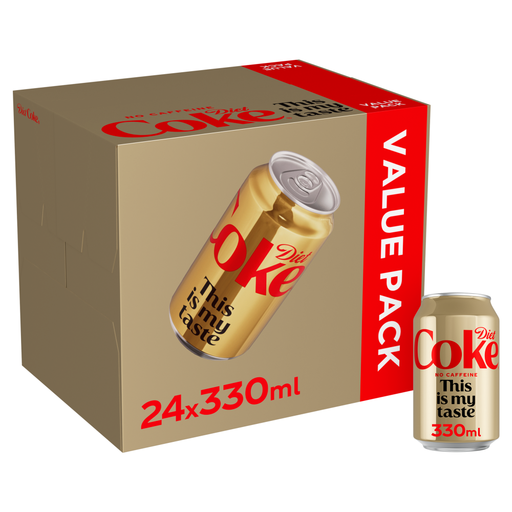 No image available
For a snack break when you want a cola labelled without caffeine. The product information lists 0g sugars per 330ml can and identifies aspartame and a phenylalanine warning; check the current pack if either ingredient or warning matters to you.
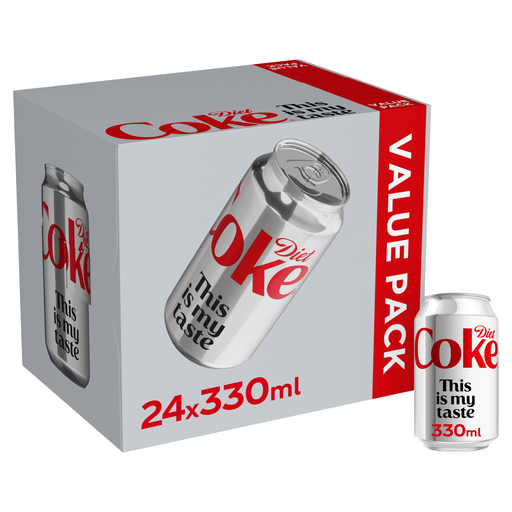 No image available
A caffeinated diet-cola option: its product information lists 0g sugars per 330ml can and includes caffeine. Check the current pack when considering your total caffeine intake; it also lists aspartame and a phenylalanine warning.
 No image available
For a snack break when you want a Pepsi Max variant labelled without caffeine. Its product information lists 0g sugars per 330ml can, alongside aspartame and a phenylalanine warning; check the current pack if those details matter to you.
 No image available
A zero-sugar cola for someone choosing a caffeinated variant: the product information lists 0g sugars per 330ml can and includes caffeine. Check the current pack when considering total caffeine intake, as well as its aspartame and phenylalanine information.
 No image available
A caffeinated zero-sugar choice for a snack stop: its product information lists 0g sugars per 330ml can and includes caffeine. Check the current pack for caffeine, sweeteners and its phenylalanine warning rather than confusing it with Coca-Cola's caffeine-free variant.
Pack water as your main drink and treat cola as an optional addition with snacks. The NHS recommends water to replace fluid lost through sweating, and Mountaineering Scotland advises carrying extra water in hot, dry conditions.
Choose a product explicitly labelled caffeine-free if you avoid caffeine; a zero-sugar label on its own does not answer that question. If considering a caffeinated version, check the exact pack and take account of caffeine from other drinks. The European Food Safety Authority's 2015 assessment says daily caffeine intake of up to 400mg from all sources does not raise safety concerns for adults in the general population, except pregnant women; it is not a caffeine figure for any of these cans.
No. Pepsi UK lists 0g sugars per 330ml for Pepsi Max and 15g per 330ml for regular Pepsi. If the food you pack is intended to provide carbohydrates during the walk, check its own label rather than counting on a zero-sugar drink for sugar.
Do not assume that a retail cola listing establishes what a school may provide. In England, Department for Education guidance addresses food and drink supplied in state-funded schools under the school-food requirements; Department of Health and Social Care guidance addresses separate restrictions on certain retail promotions in England. For a school-provided drink, confirm the school's current requirements and the rules applying in its nation.
Some zero-sugar colas list aspartame and carry a “Contains a source of phenylalanine” warning. The Food Standards Agency identifies aspartame as a potential risk for people with phenylketonuria (PKU) when it is undeclared, so the ingredients and warning on the exact current product matter.