For a garden party, choose a zero-sugar cola whose caffeine content and serving format suit your guests, rather than treating every diet or zero variety as interchangeable. Standard Coca-Cola Zero Sugar and Pepsi MAX list 0g sugars per 100ml but contain caffeine; a separately labelled caffeine-free variety suits guests avoiding it. Compare total volume as well as cans versus shared bottles, and check the exact pack’s ingredients.
Who is choosing the drinks?
Hosts serving a mixed group
A standard zero-sugar cola can cover guests who want that familiar variety, while a distinct caffeine-free option addresses a different preference. Work out the total volume and whether guests will take cans or pour from bottles.
Hosts with caffeine-avoiding guests
Choose a cola expressly labelled caffeine-free. Coca-Cola Great Britain lists caffeine flavouring in standard Coca-Cola Zero Sugar, and Pepsi UK lists caffeine in standard Pepsi MAX; their zero-sugar names do not mean caffeine-free.
Own-label cola shoppers
ASDA Diet Cola and Sainsbury’s Cola Zero offer 2-litre shared-bottle formats. Compare the exact pack’s sugar declaration and ingredients with guests’ requirements instead of assuming own-label and branded recipes are alike.
What should you check?
Start with the sugar declaration and caffeine status, then choose enough total volume in a format that works for your drinks table.
| Priority |
What to check |
Your needs |
| Sugar declaration |
Read sugars per 100ml on the exact pack. Coca-Cola Great Britain and Pepsi UK each list 0g per 100ml for standard Coca-Cola Zero Sugar and Pepsi MAX. |
I want to offer cola without choosing a regular-sugar variety. The nutrition panel lets me compare the drinks I’m considering on the same basis. |
| Caffeine |
Check for an explicit caffeine-free designation; do not infer it from “zero sugar”. Standard Coca-Cola Zero Sugar and Pepsi MAX list caffeine or caffeine flavouring. |
Some guests avoid caffeine, so I want their cans or bottle clearly distinguished from the standard cola. |
| Volume and format |
Add up the net litres, not just the number of containers. For example, the Joybuy-listed Pepsi MAX No Sugar 8 × 330ml pack contains 2.64 litres; a 2-litre bottle is a shared-pour format. |
Will people pick up individual cans, or will I put out cups for guests to pour their own drinks? I also need to plan the total quantity. |
| Ingredients |
Compare the current ingredient panels for sweeteners and any phenylalanine statement. Standard Coca-Cola Zero Sugar and Pepsi MAX list aspartame; formulations differ between products. |
If an ingredient matters to a guest, I need to check the particular variety and pack rather than rely on its “diet” or “zero” name. |
Common buying mistakes
-
Assuming zero sugar means caffeine-free
Standard Coca-Cola Zero Sugar and Pepsi MAX list caffeine or caffeine flavouring, so choosing either for its sugar declaration does not meet a caffeine-free request.
Buy a separately labelled caffeine-free variety when needed, and make it easy for guests to tell the two apart.
-
Counting packs instead of litres
Eight 330ml cans contain 2.64 litres, while one 2-litre bottle contains 2 litres. The formats also call for different self-service arrangements.
Add the net volumes before deciding how much to buy, then choose between individual cans and bottles for shared pouring.
-
Treating diet and zero colas as ingredient-identical
Product ingredient lists differ. Standard Coca-Cola Zero Sugar and Pepsi MAX list aspartame and a phenylalanine statement, while the ASDA and Sainsbury’s own-label examples described in their retailer listings use different sweeteners.
Read the current label of each exact pack if a guest needs to avoid a particular ingredient.
Brand and retailer references
These product-line examples help distinguish formulations and formats; a brand name alone does not establish a drink’s sugar, caffeine or ingredient details.
Coca-Cola
Coca-Cola Zero Sugar is a standard zero-sugar cola; Zero Sugar Zero Caffeine is a distinct variety.
- Coca-Cola Great Britain lists 0g sugars per 100ml for standard Coca-Cola Zero Sugar.
- The standard variety lists caffeine flavouring and a source of phenylalanine; check the exact variety when either matters.
Pepsi
Pepsi MAX and Pepsi MAX Caffeine Free serve different caffeine preferences.
- Pepsi UK lists 0g sugars per 100ml for standard Pepsi MAX and describes the Caffeine Free variety as no sugar.
- Standard Pepsi MAX contains caffeine. Check each variety’s sweeteners and phenylalanine statement on its current label.
ASDA
ASDA Diet Cola is an own-label option in a 2-litre shared bottle.
- The ASDA Groceries product listing identifies the 2-litre format and states its caffeine content.
- This is not a caffeine-free choice; check the current nutrition and ingredient panels for the exact bottle.
Sainsbury’s
Sainsbury’s Cola Zero is another own-label, 2-litre shared-bottle option.
- The Sainsbury’s product listing states less than 0.5g sugars per 100ml.
- Its listed formulation contains caffeine; the retailer advises checking the pack as ingredients can change.
Tesco
Tesco’s diet and sugar-free cola category provides a way to compare branded varieties and pack formats.
- The Tesco Groceries category listing includes standard zero-sugar cola and a separately named caffeine-free Pepsi MAX bottle.
- Check the particular product listing and pack label rather than applying a category description to every drink.
RC Cola
RC Cola International identifies RC Cola as part of its carbonated-drinks portfolio.
- For a UK no-added-sugar selection, check an exact pack’s local nutrition, ingredients and format before comparing it with the named varieties above.
Joybuy cola options
These Joybuy packs offer standard zero-sugar cola in cans or shared bottles, alongside caffeine-free cans. Choose the variety and total volume for your gathering, and check the product page before relying on a pack for the event.
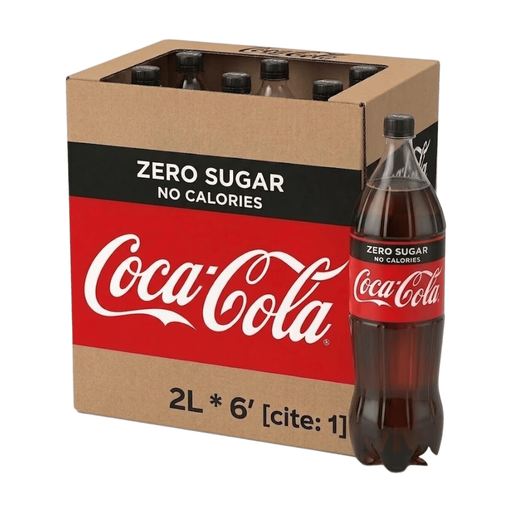 Image unavailable
Coca-Cola Zero Sugar 2L × 6
Six 2-litre bottles provide a shared-pour format for a garden party. Coca-Cola Great Britain lists 0g sugars per 100ml for standard Coca-Cola Zero Sugar; this is a caffeinated variety, so check the current label if guests need to avoid caffeine or phenylalanine.
View on Joybuy
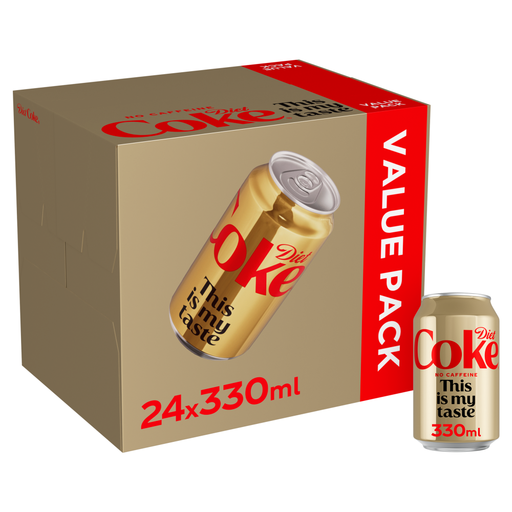 Image unavailable
Diet Coke No Caffeine 24 × 330ml
Individually portioned cans suit a self-serve table when guests want a caffeine-free cola. The Diet Coke No Caffeine product information describes it as containing no sugar or caffeine; check the current pack for sweeteners and any ingredient requirements.
View on Joybuy
 Image unavailable
Pepsi MAX Caffeine Free 24 × 330ml
This 24-can pack provides a separately identifiable caffeine-free choice for self-serving guests. Pepsi UK describes Pepsi MAX Caffeine Free as no sugar; it still contains sweeteners, so check the current label where ingredients matter.
View on Joybuy
 Image unavailable
Pepsi MAX 24 × 330ml
These cans provide individual portions of standard Pepsi MAX. Pepsi UK lists 0g sugars per 100ml for this variety, which contains caffeine; choose its separately labelled Caffeine Free variety for guests avoiding caffeine.
View on Joybuy
 Image unavailable
Coca-Cola Zero Sugar 24 × 330ml
This pack offers standard Coca-Cola Zero Sugar in individual cans rather than shared bottles. Coca-Cola Great Britain lists 0g sugars per 100ml for the standard variety; it contains caffeine flavouring, so check the label when planning for guests avoiding caffeine or phenylalanine.
View on Joybuy
Frequently asked questions
Do “no added sugars” and “sugar-free” mean the same thing?
No. The UK-retained nutrition-claims conditions published at legislation.gov.uk distinguish a “no added sugars” claim, which concerns added sugars and foods used for sweetening, from a “sugar-free” claim, which requires no more than 0.5g sugars per 100ml for a drink. Read the nutrition panel rather than treating the two phrases as interchangeable.
Is zero-sugar cola caffeine-free?
Not necessarily. Coca-Cola Great Britain lists caffeine flavouring in standard Coca-Cola Zero Sugar, and Pepsi UK lists caffeine in standard Pepsi MAX. For guests avoiding caffeine, choose a variety expressly labelled caffeine-free and keep it distinct on the drinks table.
Do diet and zero-sugar colas use the same sweeteners?
No. Standard Coca-Cola Zero Sugar and Pepsi MAX list sweeteners including aspartame, while the ASDA and Sainsbury’s own-label examples have different listed formulations. Check each exact pack’s current ingredients and any phenylalanine statement if these matter to a guest.
What should I do with an opened 2-litre bottle?
Follow the storage instructions on that bottle. The ASDA Diet Cola and Sainsbury’s Cola Zero 2-litre product information says to refrigerate after opening and use within three days; check the exact pack before storing it.


