Commuters checking sugar content
If you pick up a cola with breakfast, the nutrition panel gives you a clearer answer about total sugars than “no added sugar” wording alone. Look for the value on the exact can or bottle you intend to take.


If you want a cola with no sugar for a breakfast on the go, check that the exact drink’s nutrition panel says 0g sugars rather than relying on “no added sugar” wording. Then choose separately between a standard zero-sugar cola and a clearly labelled caffeine-free version; a portable can or bottle makes either easier to take along, but cola does not replace breakfast food or water.
If you pick up a cola with breakfast, the nutrition panel gives you a clearer answer about total sugars than “no added sugar” wording alone. Look for the value on the exact can or bottle you intend to take.
A zero-sugar name does not tell you whether a cola contains caffeine. Look for a caffeine-free variant and check its ingredient list rather than assuming the standard version is the same.
A multipack can be stored at home so you can take one can when leaving. Check the number of cans and the size of each serving, not just the pack name.
Start with the sugar value, decide whether caffeine suits your choice, then check the serving format. A zero-sugar label does not settle every consideration about a fizzy drink.
Choose it when: You want a zero-sugar cola and caffeine is acceptable to you; standard Coca-Cola Zero Sugar and Pepsi MAX are examples.
Bear in mind: These standard versions are not caffeine-free.
Choose it when: You want the cola format but prefer to avoid caffeine; check for Coca-Cola Zero Sugar Caffeine Free or Pepsi MAX No Caffeine.
Bear in mind: Removing caffeine does not remove the acidity consideration associated with fizzy drinks.
| Priority | What to check | Your needs |
|---|---|---|
| Total sugars | Read “of which sugars” on the exact variant’s nutrition panel, noting whether the value is per 100ml or per serving. “No added sugar” describes a different point from the drink’s total sugars. | I want the drink itself to show 0g sugars, not just a claim about what was added. |
| Caffeine | Check for “Caffeine Free” or “No Caffeine” in the variant name and read the ingredient list. Standard Coca-Cola Zero Sugar and Pepsi MAX are caffeinated; their dedicated caffeine-free variants are different products. | If I am avoiding caffeine, I need to choose the caffeine-free version deliberately. |
| Serving format | Check the can or bottle volume and, for multipacks, the number of individual servings. Choose a format you can take when leaving home. | A single serving is easier for me to take along; a multipack helps if I keep cans ready at home. |
| Fizzy-drink acidity | Zero sugar does not mean a fizzy drink is free of acids. Wirral Community Health and Care NHS Foundation Trust notes that fizzy drinks may contain acids harmful to teeth. | I do not want to mistake a sugar-free cola for an everyday replacement for water. |
Wording about added sugar does not, by itself, give the total-sugars value for the drink.
Check “of which sugars” on the nutrition panel of the exact variant you are buying.
Standard Coca-Cola Zero Sugar and Pepsi MAX contain caffeine, whereas their named caffeine-free variants are separate choices.
If you want to avoid caffeine, check both the variant name and its ingredient list.
Wirral Community Health and Care NHS Foundation Trust notes that fizzy drinks may contain acids harmful to teeth, including when they are sugar-free.
Keep that limitation in mind when choosing a drink for a regular morning routine; water remains a straightforward option for hydration.
These brand and retailer examples help distinguish the variants discussed here; they are not a list of products available on Joybuy.
Coca-Cola Zero Sugar and Coca-Cola Zero Sugar Caffeine Free are distinct choices for shoppers deciding whether to include caffeine.
Pepsi MAX and Pepsi MAX No Caffeine provide a similar choice between standard and caffeine-free zero-sugar cola.
Tesco’s diet and sugar-free cola category is a reference point for comparing branded options with its own-label Tesco Xero Cola.
These cans and single bottle cover take-along cola choices, including standard and caffeine-free variants. Check the exact label when sugar content or caffeine is decisive, particularly for a product whose name alone does not establish both.
 No image available
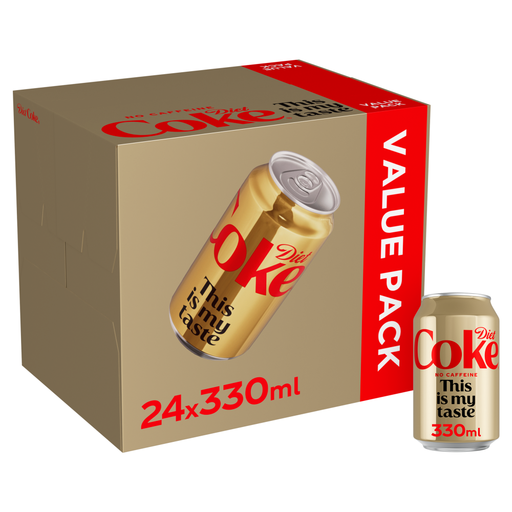
A caffeine-free cola in individual cans that can be kept ready to take along. The pack contains 24 × 330ml cans; check the exact can’s nutrition panel for its sugars value and its label if phenylalanine matters to you.
 No image available
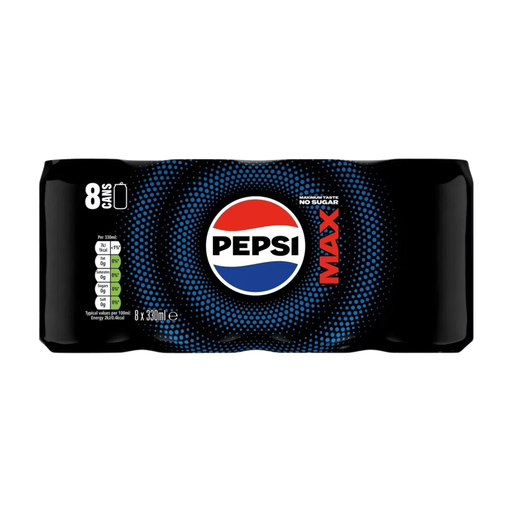
An eight-pack of 330ml cans for taking one drink at a time. Pepsi UK identifies standard Pepsi MAX as a no-sugar cola; it contains caffeine, so choose a separately labelled caffeine-free variant if you want to avoid it.
 No image available
A 24-pack of 330ml cans for keeping individual drinks ready. Pepsi UK describes Pepsi MAX No Caffeine as containing no sugar or caffeine; check the pack label if its sweetener or phenylalanine information matters to you.
 No image available
A 24-pack of 330ml cans for taking one along with breakfast. This is standard Coca-Cola Zero Sugar, which contains caffeine; choose the separately named caffeine-free variant if that distinction matters.
 No image available
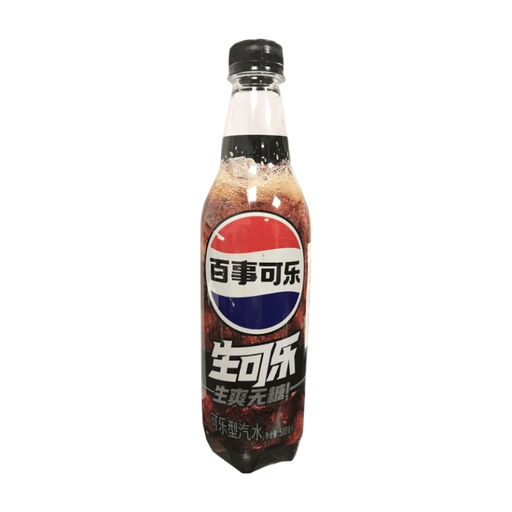
A single 500ml bottle rather than a multipack of cans, making it a different format for a journey. If 0g sugars or avoiding caffeine is essential to your choice, read the bottle’s nutrition panel and ingredients before buying rather than relying on its name.
No. Wording about added sugar is not the same as the total-sugars value. If you want a drink with 0g sugars, check “of which sugars” on the exact variant’s nutrition panel.
Look for an explicitly caffeine-free variant, such as Coca-Cola Zero Sugar Caffeine Free or Pepsi MAX No Caffeine, and check its ingredient list. Standard Coca-Cola Zero Sugar and Pepsi MAX contain caffeine.
No. Wirral Community Health and Care NHS Foundation Trust notes that fizzy drinks may contain acids harmful to teeth. A zero-sugar claim addresses sugar, not acidity.
No. Cola is a drink, not breakfast food, and water remains an option for hydration. Wirral Community Health and Care NHS Foundation Trust identifies water as the preferred drink for hydration and says most drinks for children should be water or milk.
Read the label on the exact variant and pack you intend to buy. The Coca-Cola and Pepsi zero-sugar product information discussed here identifies variants containing a source of phenylalanine; do not assume every cola has the same ingredients.