Families planning half-term snacks
When choosing a cola to share at home or take on a day out, compare the sugar and caffeine information on the exact pack. For children’s everyday drinks, the NHS recommends water and milk.


For a half-term snack, choose between regular, zero-sugar and caffeine-free cola by checking the exact drink’s sugar and caffeine information: avoiding sugar does not necessarily mean avoiding caffeine. The NHS recommends water and milk as children’s everyday drinks. If a drink will be provided to pupils by a state-funded school in England, check the applicable school food standards and catering arrangements rather than treating a retail purchase as approval for school use.
When choosing a cola to share at home or take on a day out, compare the sugar and caffeine information on the exact pack. For children’s everyday drinks, the NHS recommends water and milk.
A zero-sugar label answers one question, but not necessarily the other. Look for an explicit caffeine-free statement if avoiding caffeine matters to the person drinking it.
Buying drinks for home is different from providing them to pupils at a state-funded school. The Department for Education says food and drink provided to pupils in those schools must meet the applicable school food standards.
Start with who will drink the cola and where it will be served, then compare the exact variant’s label and pack format.
Consider when: The intended choice is a regular-sugar cola for an occasional household snack.
Trade-off: Sugar varies by product and serving size; Pepsi UK lists 15g sugars in a 330ml can of Pepsi Classic.
Consider when: Avoiding sugar matters, but caffeine is not a reason to choose a different variant.
Trade-off: Zero sugar does not establish that a drink is caffeine free; check the exact product name and ingredients.
Consider when: You want a cola-style drink labelled as both zero sugar and caffeine free.
Trade-off: Check the exact flavour’s ingredients and labelling; this remains a fizzy soft drink, not the NHS-recommended everyday drink for children.
| Priority | What to check | When it matters to me |
|---|---|---|
| Sugar | Read sugars per 100ml and per serving on the exact pack. Compare the same serving size: Pepsi UK lists 15g sugars per 330ml for Pepsi Classic and 0g per 330ml for Pepsi Max. | I want to distinguish a regular cola from a zero-sugar variant without relying on the brand name or the colour of the can. |
| Caffeine | Look for an explicit caffeine-free statement on the exact variant; do not use “zero sugar” as a substitute for that check. | If caffeine avoidance matters in our household, I need the pack to say so clearly. |
| Children’s drinks | Decide whether this is an occasional snack drink or an everyday drink. The NHS recommends water and milk for children and advises avoiding sugary fizzy drinks. | For routine drinks during half term, I would offer water or milk rather than make cola the default. |
| Pack format | Check the number of cans and the volume of each one. Use the stated serving size when comparing nutrition panels. | For drinks to share, I want to know how many individual cans the pack contains. |
| School provision | Confirm the nation, school type, current food standards and catering requirements before supplying a drink to pupils. The Department for Education’s school food standards apply to state-funded schools in England. | If I am buying for school provision rather than a home snack, I need the school’s catering process to assess the exact product. |
These are separate variant descriptions. Pepsi UK lists Pepsi Max and Pepsi Max Caffeine-Free as distinct products, both with 0g sugars per 330ml.
If avoiding caffeine matters, choose a pack explicitly labelled caffeine free and check its ingredients.
Pepsi UK lists 15g sugars in a 330ml can of Pepsi Classic. The NHS advises that children should avoid sugary fizzy drinks and recommends water and milk as their everyday drinks.
Keep the occasion in mind when shopping, and offer water or milk for routine drinks.
The Department for Education says food and drink provided to pupils in state-funded schools in England must meet school food standards. A retail cola label does not, by itself, establish whether the drink meets them.
For school provision, check the applicable standards and the school’s catering requirements for the exact drink.
Variant names are more useful than brand names alone when sugar or caffeine is the deciding factor.
Coca-Cola Great Britain presents Original Taste, Zero Sugar and a separately named Zero Sugar Zero Caffeine variant.
Pepsi UK lists Classic, Max and Max Caffeine-Free as separate cola variants.
Tesco Groceries lists own-label cola alongside branded regular, zero-sugar and caffeine-free products.
These Joybuy options are Diet Coke and Pepsi Max can multipacks, including explicitly caffeine-free variants. Compare the exact pack’s label if sugar or caffeine avoidance is part of your choice.
 No image available
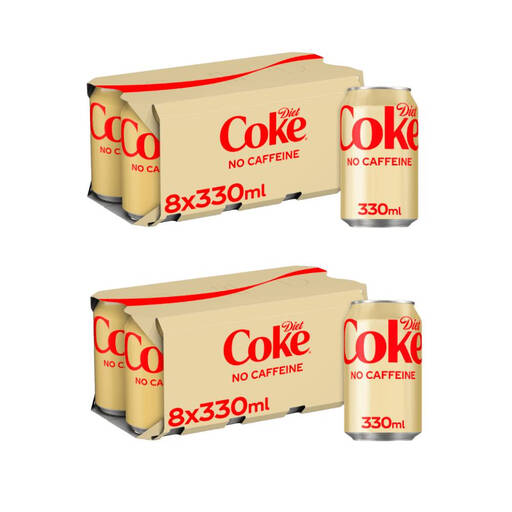
An explicitly caffeine-free Diet Coke option for a shared snack, supplied as two packs of eight 330ml cans. Check the exact pack’s sugars and ingredients if either affects your choice.
 No image available
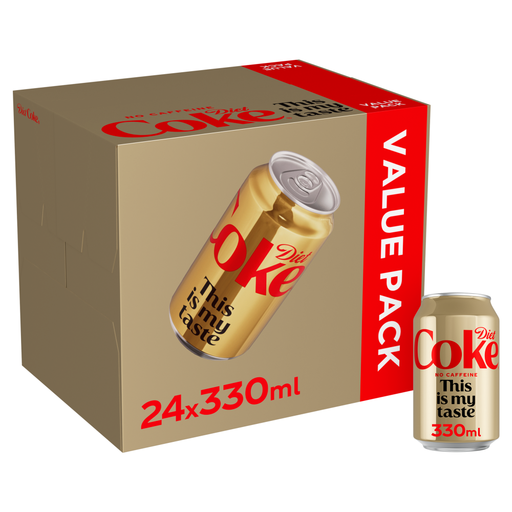
A 24-can Diet Coke pack with “No Caffeine” in its name. Each can is 330ml; check the exact pack’s nutrition and ingredient label for any other requirements.
 No image available
A caffeine-free Pepsi Max multipack of 24 330ml cans. Pepsi UK lists 0g sugars per 330ml for this variant; check the pack’s ingredients and nutrition panel when buying.
 No image available
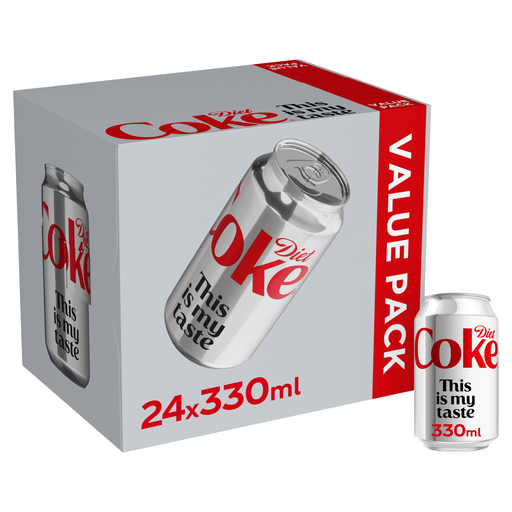
A 24-can Diet Coke pack, with 330ml in each can. If avoiding caffeine matters, do not treat the Diet Coke name as a caffeine-free statement; check the exact label or choose an explicitly caffeine-free variant.
 No image available
A 24-can Pepsi Max multipack, with 330ml per can. Pepsi UK lists 0g sugars per 330ml for Pepsi Max; if avoiding caffeine is also important, look for the separately named Caffeine-Free variant.
No. The NHS recommends water and milk as children’s everyday drinks and advises that children should avoid sugary fizzy drinks. Treat a cola chosen for a snack as separate from routine drinks.
No. Pepsi UK lists Pepsi Max and Pepsi Max Caffeine-Free as separate zero-sugar products. If caffeine matters, look for an explicit caffeine-free statement on the exact pack.
A retail listing alone cannot establish that it can. The Department for Education says food and drink provided to pupils in state-funded schools in England must comply with school food standards; check the current catering requirements and exact product before supplying it.
Check sugars per serving, an explicit caffeine-free statement if needed, and the ingredients for the exact flavour. Coca-Cola Great Britain states that its Zero Sugar Lime variant contains a source of phenylalanine, illustrating why the specific variant label matters.