Households swapping sugary cola
If cola is part of shared meals or the weekly shop, compare the sugars figure as well as the serving format. A large bottle and a can multipack meet different needs even when both are labelled zero sugar.


For a large family shop, start with the sugars figure on the nutrition panel, then choose a bottle for shared servings or a multipack of cans for individual portions. If anyone needs to avoid caffeine, choose a cola explicitly labelled caffeine-free: standard Coca-Cola Zero Sugar and Pepsi Max contain caffeine. Check the exact sweeteners and phenylalanine warning where phenylketonuria (PKU) matters; the NHS also notes that sugar-free fizzy drinks can contribute to dental erosion because of their acidity.
If cola is part of shared meals or the weekly shop, compare the sugars figure as well as the serving format. A large bottle and a can multipack meet different needs even when both are labelled zero sugar.
A zero-sugar label does not establish caffeine content. Coca-Cola Great Britain and Pepsi UK list caffeine in their standard Coca-Cola Zero Sugar and Pepsi Max formulations; Pepsi UK separately labels Pepsi Max No Caffeine as caffeine-free.
For someone with PKU, the NHS says aspartame is unsuitable, making the exact ingredients and phenylalanine warning important. Families considering teeth should also distinguish a drink without sugars from one without acidity: the NHS associates carbonated drinks with dental erosion.
Check the label requirements that affect the household first, then choose a pack that suits how the cola will be served.
| Priority | What to check | Your needs |
|---|---|---|
| Sugars | Read sugars per 100ml, not just the front-of-pack wording. Coca-Cola Great Britain and Pepsi UK list 0g per 100ml for Coca-Cola Zero Sugar and Pepsi Max; Tesco lists less than 0.1g per 100ml for its Diet Cola. | I’m replacing sugary cola, so I want to compare the actual sugars figures before choosing a family-size pack. |
| Caffeine | Look for an explicit caffeine-free label. Standard Coca-Cola Zero Sugar and Pepsi Max list caffeine; Pepsi UK labels Pepsi Max No Caffeine as containing no caffeine. | Someone in the household needs a caffeine-free option, and a zero-sugar claim alone does not answer that question. |
| Sweeteners | Check the ingredients on the exact pack. Coca-Cola Zero Sugar and the cited Pepsi Max products list aspartame and a phenylalanine warning; Tesco lists acesulfame K and sucralose for its Diet Cola. The NHS says aspartame is unsuitable for people with PKU. | If PKU affects our household, I need to rule out a product containing aspartame rather than assume every sugar-free cola uses the same sweeteners. |
| Pack format | Compare the total quantity and serving format: a 2-litre bottle can be poured for a shared meal, while a 24 × 330ml pack provides separate cans. Check how much space the chosen pack needs. | For meals together, a bottle may suit us; for separate occasions, I’d rather have individual cans. |
| Acidity | Do not use the sugars figure as a measure of acidity. The NHS says carbonated drinks are associated with dental erosion because of their acid content, including drinks without sugars. | I want to reduce sugar without assuming that sugar-free fizzy cola is neutral for teeth. |
Removing sugars does not remove the acidity of a fizzy drink. The NHS associates carbonated drinks with dental erosion because of their acid content.
Consider the sugars figure and the drink’s acidity as separate questions when choosing cola for the household.
Coca-Cola Great Britain and Pepsi UK list caffeine in standard Coca-Cola Zero Sugar and Pepsi Max. Pepsi Max No Caffeine is a separate product.
When caffeine avoidance matters, look for an explicit caffeine-free label on the exact variant.
Sweetener blends differ between the cited products. The NHS says aspartame is unsuitable for people with PKU, and the cited Coca-Cola Zero Sugar and Pepsi Max labels carry phenylalanine warnings.
For a household member with PKU, check each pack for aspartame or E951 and its phenylalanine warning before buying.
These product-line details help distinguish formulations; a brand name on its own does not establish a drink’s caffeine or sweetener content.
Coca-Cola Great Britain describes Coca-Cola Zero Sugar and Diet Coke as separate sugar-free drinks with different flavour blends. The company positions Zero Sugar as closer in taste to Coca-Cola Original Taste; that is its own description, not an independent taste comparison.
Pepsi UK distinguishes standard Pepsi Max from Pepsi Max No Caffeine, which it labels as containing no caffeine and no sugar.
Tesco describes its Diet Cola 2-litre bottle as a no-added-sugar drink with caffeine and sweeteners, providing a large-bottle own-label format for shared servings.
These branded multipacks and sharing bottles cover caffeine-free and standard sugar-free cola formats. Compare the exact variant and pack size with your household’s needs.
 No image available
The 24-can format provides individual servings when the household wants a caffeine-free cola. Pepsi UK labels Pepsi Max No Caffeine as containing no caffeine and no sugar; it lists aspartame and a phenylalanine warning, so check the exact pack if PKU is relevant.
 No image available
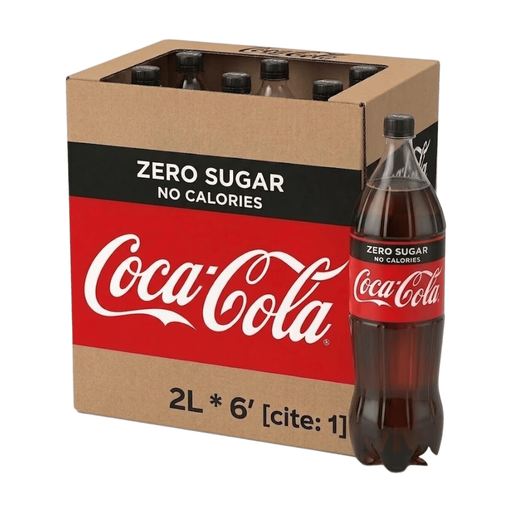
Six 2-litre bottles are a bulk format for pouring shared servings; consider where the pack will be stored. Coca-Cola Great Britain lists 0g sugars per 100ml for its standard Zero Sugar formulation, which contains caffeine flavouring and carries a phenylalanine warning.
 No image available
This 24-can pack suits separate servings rather than pouring from a sharing bottle. Coca-Cola Great Britain lists 0g sugars per 100ml for standard Coca-Cola Zero Sugar; the cited formulation contains caffeine flavouring and carries a phenylalanine warning.
 No image available
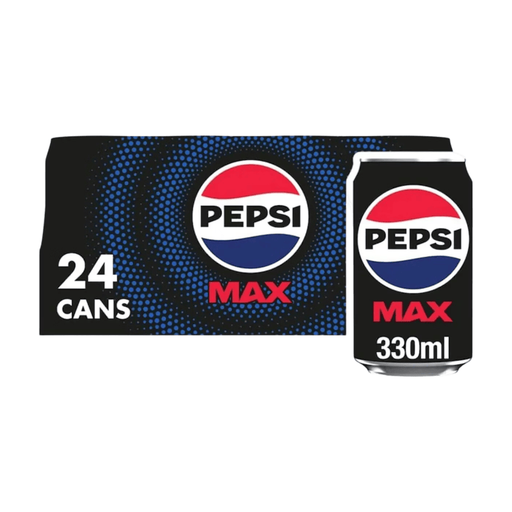
The 24-can format provides individual portions for a household choosing standard Pepsi Max. Pepsi UK lists 0g sugars for this formulation, along with caffeine flavouring, aspartame and a phenylalanine warning; it is distinct from Pepsi Max No Caffeine.
 No image available
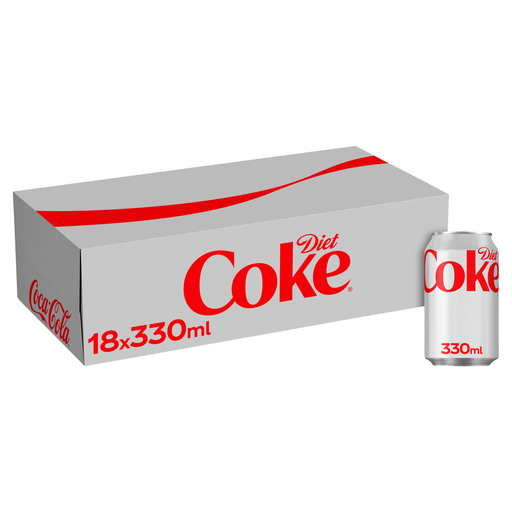
This pack contains 18 individual cans rather than the 24 in the other can multipacks shown here. Coca-Cola Great Britain describes Diet Coke as a sugar-free drink with a different, lighter flavour blend from Coca-Cola Zero Sugar; check the exact pack for caffeine and sweeteners if either affects your choice.
Not necessarily: read sugars per 100ml on the nutrition panel. Tesco lists less than 0.1g per 100ml for its no-added-sugar Diet Cola, while Coca-Cola Great Britain and Pepsi UK list 0g per 100ml for Coca-Cola Zero Sugar and Pepsi Max.
No. Standard Coca-Cola Zero Sugar and Pepsi Max list caffeine flavouring. If caffeine avoidance matters, choose an explicitly caffeine-free variant, such as Pepsi Max No Caffeine, and check the exact pack.
Check for aspartame or E951 and a phenylalanine warning. The NHS says aspartame is unsuitable for people with PKU; the cited Coca-Cola Zero Sugar, Pepsi Max and Pepsi Max No Caffeine formulations contain aspartame.
No. The NHS says replacing sugars with approved sweeteners in a drink without sugars can help reduce sugar-related tooth-decay risk, but it also associates carbonated drinks with dental erosion because of their acid content.
Choose by serving pattern: a 2-litre bottle can be poured at a shared meal, while a can multipack provides separate portions for different occasions. Compare the number and size of containers, and check that the pack fits your available storage space.