Hosts offering a lower-sugar choice
Put a clearly labelled zero-sugar option alongside other drinks rather than making regular cola the only fizzy choice. Check the nutrition label on the pack you plan to serve.


For a brunch where guests want less sugar, offer a clearly labelled zero-sugar fizzy drink alongside water; add a specifically caffeine-free option if anyone avoids caffeine. Regular cola can remain a separate choice, but check the exact ingredients for a guest with phenylketonuria (PKU), and do not treat sugar-free fizz as tooth-neutral for children.
A mixed brunch table can call for more than one kind of fizz: lower sugar, no caffeine and ingredient checks are distinct considerations.
Put a clearly labelled zero-sugar option alongside other drinks rather than making regular cola the only fizzy choice. Check the nutrition label on the pack you plan to serve.
Look for a product explicitly labelled caffeine-free. Coca-Cola GB identifies a caffeine-free Coca-Cola Zero Sugar variant, while Pepsi UK describes Pepsi Max Caffeine Free as containing no sugar or caffeine; an ordinary zero-sugar cola is not interchangeable with either.
Phenylketonuria (PKU) makes the sweetener declaration important. The NHS says aspartame is unsuitable for people with PKU, so check the exact ingredients and phenylalanine warning against the guest’s dietary requirements before serving.
Start with the dietary requirement that matters to each guest, then compare the label on the specific drink and serving size.
| Priority | What to check | Your needs |
|---|---|---|
| Sugar | Compare sugars per 100ml on the nutrition labels, then check the can or bottle size. Pepsi UK lists 15g sugars in a 330ml can of Pepsi Classic, while its Pepsi Max range includes zero-sugar options. | I want guests to have a fizzy choice with less sugar than regular cola, without making everyone choose the same drink. |
| Caffeine | Look for an explicit caffeine-free claim and read the ingredients. Coca-Cola GB lists caffeine flavouring for Coca-Cola Zero Sugar; Pepsi UK lists caffeine in Pepsi Max flavourings, while both brands identify separate caffeine-free variants. | Someone avoiding caffeine should be able to identify their drink without guessing from a diet or zero-sugar label. |
| Sweeteners | Check the exact pack for aspartame or E951 and a phenylalanine warning. The NHS says aspartame is unsuitable for people with PKU; UK food-labelling guidance requires a phenylalanine warning where a product contains aspartame. | If a guest has PKU, I need to check the ingredients against their dietary requirements rather than assume a sugar-free drink is suitable. |
| Flavour choice | Check the sugar and caffeine information on each non-cola drink rather than inferring it from the flavour. Coca-Cola GB lists 0g sugars for Sprite no sugar; Tesco Groceries also lists Fanta Zero fruit-flavoured variants. | Not everyone wants cola, so a labelled non-cola option would give the group another flavour choice. |
| Children’s drinks | Keep water available as well as fizz. Medway Community Healthcare’s dental guidance warns that acidic fizzy drinks, including sugar-free ones, can wear tooth surfaces. | When children join brunch, I do not want a zero-sugar label to be mistaken for a tooth-friendly everyday-drink claim. |
Coca-Cola GB and Pepsi UK list caffeine in their standard zero-sugar colas and offer separately named caffeine-free versions.
Choose a specifically caffeine-free product when that distinction matters, and check its current pack.
The NHS says aspartame is unsuitable for people with PKU because it contains phenylalanine. A sugar-free claim does not settle that ingredient question.
Check the exact pack for aspartame or E951 and the phenylalanine warning, and follow the guest’s dietary requirements.
Medway Community Healthcare’s dental guidance warns that acidic fizzy drinks can wear tooth surfaces, including when the drinks are sugar-free.
Keep water available at a family brunch rather than presenting zero-sugar fizz as a substitute for it.
These brand ranges show why the variant name and its current label matter more than the brand name alone.
Coca-Cola GB identifies both Coca-Cola Zero Sugar and a separate caffeine-free zero-sugar variant.
Pepsi UK distinguishes regular Pepsi Classic, zero-sugar Pepsi Max and Pepsi Max Caffeine Free.
Sprite gives guests a lemon-and-lime alternative to cola.
Tesco Groceries lists Fanta Zero Orange and Fanta Zero Fruit Twist as fruit-flavoured alternatives.
Tesco Groceries lists own-label drinks alongside branded diet and sugar-free fizzy drinks.
These multipacks cover cola and non-cola choices for a group brunch. Check each selected pack against guests’ sugar, caffeine and ingredient requirements.
 No image available
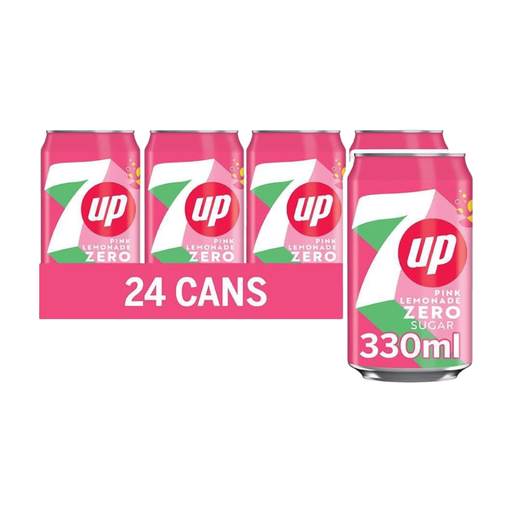
A non-cola option for guests who prefer lemonade, in 24 individual 330ml cans. Check the current nutrition and ingredient label against any sugar, caffeine or PKU-related requirements.
 No image available
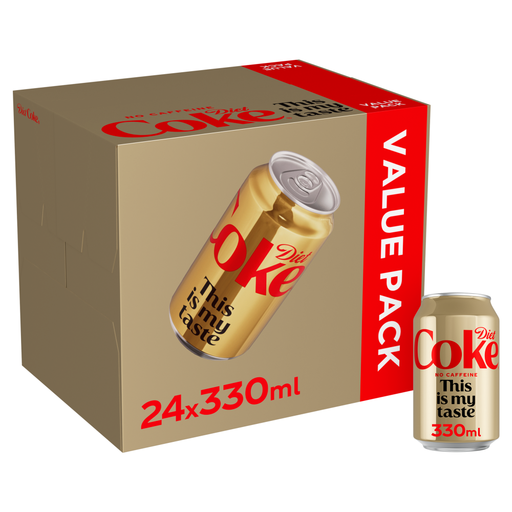
A no-caffeine cola variant in 24 individual 330ml cans. Check the current pack’s sugar and sweetener declarations, particularly if a guest has PKU-related requirements.
 No image available
A cola option for guests seeking both zero sugar and no caffeine: Pepsi UK describes Pepsi Max Caffeine Free as having both characteristics. This is a 24-can pack of 330ml servings; check its current ingredients for PKU-related requirements.
 No image available
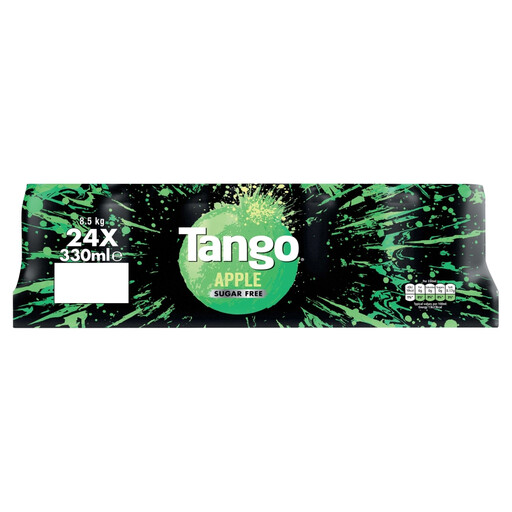
An apple-flavoured, sugar-free-labelled choice in 24 individual 330ml cans. Check the current pack for caffeine and its full sweetener declaration before serving guests with those requirements.
 No image available
A zero-sugar cola choice in 24 individual 330ml cans. Coca-Cola GB lists 0g sugars for this variant and caffeine flavouring in its ingredients, so choose a separately labelled caffeine-free drink for guests avoiding caffeine; check the pack for PKU-related requirements.
Yes, on the labels cited here. Coca-Cola GB lists 0g sugars for Coca-Cola Zero Sugar, and Pepsi UK lists zero sugar for Pepsi Max and Pepsi Max Caffeine Free; Pepsi UK lists 15g sugars in a 330ml can of Pepsi Classic. Check the serving size and current label when choosing other variants.
No. Coca-Cola GB lists caffeine flavouring for Coca-Cola Zero Sugar, and Pepsi UK lists caffeine in Pepsi Max flavourings. Choose a specifically labelled caffeine-free variant and confirm the selected pack.
Check the exact ingredients for aspartame or E951 and the phenylalanine warning against the guest’s dietary requirements. The NHS says aspartame is unsuitable for people with PKU; UK food-labelling guidance requires a phenylalanine warning when a product contains it.
No. Medway Community Healthcare’s dental guidance warns that acidic fizzy drinks, including sugar-free versions, can wear tooth surfaces. Keep water available for children at brunch rather than treating zero-sugar fizz as a tooth-friendly substitute.