Parents planning children’s lunches
For a child-focused lunch, start with water or plain milk. NHS-linked Healthier Together guidance identifies these as the preferred drinks for children and lists caffeine and fizzy drinks among drinks to avoid.


For children’s everyday school-holidays lunches, choose water or plain milk rather than diet or zero-sugar cola: NHS-linked Healthier Together guidance recommends water and milk and advises avoiding caffeine and fizzy drinks. If someone wants an occasional cola without sugar, distinguish standard varieties that contain caffeine from those explicitly labelled caffeine-free. A caffeine-free cola is still fizzy, so check the exact pack rather than treating it as an everyday substitute for water or milk.
The drinker matters as much as the sugar claim: a child’s routine lunch drink and an occasional cola for someone avoiding caffeine are different decisions.
For a child-focused lunch, start with water or plain milk. NHS-linked Healthier Together guidance identifies these as the preferred drinks for children and lists caffeine and fizzy drinks among drinks to avoid.
If the choice is between regular sugary cola and a diet or zero-sugar variety, compare the sugars figure on the nutrition panel. Lower sugar does not settle the separate questions of caffeine, fizz or ingredients.
Look for a variant explicitly labelled caffeine-free, not just “diet” or “zero sugar”. Coca-Cola GB and Pepsi UK identify caffeine-free versions of their zero-sugar colas; Coca-Cola GB also lists Diet Coke Caffeine Free.
Choose the type of drink for the person having lunch, then check the nutrition panel and ingredients of the particular cola and pack size.
Choose when: You are planning a child’s usual lunch drink; NHS-linked Healthier Together guidance recommends water and milk for children.
Trade-off: Neither offers a cola flavour or fizz.
Choose when: An occasional cola is wanted without sugar and caffeine is acceptable to the drinker.
Trade-off: Standard Diet Coke, Coca-Cola Zero Sugar and Pepsi Max list caffeine; NHS-linked child-health guidance also advises avoiding fizzy drinks for children.
Choose when: Someone specifically wants a cola-style drink without sugar or caffeine.
Trade-off: Removing caffeine does not remove the fizz or make cola the preferred everyday drink for children.
| Priority | What to check | Your needs |
|---|---|---|
| Sugar | Compare sugars per 100ml on the exact nutrition panel. Check the can or bottle size as well as any stated serving size. | If I’m choosing cola instead of a sugary fizzy drink, I want to know what the whole drink contains, not just what the front-of-pack claim says. |
| Caffeine | Look for an explicit caffeine-free designation and check the ingredients. “Diet” and “zero sugar” do not mean caffeine-free. | For someone avoiding caffeine, I need the caffeine-free variant; a standard zero-sugar cola will not answer that need. |
| Everyday drink | Check whether the drink is fizzy. For children, NHS-linked Healthier Together guidance recommends water and milk and advises avoiding caffeine and fizzy drinks. | I’m packing a child’s regular lunch, so I want water or plain milk to be the usual drink rather than relying on a diet-cola label. |
| Ingredients | Read the sweeteners and any “contains a source of phenylalanine” statement on the specific pack. Do not assume two cola recipes are identical. | Where an ingredient or label warning matters to the drinker, I need to check the variant I’m actually serving. |
| Pack format | Compare the stated can or bottle size with the number of planned servings. Check storage instructions for a bottle after opening. | For a few lunches, individual cans may fit my serving plans differently from a large shared bottle. |
A sugar-free label addresses sugar, not whether a fizzy drink is suitable as a routine lunch choice. NHS-linked Healthier Together guidance recommends water and milk for children and advises avoiding fizzy drinks.
Pack water or plain milk as the usual drink. If you choose an occasional cola, Northern Care Alliance NHS Foundation Trust dental guidance advises keeping drinks other than plain water to mealtimes.
Coca-Cola GB lists caffeine flavouring in standard Coca-Cola Zero Sugar and Diet Coke, while Pepsi UK lists caffeine in Pepsi Max. A low or zero sugars figure does not answer the caffeine question.
When caffeine avoidance matters, select a product explicitly labelled caffeine-free and check the ingredients on its pack.
A shared bottle may not match the number of lunches you intend to serve, and its storage instructions matter once opened.
Compare the bottle size with your planned servings and read its after-opening instructions; consider cans if individual portions better fit the occasion.
An unfinished bottle can mean unused drink if you cannot use it within its stated storage period.
Standard and caffeine-free versions can differ, while retailer product information may change. A familiar brand name alone does not confirm the ingredients of the pack in hand.
Check the delivered pack’s sugars figure, ingredients, caffeine designation and any phenylalanine statement before serving it.
These references help distinguish named variants and label details; they do not imply that every listed product is available in the Joybuy selection below.
Coca-Cola GB lists Coca-Cola Zero Sugar, Coca-Cola Zero Sugar Caffeine Free, Diet Coke and Diet Coke Caffeine Free as distinct cola choices.
Pepsi UK lists Pepsi Max and Pepsi Max Caffeine Free as separate no-sugar cola variants.
Tesco Diet Cola is an own-label, no-added-sugar cola listed in a 2-litre bottle.
ASDA Diet Cola is an own-label, sugar-free cola listed in a 2-litre bottle.
These can multipacks cover caffeine-free and standard diet or zero-sugar cola choices for an occasional lunch drink. For children’s routine lunches, NHS-linked Healthier Together guidance instead recommends water or milk.
 No image available
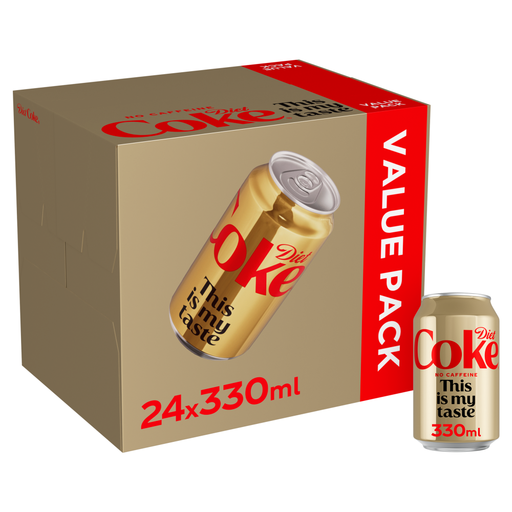
For an occasional cola when caffeine avoidance matters, this is the No Caffeine variant in a 24 × 330ml can pack. Coca-Cola GB identifies Diet Coke Caffeine Free as a no-sugar, caffeine-free choice. It remains fizzy; check the pack’s sweeteners and phenylalanine statement where relevant.
 No image available
This 24 × 330ml can pack is the caffeine-free Pepsi Max variant for someone who wants an occasional cola without sugar or caffeine. Pepsi UK lists 0g sugars for Pepsi Max Caffeine Free. It is still fizzy; check the pack’s sweeteners and phenylalanine statement where relevant.
 No image available
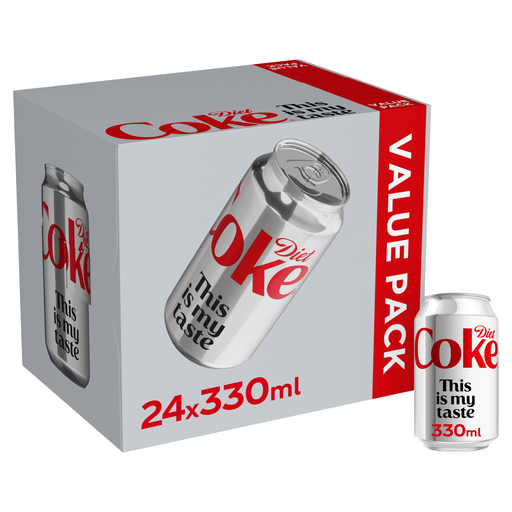
These 24 × 330ml cans suit an occasional cola choice when caffeine is acceptable. Coca-Cola GB describes standard Diet Coke as a no-sugar variant but lists caffeine flavouring in its ingredients. Choose the separately named caffeine-free version if caffeine avoidance matters, and check the pack’s ingredient warnings.
 No image available
This standard Pepsi Max variant comes as 24 × 330ml cans for an occasional cola when caffeine is acceptable. Pepsi UK lists 0g sugars and includes caffeine in the flavourings. It is not the Pepsi Max Caffeine Free variant; check the pack’s ingredients and warnings.
 No image available
These 24 × 330ml cans provide the standard Coca-Cola Zero Sugar variant for an occasional cola choice when caffeine is acceptable. Coca-Cola GB lists 0g sugars and caffeine flavouring for this variant. For caffeine avoidance, look for the separately named Caffeine Free version and check the pack.
Choose water or plain milk for a child’s routine lunch instead. NHS-linked Healthier Together guidance identifies water and milk as the preferred drinks for children and advises avoiding caffeine and fizzy drinks; removing sugar from cola does not remove its fizz.
No. Coca-Cola GB lists caffeine flavouring in standard Coca-Cola Zero Sugar and Diet Coke, and Pepsi UK lists caffeine in standard Pepsi Max. Look for an explicitly caffeine-free variant and confirm the ingredients on its pack.
Coca-Cola GB identifies Coca-Cola Zero Sugar Caffeine Free and Diet Coke Caffeine Free, while Pepsi UK lists Pepsi Max Caffeine Free. Check the exact variant name and current pack label, because the standard versions are different products.
Diet and zero-sugar cola recipes can use different sweeteners, and some packs state that they contain a source of phenylalanine. If that warning is relevant to the drinker, read the statement on the specific pack rather than assuming every variant has the same ingredients.