For a lunch cola with less sugar, choose a zero-sugar version, but check the ingredients: standard Coca-Cola Zero Sugar and Pepsi Max contain caffeine. If you also want to avoid caffeine, look for a specifically labelled caffeine-free variant. Regular cola remains an option if you prefer its taste and accept the sugar shown on the can; for a lunch on the go, check whether you are buying one can or a multipack to store.
Who is choosing a lunch cola?
The useful starting point is what you want from one lunch drink: less sugar, no caffeine or a can that is convenient to carry.
Shoppers comparing sugar
If you want cola with lunch but are considering a zero-sugar version, compare sugar for the can you intend to drink. ASDA lists 35g sugar in a 330ml Coca-Cola Original Taste can, while its Coca-Cola Zero Sugar listing gives 0g for a 330ml can.
Caffeine-conscious cola drinkers
If you do not want caffeine at lunch or later in the day, check for an explicit caffeine-free label. Standard Coca-Cola Zero Sugar and Pepsi Max list caffeine even though they contain no sugar.
Shoppers carrying one lunch drink
A 330ml can gives you an individual portion to take with lunch. If it comes from a multipack, consider where you will keep the remaining cans rather than choosing by can size alone.
What should you check?
Choose the sugar and caffeine combination first, then check the exact can’s ingredients and whether its pack format suits your routine.
| Priority |
What to check |
Your needs |
| Sugar per can |
Compare the nutrition panel for the serving you will drink. ASDA lists 35g sugar per 330ml for Coca-Cola Original Taste and 0g per 330ml for Coca-Cola Zero Sugar; Pepsi UK lists 15g per 330ml for Pepsi Regular and 0g for Pepsi Max. |
I want to know how much sugar is in my lunch drink, not just whether the front of the can says “zero sugar”. |
| Caffeine |
Read the product name and ingredients separately from the sugar claim. Coca-Cola GB and Pepsi UK distinguish their caffeine-free zero-sugar variants from standard zero-sugar colas that contain caffeine. |
If I am avoiding caffeine, a zero-sugar label on its own does not answer my question. |
| Sweeteners and labelling |
Inspect the ingredients and any phenylalanine statement on the exact pack. The Coca-Cola Zero Sugar and Pepsi Max products described by ASDA and Pepsi UK use sweeteners; relevant variants carry a source-of-phenylalanine statement. |
I want to check the ingredients of the particular variant I am taking to lunch. |
| Pack format |
Check both can volume and pack quantity. A pack of 12 or 24 × 330ml cans provides individual cans, but the rest need storing. |
One can is enough for today’s lunch; a multipack makes sense if I also want cans for later. |
| When you drink it |
Consider whether cola is accompanying lunch or being sipped over a longer period. The NHS links too much sugary food and drink with tooth decay; the Scottish Dental Clinical Effectiveness Programme notes that acidic fizzy drinks can contribute to tooth surface loss, including when they contain little or no sugar. |
I do not want to assume that removing sugar makes a fizzy drink tooth-neutral. |
Common buying mistakes
-
Assuming “zero sugar” also means caffeine-free
Standard Coca-Cola Zero Sugar and Pepsi Max list caffeine, according to the ASDA product listing and Pepsi UK.
If caffeine matters to you, choose a version explicitly labelled caffeine-free and check its current ingredients.
-
Comparing regular and zero-sugar cola by name alone
ASDA lists 35g sugar per 330ml can of Coca-Cola Original Taste, compared with 0g for its 330ml Coca-Cola Zero Sugar listing.
Compare the nutrition information for the quantity you plan to drink, especially when can and bottle sizes differ.
-
Assuming sugar-free fizz is tooth-neutral
The Scottish Dental Clinical Effectiveness Programme notes that the acidity of fizzy drinks can contribute to tooth surface loss. The NHS also links too much sugary food and drink with tooth decay.
Consider how often you drink cola and whether you tend to sip it between meals, as well as checking its sugar content.
-
Buying a multipack when you only need one can
A 330ml can may suit one lunch, but a 12- or 24-can pack also leaves cans to store afterwards.
Check the number of cans before ordering; choose a multipack when you expect to use the remaining portions.
Brand ranges to compare
A brand name does not settle the sugar or caffeine question: compare the specific variant and its current label.
Coca-Cola
Coca-Cola GB lists Original Taste, Zero Sugar and Zero Sugar Caffeine Free as distinct choices.
- ASDA lists 35g sugar per 330ml for Original Taste and 0g per 330ml for standard Zero Sugar.
- Standard Zero Sugar contains caffeine; check the specifically labelled caffeine-free variant if you want to avoid it.
Pepsi
Pepsi UK distinguishes Pepsi Regular, Pepsi Max and Pepsi Max Caffeine-Free.
- Pepsi UK lists 15g sugar per 330ml for Pepsi Regular and 0g per 330ml for Pepsi Max.
- Standard Pepsi Max contains caffeine; its caffeine-free variant still uses sweeteners and carries a source-of-phenylalanine statement.
Sainsbury's
Sainsbury's lists its own-label Cola Zero as a six-pack of 330ml cans.
- Its product information lists less than 0.5g sugar per 330ml can.
- The listed recipe contains caffeine and sweeteners, so check the label if either matters to you.
RC Cola
RC Cola International describes Classic, No Sugar and RC Double Caffeine variants.
- The variants give distinct product names to check when comparing sugar and caffeine.
- For a UK lunch purchase, check the particular pack’s nutrition information and caffeine details rather than assuming the variants share a recipe.
Joybuy cola options
These Joybuy multipacks contain 330ml cans across caffeine-free, standard zero-sugar and regular-sugar cola choices. You can take one can with lunch, but each listing is for a pack rather than a single can.
 No image available
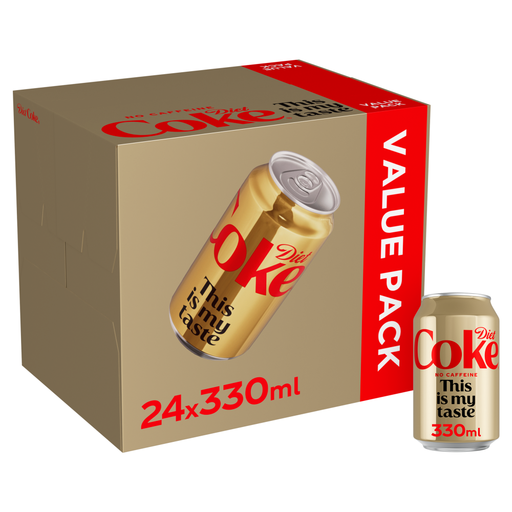
Diet Coke No Caffeine 24 × 330ml
A multipack of individual cans for a caffeine-free cola with lunch. The product description states zero sugar and identifies sweeteners and a source-of-phenylalanine statement; check the current pack if these ingredients matter to you.
View on Joybuy
 No image available
Pepsi Max Caffeine Free 24 × 330ml
Choose a can from this multipack if you want Pepsi Max without caffeine at lunch. Pepsi UK lists 0g sugar per 330ml for this variant and a source-of-phenylalanine statement; check the current pack if relevant.
View on Joybuy
 No image available
Pepsi Max 24 × 330ml
This multipack suits a lunch choice where zero sugar matters but avoiding caffeine does not. Pepsi UK lists 0g sugar per 330ml for standard Pepsi Max; its ingredients include caffeine and sweeteners.
View on Joybuy
 No image available
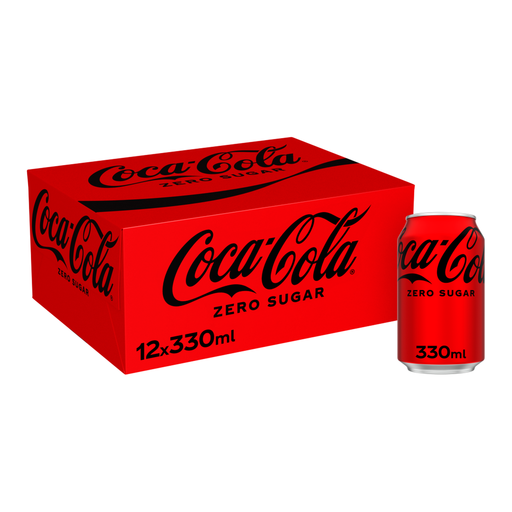
Coca-Cola Zero 12 × 330ml
The 12-pack provides individual cans for a zero-sugar lunch cola. The listing describes 0g sugar per 330ml and identifies caffeine and sweeteners, so choose a specifically caffeine-free variant if caffeine is a concern.
View on Joybuy
 No image available
Coca-Cola Original Taste 24 × 330ml
This is the regular-sugar option if you prefer Original Taste with lunch. ASDA lists 35g sugar per 330ml can; the product also contains caffeine. The 24-can pack leaves additional cans to store after taking one.
View on Joybuy
Questions about lunch cola
Is zero-sugar cola automatically caffeine-free?
No. Standard Coca-Cola Zero Sugar and Pepsi Max list caffeine in their ingredients, according to the ASDA listing and Pepsi UK. Look for a specifically labelled caffeine-free or zero-caffeine variant if you want to avoid it.
How much sugar is in a 330ml Coca-Cola Original Taste can?
ASDA lists 35g sugar per 330ml can of Coca-Cola Original Taste, alongside 139kcal. Check the serving size when comparing it with another can or bottle.
Do zero-sugar colas contain sweeteners?
The Coca-Cola Zero Sugar and Pepsi Max variants described by ASDA, Coca-Cola GB and Pepsi UK use sweeteners. Check the ingredients and any phenylalanine statement on the exact variant you plan to buy.
Does choosing zero sugar remove every dental consideration?
No. The Scottish Dental Clinical Effectiveness Programme notes that acidic fizzy drinks can contribute to tooth surface loss, including low- or zero-sugar versions. It advises considering when and how often fizzy drinks are consumed, not sugar content alone.


