Who this decision affects

Runners planning long-run fuel

If you are deciding what to carry for a long run or marathon, separate drinks that supply carbohydrate from those chosen for flavour. World Athletics’ endurance guidance describes carbohydrate intake for prolonged events; zero-sugar colas listing 0 g carbohydrate per 100 ml cannot fill that role.

Runners choosing a fizzy drink outside training

If carbohydrate fuel is not the aim, the exact variant still matters. The Coca-Cola Company GB lists 0 g carbohydrate and 0 g sugars per 100 ml for Coca-Cola Zero Sugar, and PepsiCo UK lists the same values for Pepsi Max.

Runners checking caffeine or phenylalanine

If caffeine matters to your choice, read the ingredients of the exact drink; The Coca-Cola Company GB labels Fanta Orange caffeine free. People with phenylketonuria (PKU) also need to check for aspartame and a phenylalanine warning, as the Food Standards Agency explains.

What to check before choosing

Decide whether the drink needs to supply carbohydrate, then compare the exact variant’s label with your fuelling plan and ingredient requirements.

PriorityWhat to checkYour needs
Long-run fuel Check carbohydrate per 100 ml and the amount you intend to drink. World Athletics describes 30–60 g carbohydrate per hour for events lasting 1–2.5 hours, and up to 90 g per hour beyond 2.5 hours; those are event-duration guidelines, not a target supplied by any one drink. I’m planning fuel for a prolonged run, so I need to know how much carbohydrate my drinks, gels or food will actually provide.
Regular or zero sugar Compare the exact variants, not just their brands. The Coca-Cola Company GB lists 10.6 g carbohydrate per 100 ml for Coca-Cola Original Taste and 0 g for Coca-Cola Zero Sugar; PepsiCo UK lists 4.6 g for Pepsi and 0 g for Pepsi Max. If I want a fizzy drink without carbohydrate fuel, a zero-sugar variant may fit. If it is meant to contribute to my fuel plan, I need its measured carbohydrate content.
Caffeine and sweeteners Read the ingredients and warnings on the chosen variant. PepsiCo UK lists caffeine in Pepsi and Pepsi Max; The Coca-Cola Company GB labels Fanta Orange caffeine free. Check for aspartame and a phenylalanine warning if PKU is relevant. I’m keeping track of caffeine, or I need to avoid aspartame because of PKU, so the particular product label matters more than the flavour name.
Everyday drinking Keep hydration and fuelling as separate decisions. The NHS recommends water to replace fluid lost through sweating and says carbonated drinks are associated with dental erosion due to acidity, whether or not they contain sugar. Between sessions, I want a drink for ordinary fluid replacement rather than assuming a sugar-free fizzy drink has no other considerations.

Common mistakes to avoid

  • Counting zero-sugar cola as marathon fuel

    Coca-Cola Zero Sugar and Pepsi Max each list 0 g carbohydrate per 100 ml on their UK product pages, so they do not contribute carbohydrate to a prolonged-run plan.

    Plan carbohydrate from drinks, gels or food with a stated amount, using event duration and your practised intake to guide the choice.

  • Assuming regular fizzy drinks are interchangeable

    The Coca-Cola Company GB lists 10.6 g carbohydrate per 100 ml for Coca-Cola Original Taste and 4.5 g for Fanta Orange; PepsiCo UK lists 4.6 g for Pepsi. One drink’s label cannot stand in for another’s.

    Check carbohydrate per 100 ml and per serving on the exact pack before including it in a fuel plan.

  • Making diet fizzy drinks the default hydration drink

    The NHS associates carbonated drinks with dental erosion due to acidity regardless of sugar content. Removing sugar does not remove that consideration.

    Use water for ordinary replacement of fluid lost through sweating, as the NHS recommends, and make a separate decision about any fizzy drink.

  • Overlooking variant-specific warnings

    Some cola-style drinks list caffeine, while several zero-sugar variants carry a phenylalanine warning. The Food Standards Agency identifies aspartame as a concern for people with PKU.

    Read the chosen pack’s ingredients and warnings. If pregnant, account for caffeine from all sources against the NHS advice of no more than 200 mg per day.

Brand and variant references

Coca-Cola

The Original Taste and Zero Sugar labels illustrate why regular and zero-sugar variants have different roles in a carbohydrate plan.

  • The Coca-Cola Company GB lists 10.6 g carbohydrate and 10.6 g sugars per 100 ml for Original Taste, compared with 0 g of each for Zero Sugar.
  • Zero Sugar cannot supply carbohydrate fuel; its label also carries a phenylalanine warning.

Pepsi

Pepsi and Pepsi Max provide another label-level comparison between a regular cola and a zero-sugar variant.

  • PepsiCo UK lists 4.6 g carbohydrate per 100 ml for Pepsi and 0 g for Pepsi Max.
  • Both product pages list caffeine; Pepsi Max also carries a phenylalanine warning and does not provide carbohydrate fuel.

Fanta

Fanta Orange is a fruit-flavoured option to check when caffeine avoidance and carbohydrate content both matter.

  • The Coca-Cola Company GB labels Fanta Orange caffeine free and lists 4.5 g carbohydrate per 100 ml.
  • Its carbohydrate content still needs to be counted against the intended fuel plan; a fizzy-drink label does not establish a sports-drink formulation.

Sprite

Coca-Cola Europacific Partners lists Sprite Zero Sugar in its UK Sprite range.

  • The named zero-sugar variant gives shoppers a distinct product label to compare with regular Sprite.
  • Check the exact pack for carbohydrate and ingredients. The NHS notes that sugar-free carbonated drinks remain associated with acid-related dental erosion.

Dr Pepper

Dr Pepper Zero is a cola-style zero-sugar variant for which ingredient warnings matter as well as the nutrition label.

  • The Coca-Cola Company GB lists 0 g carbohydrate and 0 g sugars per 100 ml for Dr Pepper Zero.
  • Its product information lists caffeine and carries a phenylalanine warning; it cannot provide carbohydrate fuel.

A Joybuy fizzy-drink option

The 7UP Zero option below is relevant to choosing a fizzy drink outside a planned carbohydrate-fuelling session, not to selecting marathon fuel.
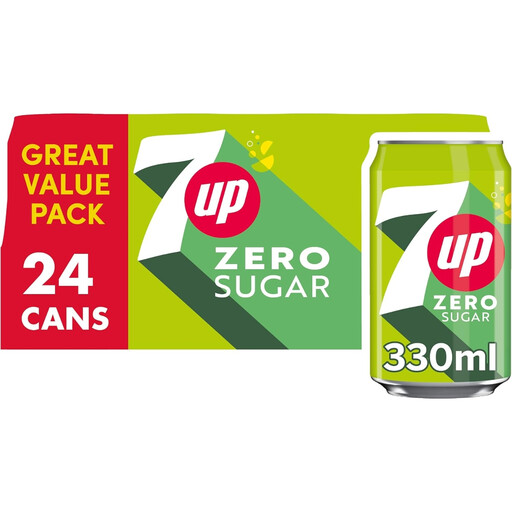
7UP Zero 330 ml, 24-pack

7UP Zero 330 ml, 24-pack

For a fizzy drink outside your fuelling plan, check the pack’s carbohydrate per 100 ml before counting it as a fuel source. The product name specifies 330 ml cans in a 24-pack; check the ingredients and warnings on the pack if caffeine or aspartame matters to you.

View on Joybuy

Frequently asked questions

Can a zero-sugar fizzy drink fuel a long training run?

Coca-Cola Zero Sugar and Pepsi Max cannot supply carbohydrate fuel: their respective UK brand labels each list 0 g carbohydrate per 100 ml. World Athletics describes carbohydrate intake for prolonged events, so choose a stated carbohydrate source when that is part of your run plan.

Can regular cola replace a sports drink during a marathon?

Do not assume the two are interchangeable. The Coca-Cola Company GB lists 10.6 g carbohydrate per 100 ml for Coca-Cola Original Taste, while PepsiCo UK lists 4.6 g for Pepsi; World Athletics’ practical guide describes typical sports drinks as containing 4–8 g per 100 ml. Check the exact drink’s contribution to your plan and practise your choice in training.

Is a sugar-free fizzy drink the same choice as water for hydration?

No. The NHS recommends water for replacing fluid lost through sweating and says carbonated drinks are associated with dental erosion due to their acid content regardless of whether they contain sugar or sweeteners.

Why check zero-sugar drinks for a phenylalanine warning?

Aspartame is a source of phenylalanine, which the Food Standards Agency identifies as a concern for people with phenylketonuria (PKU). The UK product pages for Coca-Cola Zero Sugar, Pepsi Max and Dr Pepper Zero carry a phenylalanine warning; check the exact product label before choosing.

What caffeine advice applies during pregnancy?

The NHS advises no more than 200 mg of caffeine per day during pregnancy. If choosing a fizzy drink, check its ingredients and account for caffeine from other drinks, foods, tablets and supplements as well.