Students stocking a shared kitchen
Individual cans make portions easy to separate. If you are considering a larger bottle, think about fridge space, who will share it and whether it will be finished while it is still fizzy.


For a move-in shop, check the nutrition panel: if you want cola with no sugars listed, look for 0g sugars per 100ml rather than relying on a no-added-sugar phrase. Coca-Cola GB and Pepsi UK list 0g sugars for their standard Zero Sugar and Pepsi MAX products, but those versions contain caffeine; choose an explicitly caffeine-free variant if you need to avoid it. Match cans or a larger bottle to your shared storage and likely use, and bear in mind the NHS advice that carbonated drinks can be associated with dental erosion regardless of sugar content.
Individual cans make portions easy to separate. If you are considering a larger bottle, think about fridge space, who will share it and whether it will be finished while it is still fizzy.
If your requirement is cola with no sugars listed, compare the 'of which sugars' figure per 100ml on the exact variant rather than relying on its front-of-pack wording.
Standard zero-sugar cola can contain caffeine. Look for a separately named caffeine-free version and check its ingredients before adding it to a shared shop.
Start with the exact drink, then decide whether its caffeine status and pack format fit your household.
| Priority | What to check | Your needs |
|---|---|---|
| Sugars | Read 'of which sugars' per 100ml on the exact variant. Coca-Cola GB lists 0g for Coca-Cola Zero Sugar, and Pepsi UK lists 0g for standard Pepsi MAX. | I want the nutrition panel to show 0g sugars per 100ml, not just a no-added-sugar claim on the front. |
| Caffeine | Check the variant name and ingredients. Standard Coca-Cola Zero Sugar and Pepsi MAX list caffeine; Pepsi MAX No Caffeine and Coca-Cola Zero Sugar Zero Caffeine are separately identified products. | If I am avoiding caffeine, I need the caffeine-free version rather than assuming zero sugar means no caffeine. |
| Pack format | Compare the number and size of cans with the space available. For a larger bottle, consider sharing and how quickly it is likely to be finished. | Separate cans would be useful in a shared fridge; a larger bottle only works for us if there is room and someone will finish it. |
| Ingredients and acidity | Read the sweetener and phenylalanine information on the exact pack. The NHS notes that carbonated drinks can be associated with dental erosion regardless of whether they contain sugar or sweeteners. | I need to check ingredient declarations that matter to my household, without treating zero sugar as a sign that the drink is free from other considerations. |
The phrases answer different questions. The Advertising Standards Authority describes conditions for a 'no added sugars' claim in Great Britain; that wording is not a substitute for reading the sugar figure.
If you want no sugars listed in the drink, check 'of which sugars' per 100ml on the exact product.
Coca-Cola GB and Pepsi UK list caffeine in their standard zero-sugar colas, while caffeine-free versions have distinct names.
Choose a variant explicitly marked caffeine-free and confirm its ingredients if avoiding caffeine matters to you.
The listed ingredients differ between products and variants. Coca-Cola Zero Sugar and the Pepsi MAX products described by their brands include aspartame.
Check the exact pack for aspartame and phenylalanine information when those declarations matter to your household.
A 2-litre bottle and individual cans create different demands on shared fridge space and how the drink is served.
Choose the format your household has room for and is likely to use.
An unfinished shared bottle may lose its fizz before everyone has had some.
These examples show why the precise variant matters; a brand name alone does not establish its sugar, caffeine or ingredient details.
Coca-Cola Zero Sugar is the standard zero-sugar option; Coca-Cola Zero Sugar Zero Caffeine is a separate variant.
Pepsi UK identifies standard Pepsi MAX and Pepsi MAX No Caffeine as separate zero-sugar colas.
Tesco lists Xero Cola in a 2-litre bottle, an own-label format to consider for a shared kitchen.
These multipacks offer individual cans for a student kitchen, including standard, caffeine-free and cherry-flavoured variants. Check the exact pack label against your sugar, caffeine and ingredient requirements.
 No image available
Individual cans may suit a shared kitchen. Coca-Cola GB lists 0g sugars per 100ml for Coca-Cola Zero Sugar; the standard version lists caffeine flavouring and aspartame, so check the pack if either ingredient matters to you.
 No image available
The 24-can format provides separate portions for a shared kitchen. Pepsi UK lists 0g sugars for standard Pepsi MAX, which contains caffeine and aspartame; choose a separately named caffeine-free variant if needed.
 No image available
This caffeine-free variant comes in individual cans for a shared kitchen. Pepsi UK lists 0g sugars for Pepsi MAX No Caffeine; it still lists aspartame, so check the pack's sweetener declaration.
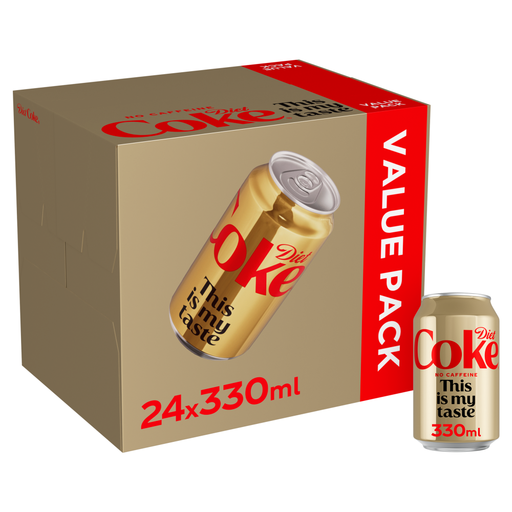 No image available
The named caffeine-free variant comes as 24 individual 330ml cans. If you also require 0g sugars per 100ml or need to check a sweetener declaration, read those details on the exact pack.
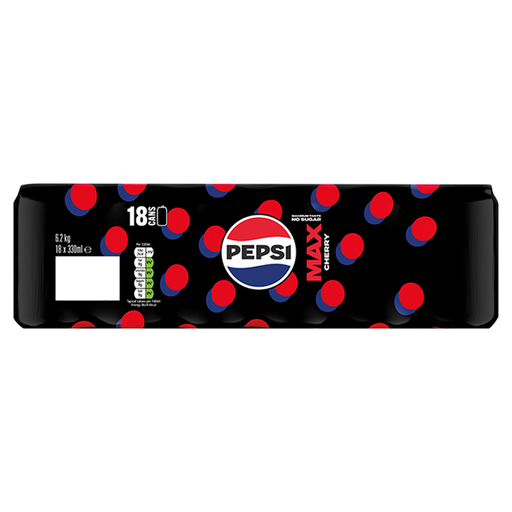 No image available
This cherry-flavoured variant offers individual cans in an 18-pack. Check its own sugars-per-100ml figure, caffeine status and ingredients rather than applying the standard Pepsi MAX details to a different flavour.
Not necessarily. The Advertising Standards Authority explains that a 'no added sugars' claim in Great Britain concerns what has been added for sweetening. If you want a drink with no sugars listed, check 'of which sugars' per 100ml on its nutrition panel.
No. Coca-Cola GB lists caffeine flavouring in standard Coca-Cola Zero Sugar, and Pepsi UK lists caffeine in standard Pepsi MAX. Look for an explicitly caffeine-free variant and check the exact product's ingredients.
Yes. The NHS says carbonated drinks are associated with dental erosion because of their acid content, regardless of whether they contain sugar or sweeteners. A 0g sugar declaration does not address that acidity.
Sweeteners can differ by variant. Coca-Cola GB and Pepsi UK list aspartame in the zero-sugar products described here; check the exact pack's ingredient and phenylalanine declarations when those details matter to your household.