Parents buying for an occasional snack
Compare sugar per can before choosing between regular and zero-sugar cola. A multipack need not become the usual after-school drink.


For an occasional after-school cola at home, a caffeine-free, zero-sugar multipack suits a household that wants to avoid both sugar and caffeine. Standard zero-sugar cola can still contain caffeine, so check the exact variant as well as the number and size of the cans. Keep a home snack decision separate from rules governing drinks provided by schools in England.
The useful distinction is whether the cans are for an occasional drink at home or for a school to provide; the setting changes which questions matter.
Compare sugar per can before choosing between regular and zero-sugar cola. A multipack need not become the usual after-school drink.
Look for an explicitly caffeine-free variant. Pepsi Max, for example, lists caffeine in its ingredients, while Pepsi Max No Caffeine is a separately named product.
The Department for Education's school food standards concern food and drink provided in state-funded schools in England. Check the setting and applicable rules rather than treating a purchase for home as school provision.
Decide whether cola is for an occasional home snack, then compare the exact variant's sugar and caffeine information before settling on a pack size.
| Priority | What to check | Your needs |
|---|---|---|
| Sugar per can | Read sugars per 330ml can, not just per 100ml. Coca-Cola GB lists 10.6g per 100ml for Original Taste; Pepsi UK lists 15g per 330ml for Pepsi Classic. Check the exact label. | If I'm choosing cola for an occasional snack, I want to know how much sugar is in the can being served, rather than assume all regular and zero-sugar variants are alike. |
| Caffeine | Check the product name and ingredients separately from the sugar figure. Pepsi UK lists caffeine in Pepsi Max and identifies Pepsi Max No Caffeine as a different variant. | When avoiding caffeine after school, I need the pack itself to say caffeine free or no caffeine; zero sugar alone does not answer that question. |
| Pack format | Confirm both can count and volume. Tesco lists 24 x 330ml branded zero-sugar options and an 8 x 330ml Tesco Xero Cola pack; the variant and pack size both matter. | I'd rather check how many 330ml cans I'm buying than rely on a familiar product-family name. |
| Where it is served | Distinguish a drink bought for home from one provided by a school. The Department for Education states that school food standards are a legal requirement for state-funded schools in England. | If I'm buying for a school rather than an after-school snack at home, I need to check the rules for that school and setting. |
Pepsi Max contains caffeine despite listing 0g sugars. A sugar-free label therefore does not settle a caffeine-avoidance decision.
Check the exact variant name and ingredients. Pepsi UK identifies Pepsi Max No Caffeine as a separate, zero-sugar option.
Regular recipes differ: Pepsi UK lists 15g sugars per 330ml can, while Coca-Cola GB lists 10.6g per 100ml for Original Taste. The NHS links too much sugary food and drink with tooth decay.
Compare the label for the can you plan to serve. For a usual drink between meals, consider water instead of making cola routine.
Multipacks in the same cola category do not all have the same count. Tesco lists both 8 x 330ml and 24 x 330ml options.
Read the can count and volume on the exact pack before choosing it.
The Department for Education's school food standards address provision in state-funded schools in England, not a parent serving a drink at home after school.
For a school event or school catering, check which nation, school and provision arrangements apply rather than assuming the home and school settings are the same.
These named product lines help distinguish sugar and caffeine variants; a brand name alone does not identify what is in a particular can.
Coca-Cola has separate Original Taste, Zero Sugar and Zero Caffeine Zero Sugar variants relevant to this choice.
Pepsi Classic, Pepsi Max and Pepsi Max No Caffeine offer distinct regular, zero-sugar and caffeine-free choices.
Tesco's cola listings provide a way to compare named multipack formats, including its own Tesco Xero Cola.
These 24 x 330ml can packs cover caffeine-free and caffeinated zero-sugar cola options for an occasional after-school snack at home. Check the exact variant if avoiding caffeine is important.
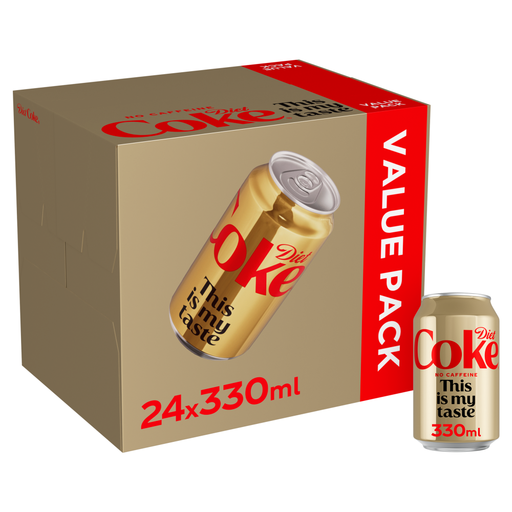 No image available
A 24-can option for an occasional home snack when avoiding both sugar and caffeine matters. The product information states no caffeine and 0g sugars per 330ml; it also lists sweeteners and a source of phenylalanine, so check the pack label if that ingredient matters to your household.
 No image available
This 24-can variant is labelled zero sugar and zero caffeine, distinguishing it from standard Pepsi Max for a household avoiding caffeine. It contains sweeteners and a source of phenylalanine; check the pack label if relevant.
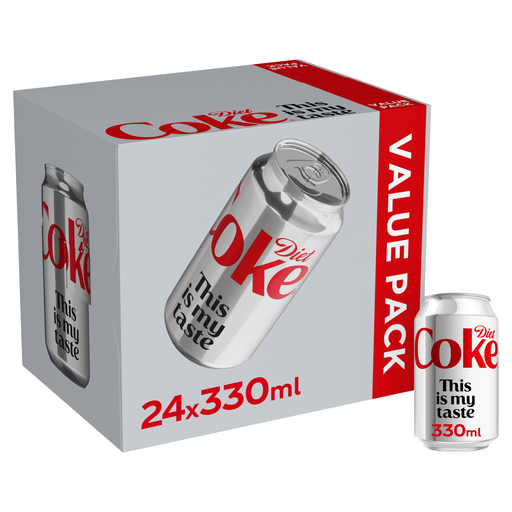 No image available
This 24-can zero-sugar option is for a household where caffeine is not being avoided: the ingredients list caffeine. It also contains sweeteners and a source of phenylalanine; check the pack label if relevant.
 No image available
This 24-can pack lists 0g sugars per 330ml but includes caffeine, so it does not meet a caffeine-free requirement. It also contains sweeteners and a source of phenylalanine; check the pack label if relevant.
 No image available
This 24-can option lists 0g sugars per 330ml, but its ingredients include caffeine. It also contains sweeteners and a source of phenylalanine; check the pack label if relevant.
It can. Pepsi UK lists caffeine in Pepsi Max but identifies Pepsi Max No Caffeine as a separate zero-sugar variant. Check the exact product name and ingredients if caffeine avoidance matters.
It depends on the product. Pepsi UK lists 15g sugars per 330ml can of Pepsi Classic; Coca-Cola GB lists 10.6g per 100ml for Original Taste, equivalent to about 35g in 330ml. Read the label on the variant you are buying.
No. The Department for Education's school food standards are a legal requirement for state-funded schools in England when they provide food and drink; serving a drink at home is a different setting.
No. The Department of Health and Social Care and Department for Culture, Media and Sport describe England's Food (Promotion and Placement) Regulations 2021 as restrictions on specified promotion and placement practices for less healthy products, not a ban on a household purchasing cola for home use.
Water is a straightforward choice instead of making cola a routine between-meal drink. The NHS links too much sugary food and drink with tooth decay; if choosing cola for an occasional snack, compare the sugar information on the individual can.