Hosts checking sugar wording
If your picnic shopping calls for an explicit ‘no added sugar’ claim, read the product description rather than assuming every zero-sugar cola uses those words.


If the words ‘no added sugar’ matter, check for that exact description: Tesco uses it for Tesco Diet Cola, while Coca-Cola Zero Sugar and Pepsi Max are presented as zero-sugar options. For guests avoiding caffeine, choose a variant explicitly labelled caffeine-free; then decide whether individual cans or a shared bottle will work better at the picnic.
If your picnic shopping calls for an explicit ‘no added sugar’ claim, read the product description rather than assuming every zero-sugar cola uses those words.
A zero-sugar label alone does not establish that a cola is caffeine-free. Check the exact variant before choosing drinks for the group.
Read the ingredient list and any phenylalanine statement on the exact product, particularly when phenylketonuria (PKU) is relevant to someone who may drink it.
Start with the wording and ingredients that matter to your group, then choose a pack you can serve and carry at the picnic.
| Priority | What to check | Your needs |
|---|---|---|
| Sugar wording | Check the exact claim on the pack or product page. Tesco Groceries describes Tesco Diet Cola as ‘no added sugar’; Pepsi Max and Coca-Cola Zero Sugar use zero-sugar wording. | I want the product description to say ‘no added sugar’, rather than assuming ‘zero sugar’ is the wording I need. |
| Caffeine | Look for an explicit caffeine-free designation and check the ingredients. Pepsi UK lists caffeine in standard Pepsi Max and identifies Pepsi Max No Caffeine as the caffeine-free variant. | Some guests avoid caffeine, so I need the right variant—not just a cola labelled zero sugar. |
| Sweeteners | Read the sweetener list and phenylalanine statement for the exact variant. Pepsi UK lists aspartame in Pepsi Max and Pepsi Max No Caffeine; ingredient lists can differ between products. | Before serving the cola, I want to check its ingredients against the needs of everyone drinking it. |
| Sharing format | Check the number and size of servings, the space available to carry them, and whether you will have cups. Tesco Groceries lists zero-sugar options in multipacks and 2-litre bottles. | Individual servings would simplify sharing, or a bottle could work if we have cups and room to carry it. |
A product can be presented as zero sugar without using the words ‘no added sugar’ in its description.
If the wording matters, check the current pack. Tesco Groceries describes Tesco Diet Cola as ‘no added sugar’; Coca-Cola Zero Sugar and Pepsi Max are presented as zero-sugar products.
Standard Pepsi Max lists caffeine, and the Tesco Groceries listing for Coca-Cola Zero Sugar includes caffeine flavouring.
Choose a variant explicitly labelled caffeine-free when that is required, and check its ingredient statement rather than relying on the sugar claim.
Pepsi Max and Pepsi Max No Caffeine list aspartame and carry a source-of-phenylalanine statement. The Food Standards Agency identifies aspartame as relevant to people with PKU.
Check the ingredients and warning on the exact drink before offering it to someone for whom phenylalanine matters.
Coca-Cola Zero Sugar is a zero-sugar option available in can formats listed by Tesco Groceries.
Pepsi offers standard Pepsi Max and a separately named Pepsi Max No Caffeine variant.
Tesco Diet Cola is an own-label 2-litre bottle whose Tesco Groceries description explicitly says ‘no added sugar’.
These 24 × 330 ml packs offer individual servings for a picnic, with both caffeine-free and standard cola variants. Check the exact label if ‘no added sugar’ wording or particular ingredients matter to your group.
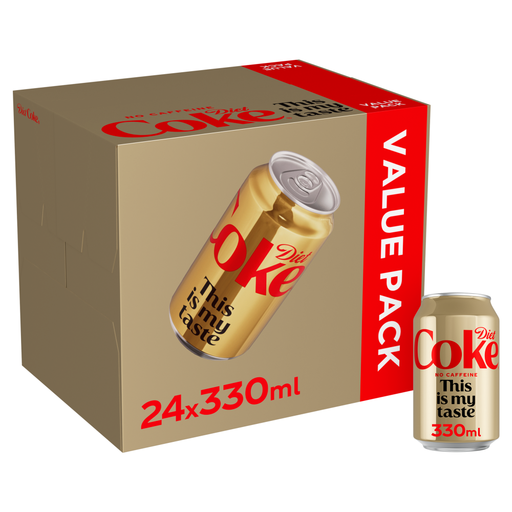 No image available
A pack to consider when individual picnic servings and a no-caffeine variant matter. Check the current label for its sugar wording, sweeteners and phenylalanine statement.
 No image available
This named caffeine-free Pepsi Max variant comes in a 24 × 330 ml pack for individual servings. Pepsi UK lists sweeteners and a source-of-phenylalanine statement for its no-caffeine variant; check the pack if those ingredients matter.
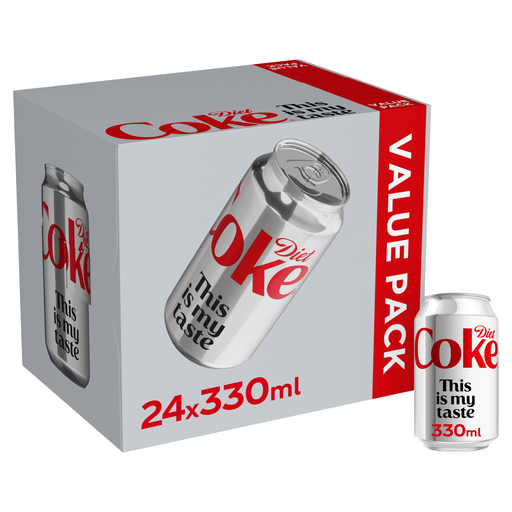 No image available
A 24 × 330 ml pack for sharing as individual servings. Check this Diet Coke variant’s current sugar wording, caffeine information and ingredients rather than applying details from a different Coca-Cola product.
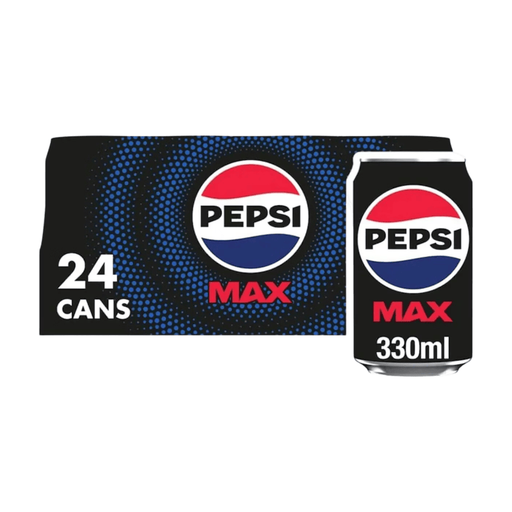 No image available
This 24 × 330 ml pack suits a picnic where individual servings are useful and caffeine is acceptable. Pepsi UK lists caffeine, sweeteners and a source-of-phenylalanine statement for standard Pepsi Max.
 No image available
This 24 × 330 ml pack provides individual servings of Coca-Cola Zero Sugar. The Tesco Groceries listing for the 330 ml drink states 0 g sugars per 100 ml and includes caffeine flavouring and sweeteners; it is not the caffeine-free variant.
No. Tesco Groceries describes Tesco Diet Cola as ‘no added sugar’, while Coca-Cola Zero Sugar and Pepsi Max use zero-sugar wording. If an exact claim matters, check the wording on the product you are buying.
No. Pepsi UK lists caffeine in standard Pepsi Max, and the Tesco Groceries listing for Coca-Cola Zero Sugar includes caffeine flavouring. Look for an explicitly caffeine-free variant, such as Pepsi Max No Caffeine, when guests avoid caffeine.
Pepsi UK states that Pepsi Max and Pepsi Max No Caffeine contain a source of phenylalanine. The Food Standards Agency identifies aspartame as a source of phenylalanine relevant to people with phenylketonuria (PKU), so check the exact drink’s ingredient and warning labels when selecting for someone with PKU.
Choose cans if individual servings make sharing simpler; a larger bottle works when you can bring cups and have space to serve it. Check the pack size against your group and the room available to carry drinks.