Picnic hosts serving a mixed group
Individual cans make it straightforward to offer separate servings, while a larger bottle works when guests will pour and share. Check how many servings you need and whether the group wants more than one recipe.


For a picnic lunch, choose cans for individual servings or a larger bottle if the group will pour and share it. Compare sugars per 100ml on the exact recipe, and choose an explicitly caffeine-free variant if caffeine avoidance matters: a zero-sugar label alone does not establish caffeine status.
Individual cans make it straightforward to offer separate servings, while a larger bottle works when guests will pour and share. Check how many servings you need and whether the group wants more than one recipe.
Compare the nutrition panels on the exact products rather than treating all regular or zero-sugar colas alike. Pepsi UK lists 0g sugars per 100ml for Pepsi Max; Sainsbury’s lists under 0.5g per 100ml for its Cola Zero.
Look for an explicitly caffeine-free variant. Pepsi Max Caffeine-Free and Coca-Cola Zero Sugar Caffeine Free are distinct products from standard zero-sugar cola.
Decide on the recipe and caffeine requirement, then choose a pack format that fits how the group will serve the drinks.
| Priority | What to check | Your needs |
|---|---|---|
| Sugar and recipe | Compare ‘of which sugars’ per 100ml on the exact variant. Coca-Cola GB lists 10.6g per 100ml for Original Taste; Pepsi UK lists 4.5g for Pepsi and 0g for Pepsi Max. | We want a sweetened regular cola, or we would rather choose a product with no or very little listed sugar. |
| Caffeine | Check the full variant name and ingredients. Standard Pepsi Max and Sainsbury’s Cola Zero list caffeine; their sugar descriptions do not establish caffeine status. | If someone wants to avoid caffeine, I need a product explicitly labelled caffeine-free. |
| Serving format | Count the cans or check the bottle volume against the planned servings. For an opened bottle, follow that product’s storage instructions. | Separate cans would make serving easier for our group, or we expect to pour from one bottle and can look after any leftovers. |
| Ingredients | Read the exact ingredient list and any phenylalanine statement. Pepsi UK and Coca-Cola GB list sweeteners and a source of phenylalanine for the specified zero-sugar variants. | I want to check the chosen recipe’s ingredients rather than assume that all zero-sugar colas are interchangeable. |
Pepsi Max and Sainsbury’s Cola Zero list caffeine, while specifically named caffeine-free variants are available.
Check the exact variant name and ingredients when caffeine avoidance matters.
Regular recipes can differ: Coca-Cola GB lists 10.6g sugars per 100ml for Original Taste, while Pepsi UK lists 4.5g per 100ml for Pepsi. A pack-size comparison alone does not show this difference.
Compare sugars per 100ml first, then consider the amount each person is likely to pour or drink.
A bottle suits sharing, but its storage instructions matter once it is opened. Sainsbury’s says to refrigerate its Cola Zero 2L after opening and use it within 3 days.
Choose individual cans if separate sealed servings are more practical; for a bottle, check that you can follow its after-opening instructions.
Coca-Cola Original Taste is a sweetened cola; Coca-Cola Zero Sugar Caffeine Free is a separate option for shoppers checking both sugar and caffeine.
Pepsi, Pepsi Max and Pepsi Max Caffeine-Free provide distinct sweetened, zero-sugar and zero-sugar caffeine-free recipes.
Tesco’s grocery cola category includes its own-label Classic Cola alongside branded regular, sugar-free and caffeine-free options.
Sainsbury’s Cola Zero 2L is an own-label bottle for a group planning to pour and share.
Asda’s grocery cola category lists regular, flavoured, diet, zero-sugar and caffeine-free options in different pack formats.
These individual-can packs cover regular cola, zero-sugar cola and explicitly caffeine-free variants for picnic servings. Check the recipe and number of cans against your group’s needs.
 No image available
Individual cans for a group seeking an explicitly caffeine-free, zero-sugar Pepsi Max variant. Pepsi UK lists 0g sugars per 100ml for Pepsi Max Caffeine-Free and states that it contains a source of phenylalanine.
 No image available
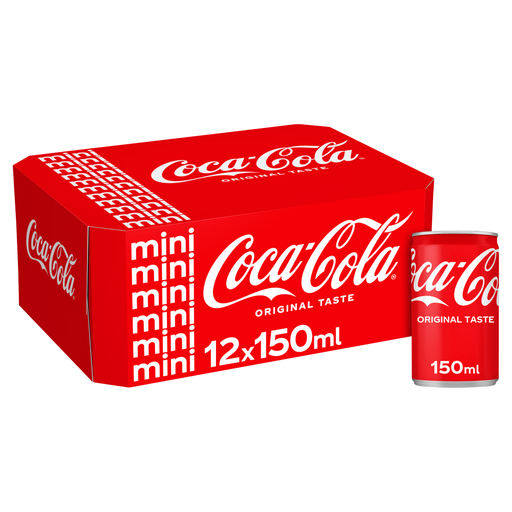
Smaller individual cans for guests choosing the regular sweetened recipe. Coca-Cola GB lists 10.6g sugars per 100ml for Original Taste and includes caffeine flavouring in its ingredients.
 No image available
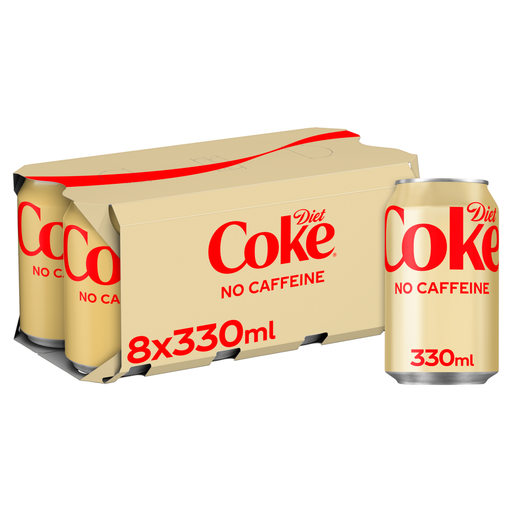
Eight individual cans offer a smaller pack when guests want a cola explicitly named caffeine-free. Check the exact can label for its ingredients and nutrition.
 No image available
Individual cans for a group choosing zero-sugar cola when caffeine is acceptable. Pepsi UK lists 0g sugars per 100ml for Pepsi Max; its ingredients include caffeine and sweeteners, and its label states that it contains a source of phenylalanine.
Choose according to the recipes your group wants, then compare sugars per 100ml on the exact products. Coca-Cola GB lists 10.6g per 100ml for Original Taste; Pepsi UK lists 4.5g for Pepsi and 0g for Pepsi Max. NHS guidance identifies some fizzy drinks as a source of free sugars.
Not necessarily. Pepsi Max and Sainsbury’s Cola Zero list caffeine. If caffeine avoidance matters, choose an explicitly caffeine-free variant and check the exact pack label.
Cans suit individual servings; a large bottle suits a group intending to pour and share. Plan for the bottle’s after-opening instructions: Sainsbury’s says to refrigerate its Cola Zero 2L after opening and use it within 3 days.
Read the chosen product’s ingredient list and any phenylalanine statement. Pepsi UK lists sweeteners and a source of phenylalanine for Pepsi Max and Pepsi Max Caffeine-Free; Coca-Cola GB does the same for Coca-Cola Zero Sugar Caffeine Free. These details apply to those variants, not every zero-sugar cola.