For a cola-style revision drink without sugar, check the nutrition panel on the exact variant rather than relying on its brand name. If a child or young person is revising later in the day, a caffeine-free variant avoids the caffeine in standard versions; Great Ormond Street Hospital NHS Foundation Trust advises avoiding caffeinated drinks after lunchtime because they can make sleep more difficult. A no-added-sugar label does not, by itself, establish whether a drink may be supplied or sold at a school.
Who is choosing the drink?
Students avoiding sugar during revision
If you want cola alongside a revision snack without sugar, compare the sugars figure per 100ml and per serving on the exact can. An original-taste drink and a zero-sugar variant need not have the same nutrition declaration.
Late-afternoon or evening revisers
If avoiding caffeine matters, look for a caffeine-free variant as well as a zero-sugar declaration. Great Ormond Street Hospital NHS Foundation Trust advises children and young people to avoid caffeinated drinks after lunchtime because caffeine can make settling to sleep harder.
Parents and school staff buying for pupils
A drink bought for revision at home raises a different question from one supplied or sold on school premises. For school use, check the applicable nation’s requirements and the individual school’s policy before choosing a product.
What should you check?
Start with the sugars declaration, then decide whether caffeine suits the time of day. If the drink is for a school setting, check the rules for that setting separately.
| Priority |
What to check |
Your needs |
| Sugars |
Read sugars per 100ml and per serving on the exact variant. Coca-Cola Great Britain and PepsiCo UK declare 0g sugars per 100ml for their named Zero Sugar and Pepsi MAX variants. |
I want a cola-style drink without sugar, so the figure on the can matters more than the range name. |
| Caffeine |
Check the full variant name and ingredients. Coca-Cola Zero Sugar and Pepsi MAX list caffeine or caffeine flavouring; their separately named caffeine-free variants do not. |
For later revision, I would rather choose a caffeine-free cola. Great Ormond Street Hospital NHS Foundation Trust advises children and young people to avoid caffeinated drinks after lunchtime. |
| Ingredients |
Read the sweetener ingredients and any phenylalanine-source statement on the exact pack. Coca-Cola Great Britain and PepsiCo UK disclose these for the named zero-sugar variants. |
If an ingredient or advisory statement is relevant to me, I need to check that particular drink rather than assume all zero-sugar colas are formulated alike. |
| School setting |
Establish whether the drink is for private use or will be supplied or sold at school. Check the applicable nation’s school-food requirements and the school’s policy. |
If I am ordering for pupils at school, a no-added-sugar label alone does not settle whether that drink can be provided there. |
Common buying mistakes
-
Assuming zero sugar also means caffeine-free
Standard Coca-Cola Zero Sugar and Pepsi MAX list caffeine or caffeine flavouring, while separately named caffeine-free variants are available. The distinction matters when choosing a drink for later revision.
Read the exact variant name and ingredients. For children and young people, Great Ormond Street Hospital NHS Foundation Trust advises avoiding caffeinated drinks after lunchtime.
-
Using the sugars figure as the whole ingredient check
A zero-sugar declaration does not describe the sweeteners or replace the pack’s phenylalanine-source statement. Coca-Cola Great Britain and PepsiCo UK disclose both for the named variants.
Check sugars in the nutrition panel, then read the ingredients and advisory text on the product you intend to buy.
-
Confusing retail HFSS rules with school-food requirements
England’s Food (Promotion and Placement) Regulations address retail promotion and placement. They do not provide a single answer about drinks supplied or sold by schools across the UK.
For a school meal, tuck shop or other school provision, check the relevant nation’s school-food requirements and the individual school’s policy before ordering.
Brand and retailer references
These product declarations and retailer listings help distinguish variants; a retailer listing is not evidence of an own-label equivalent.
Coca-Cola
Coca-Cola Great Britain lists both Coca-Cola Zero Sugar and Coca-Cola Zero Sugar Caffeine Free.
- Its product declarations give 0g sugars per 100ml for both named variants.
- Standard Coca-Cola Zero Sugar lists caffeine flavouring. Check the exact variant and its phenylalanine-source statement.
Pepsi
PepsiCo UK lists Pepsi MAX and the separately named Pepsi MAX No Caffeine.
- Its product declarations give 0g sugars per 100ml for both named variants.
- Standard Pepsi MAX lists caffeine. Both named variants disclose sweeteners and a phenylalanine-source statement.
Tesco
Tesco Groceries lists a 330ml can of branded Coca-Cola Zero Sugar.
- The listing identifies the can size and gives its sugars declaration per 100ml.
- That branded listing does not establish the ingredients or nutrition of a Tesco own-label cola.
Cola options on Joybuy
These 24-packs of 330ml cans include both caffeinated and caffeine-free cola variants for a revision snack at home. Check the exact pack label if sugars, ingredients or an advisory statement affect your choice.
 Image unavailable
Diet Coke No Caffeine, 24 × 330ml
The no-caffeine variant suits a revision snack when avoiding caffeine is a priority. Check the can’s sugars declaration, sweeteners and advisory text against your requirements.
View on Joybuy
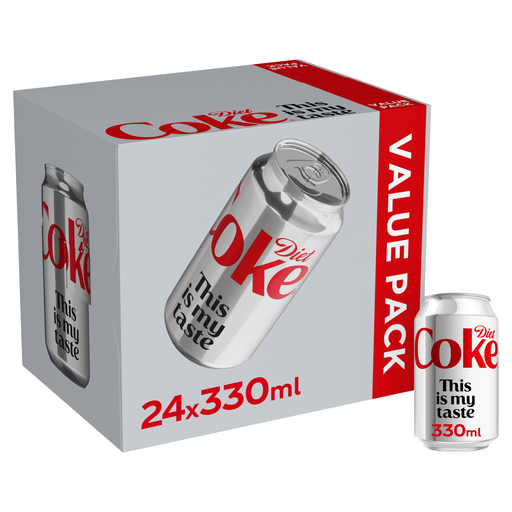 Image unavailable
Coca-Cola Diet Coke, 24 × 330ml
This is the standard Diet Coke pack, not the separately named No Caffeine variant. Check its sugars declaration and ingredients; for children and young people revising later, Great Ormond Street Hospital NHS Foundation Trust advises avoiding caffeinated drinks after lunchtime.
View on Joybuy
 Image unavailable
Pepsi Max Caffeine Free, 24 × 330ml
This caffeine-free variant is an option when avoiding caffeine matters. PepsiCo UK declares 0g sugars per 100ml for Pepsi MAX No Caffeine; check the pack’s sweeteners and phenylalanine-source statement if relevant.
View on Joybuy
 Image unavailable
Pepsi Max, 24 × 330ml
This is the caffeinated Pepsi MAX variant. PepsiCo UK declares 0g sugars per 100ml and lists caffeine among its ingredients, so choose the separately named No Caffeine variant if avoiding caffeine is important.
View on Joybuy
 Image unavailable
Coca-Cola Zero Sugar, 24 × 330ml
This is the standard Zero Sugar variant, not Coca-Cola Zero Sugar Caffeine Free. Coca-Cola Great Britain declares 0g sugars per 100ml and lists caffeine flavouring for the standard variant; check the can if caffeine or its advisory text matters to you.
View on Joybuy
Questions about revision drinks
Does “no added sugar” always mean 0g sugars?
Do not assume so from the wording alone: read sugars per 100ml on the exact product. Coca-Cola Great Britain and PepsiCo UK declare 0g sugars per 100ml for their named Zero Sugar and Pepsi MAX variants, including the separately named caffeine-free versions.
Which cola should I consider for evening revision?
If avoiding caffeine is important, choose a clearly labelled caffeine-free variant and confirm its sugars declaration too. Great Ormond Street Hospital NHS Foundation Trust advises children and young people to limit caffeinated drinks and avoid them after lunchtime because caffeine can make sleep more difficult.
Can a no-added-sugar cola be supplied at school?
The label alone does not establish that it can. The Department for Education says school-food standards apply to food and drink provided to pupils on the premises of state-funded schools in England; Education Scotland and the Department of Education Northern Ireland describe separate school-food requirements. Check the applicable nation’s rules and the individual school’s policy for the proposed use.
What if a phenylalanine-source statement matters to me?
Read the ingredients and advisory statement on the exact pack before choosing it. Coca-Cola Great Britain and PepsiCo UK disclose a phenylalanine-source statement for the named zero-sugar variants discussed here; the sugars figure does not replace that check.


