Travellers choosing zero-sugar cola
If you want cola with a sandwich or snack but want the drink to list 0g sugar, check the label on the exact variant and serving size you plan to carry.


For one train meal, choose a single-serving can of a cola whose label lists the sugar content you want, rather than carrying a large bottle. If you also want to avoid caffeine, look for an explicitly caffeine-free variant: zero sugar alone does not mean no caffeine. Diet and zero-sugar fizzy drinks can still be acidic, so they are not tooth-neutral choices.
If you want cola with a sandwich or snack but want the drink to list 0g sugar, check the label on the exact variant and serving size you plan to carry.
For a late journey or whenever caffeine avoidance matters to you, choose a cola explicitly labelled caffeine-free, no caffeine or zero caffeine. A diet or zero-sugar label does not answer that question.
A multipack can provide separate cans for more than one meal or traveller. A large bottle makes more sense when you can use several servings and manage the opened drink, rather than carrying it for one train meal.
Decide whether you need to avoid sugar, caffeine or both; then choose a pack you can carry and use on the journey.
| Priority | What to check | Your needs |
|---|---|---|
| Sugar | Read sugars per 100ml and per serving on the exact variant. Coca-Cola GB lists 0g sugars for Coca-Cola Zero Sugar; Pepsi UK lists 0g per 330ml for Pepsi Max and Diet Pepsi. | I want cola with my train food but want to know how much sugar is in the serving I take. |
| Caffeine | Check for an explicit caffeine-free, no caffeine or zero caffeine label. Standard Coca-Cola Zero Sugar, Pepsi Max and Diet Pepsi list caffeine or caffeine flavouring. | On this journey, avoiding caffeine matters to me as well as choosing a zero-sugar drink. |
| Pack size | Compare the volume of one can or bottle with the number of servings in the whole pack. Sainsbury's lists eight 250ml servings in its 2L Cola Zero bottle. | A single serving is easier for me to take with one meal; I would use a larger pack across several meals or share it. |
| Ingredients | Read the sweeteners and any phenylalanine notice on the exact variant. Do not assume caffeine-free and standard versions have identical ingredients. | I need to check whether an ingredient or label notice matters for my dietary requirements. |
| Acidity | Do not treat zero sugar as meaning tooth-neutral. Northumbria Healthcare NHS Foundation Trust notes that sugar-free fizzy drinks are still acidic and can cause tooth erosion. | I would rather have cola with my meal than keep sipping it throughout a long journey. |
Standard Coca-Cola Zero Sugar, Pepsi Max and Diet Pepsi list caffeine or caffeine flavouring, so the sugar claim alone will not identify a caffeine-free drink.
Check the exact pack for the words caffeine-free, no caffeine or zero caffeine before buying.
Northumbria Healthcare NHS Foundation Trust says sugar-free fizz is still acidic and can cause tooth erosion.
If you choose cola, have it with your meal rather than sipping it continuously through the journey; choose water when you want a drink to sip over time.
Sainsbury's Cola Zero 2L contains eight 250ml servings. Sainsbury's instructs customers to refrigerate it after opening and use it within three days.
For one train meal, consider a single can or a small resealable bottle instead.
A partly used 2L bottle also means carrying the remaining drink and arranging refrigeration after the journey.
Several of the diet and zero-sugar colas covered here use aspartame and carry a notice that they contain a source of phenylalanine.
Check the ingredients and warning on the exact variant if that notice is relevant to your dietary requirements.
Coca-Cola Zero Sugar and caffeine-free Coca-Cola variants give shoppers different choices for the caffeine question.
Pepsi Max, Diet Pepsi and Pepsi Max No Caffeine cover both standard and caffeine-free zero-sugar choices.
Sainsbury's Cola Zero 2L is a multi-serving option to consider when buying drinks for more than one meal.
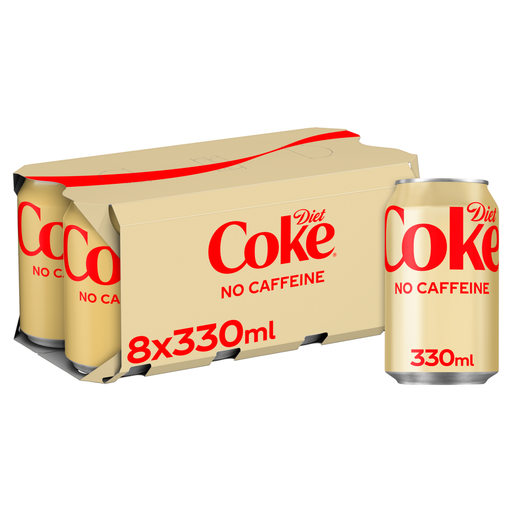
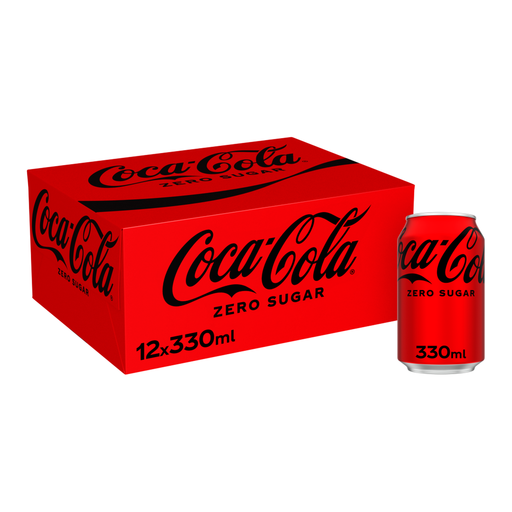
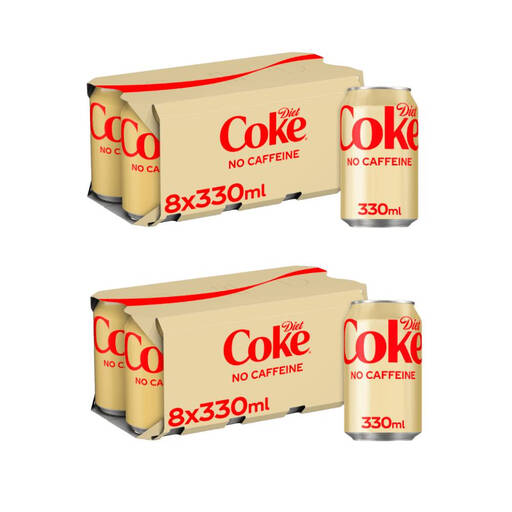
These multipacks contain 330ml cans for taking individual servings with train food. The selection includes both caffeine-free Diet Coke and Pepsi Max variants and a Coca-Cola Zero variant that contains caffeine; compare the total number of cans if you are buying for just one journey.
 No image available
A zero-sugar, caffeine-free option if you want to take a can with a train meal. The pack contains eight 330ml cans. It contains sweeteners and carries a phenylalanine notice; check the label if this is relevant to you.
 No image available
This zero-sugar cola comes in individual 330ml cans for taking with food. The pack contains 12 cans, and its ingredients list caffeine, so choose a separately labelled caffeine-free variant if needed. It also carries a phenylalanine notice.
 No image available
This zero-sugar, caffeine-free variant provides individual cans for a train meal. The two eight-can packs contain 16 cans altogether, so consider whether you will use the rest beyond one journey. The drink contains sweeteners and carries a phenylalanine notice.
 No image available
Choose this zero-sugar, caffeine-free variant if you want individual cans for several meals or travellers. The pack contains 24 cans, considerably more than one train meal requires. It contains sweeteners and carries a phenylalanine notice.
 No image available
This zero-sugar, caffeine-free Pepsi Max variant comes in 330ml cans that can be taken individually with food. The 24-can pack is a larger bundle for one journey. Its description carries a phenylalanine notice; check the label if relevant to you.
Choose by the variant's label and the flavour you prefer, rather than assuming one suits every journey. If avoiding caffeine matters, look for an explicitly caffeine-free version: standard Coca-Cola Zero Sugar lists caffeine flavouring, while Diet Coke Caffeine Free is labelled as having no caffeine.
It can. Coca-Cola Zero Sugar, Pepsi Max and Diet Pepsi list caffeine or caffeine flavouring, so choose a variant explicitly labelled no caffeine, caffeine-free or zero caffeine when you need to avoid it.
No. Northumbria Healthcare NHS Foundation Trust notes that sugar-free fizzy drinks remain acidic and can cause tooth erosion. If you take cola, consider drinking it with your meal rather than sipping it throughout the journey.
Some diet and zero-sugar colas use aspartame and state that they contain a source of phenylalanine. Check the ingredients and warning on the exact variant if that notice affects your dietary requirements.
For one meal, a single can avoids carrying a partly used large bottle. Sainsbury's Cola Zero 2L contains eight 250ml servings and, according to its label, should be refrigerated and used within three days after opening; that format makes more sense when you can use several servings.