Who is this choice for?
The useful distinction is whether you want a drink alongside food, a drink containing sugar, or a cola without caffeine.
Shoppers choosing a low-sugar drink
A zero-sugar cola can provide the cola flavour you want before training. If you also need a pre-workout snack, choose food separately: the zero-sugar colas reviewed do not provide meaningful carbohydrate or protein.
People avoiding caffeine before exercise
Look for a variant explicitly marked caffeine-free, particularly if you prefer to avoid caffeine later in the day. Sugar-free and caffeine-free describe different features, so check both on the exact pack.
What should you check?
Decide first whether you need food as well as a drink, then compare sugar, caffeine and ingredient declarations on the variant you intend to buy.
Zero-sugar cola with caffeine
Choose when: You want cola without sugar and are comfortable having caffeine before exercise.
Bear in mind: It does not replace a carbohydrate-and-protein snack, and the product information here does not establish a measured caffeine dose.
Caffeine-free zero-sugar cola
Choose when: You want a zero-sugar cola without caffeine, including before an evening workout.
Bear in mind: Caffeine-free cola remains a drink rather than a substitute for a pre-workout snack.
Regular cola
Consider when: You specifically want a drink containing carbohydrate rather than a sugar-free cola.
Bear in mind: Regular Coca-Cola contains sugar but no protein, so it does not provide everything described for a typical pre-workout snack.
| Priority |
What to check |
Your needs |
| Snack or drink |
University College London Hospitals NHS Foundation Trust describes a typical pre-workout snack taken 60–90 minutes before exercise as including carbohydrate and protein, with minimal fat. Check whether the cola is accompanying food or being relied on as the snack. |
I want something to eat before training, not just a fizzy drink. If I choose cola, I will consider the food separately. |
| Sugar |
Coca-Cola Great Britain lists 0g sugars and 0g carbohydrate per 100ml for Coca-Cola Zero Sugar, compared with 10.6g of each per 100ml for Coca-Cola Original Taste. Compare the exact variety and the amount you intend to drink. |
If I only want cola alongside my snack, I may prefer a zero-sugar version. If I specifically want carbohydrate in the drink, regular cola is a different choice—but it is not a complete snack. |
| Caffeine |
Check the full variant name and ingredients. Coca-Cola Great Britain lists caffeine flavouring in Coca-Cola Zero Sugar, while Pepsi UK lists caffeine in Pepsi MAX and offers Pepsi MAX No Caffeine as a separate product. |
For a later workout, or whenever I do not want caffeine, I would choose a cola explicitly labelled caffeine-free rather than relying on “diet” or “zero”. |
| Sweeteners |
Read the current ingredients and phenylalanine declaration, particularly if phenylketonuria (PKU) is relevant. Coca-Cola Great Britain and Pepsi UK declare a source of phenylalanine on the zero-sugar varieties reviewed, including Pepsi MAX No Caffeine. |
I need to check the actual pack’s sweeteners and warnings; removing caffeine does not necessarily remove sweeteners. |
Relevant brand references
These brand examples illustrate distinctions between varieties; a brand name alone does not establish a drink’s sugar, caffeine or sweetener content.
Coca-Cola
Coca-Cola Great Britain provides information for both Coca-Cola Zero Sugar and Coca-Cola Original Taste, making the sugar-containing and zero-sugar formulations distinguishable.
- Coca-Cola Great Britain lists 0g sugars per 100ml for Zero Sugar and 10.6g per 100ml for Original Taste.
- Both reviewed formulations list 0g protein per 100ml; Zero Sugar also declares a source of phenylalanine.
Pepsi
Pepsi UK distinguishes caffeinated Pepsi MAX from Pepsi MAX No Caffeine; both are listed as zero-sugar varieties.
- Pepsi UK lists 0g sugars per 100ml for both reviewed MAX variants, with a separate caffeine-free choice.
- The reviewed variants declare a source of phenylalanine. Neither should be treated as a carbohydrate-and-protein snack.
Tesco
Tesco Groceries lists its own-label Tesco Xero Cola alongside branded diet, zero-sugar and caffeine-free colas in its diet and sugar-free cola category.
- The category offers a way to identify own-label and branded varieties to compare.
- Check each individual product’s current label for sugar, caffeine and sweeteners rather than assuming that the listed varieties have the same formulation.
Cola options on Joybuy
These packs represent diet or zero-sugar colas with and without caffeine for use as drinks around a workout. If you also want a pre-workout snack, choose food separately; this selection does not compare regular cola packs.
 No image available
Diet Coke No Caffeine 24 × 330ml
The explicitly caffeine-free variant suits a choice of cola without caffeine before exercise. Treat it as a drink alongside food rather than as the pre-workout snack, and check the current pack’s sweetener and phenylalanine declarations if relevant.
View on Joybuy
 No image available
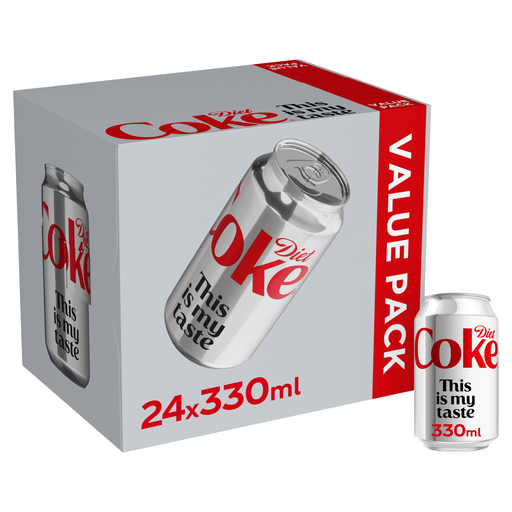
Coca-Cola Diet Coke 24 × 330ml
A diet-cola multipack for someone choosing a drink alongside a separate pre-workout snack. The product selection identifies caffeine in this variant; check the current pack if caffeine or its sweetener declarations affect your choice.
View on Joybuy
 No image available
Pepsi Max Caffeine Free 24 × 330ml
This caffeine-free MAX variant is a choice when you want cola without caffeine before exercise. Pepsi UK lists the caffeine-free formulation as zero sugar and declares a source of phenylalanine; it remains a drink, not a replacement for food.
View on Joybuy
 No image available
Pepsi Max 24 × 330ml
Pepsi UK lists Pepsi MAX as containing caffeine, with 0g sugars, carbohydrate and protein per 100ml. Choose it as a zero-sugar drink if caffeine suits you, not to replace a snack or to calculate a measured caffeine dose.
View on Joybuy
 No image available
Coca-Cola Zero Sugar 24 × 330ml
Joybuy lists 0g sugars, carbohydrate and protein per 100ml for this pack. Its ingredients include caffeine, so it is a zero-sugar drink to consider alongside food if caffeine suits you, rather than a snack or a measured caffeine supplement.
View on Joybuy
Frequently asked questions
Can zero-sugar cola replace a pre-workout snack?
No: the Coca-Cola Zero Sugar and Pepsi MAX formulations reviewed list 0g carbohydrate and 0g protein per 100ml. University College London Hospitals NHS Foundation Trust describes a typical pre-workout snack taken 60–90 minutes before exercise as including carbohydrate and protein. Have cola as a drink alongside food if you need that snack.
When might regular cola be relevant before activity?
Regular cola is a different option if you specifically want carbohydrate in your drink. Coca-Cola Great Britain lists 10.6g carbohydrate, all of it sugars, and 0g protein per 100ml for Coca-Cola Original Taste. That sugar content does not make it a complete pre-workout snack; consider the drink and food separately.
Does zero sugar mean caffeine-free?
No. Coca-Cola Great Britain lists caffeine flavouring in Coca-Cola Zero Sugar, and Pepsi UK lists caffeine in Pepsi MAX. Pepsi MAX No Caffeine is a separate zero-sugar variant, so check the exact name and ingredients. Do not treat a caffeinated cola as a measured pre-workout caffeine product without a dose for that product.
Why check the phenylalanine declaration?
The reviewed Coca-Cola Zero Sugar, Pepsi MAX and Pepsi MAX No Caffeine formulations declare a source of phenylalanine. The Food Standards Agency identifies aspartame, a source of phenylalanine, as a possible risk for people with phenylketonuria (PKU). If this affects your purchase, read the current pack label, including on caffeine-free cola.
Does sugar-free labelling establish whether a cola can be served in a school meal?
No. Sugar-free labelling alone does not establish whether a particular drink meets school-food requirements. Department for Education guidance on school food applies to food and drink provided in state-funded schools in England; check the current rules for the relevant UK nation and the individual product before serving it in that setting. The guidance describes proposed changes from September 2027 as subject to Parliamentary approval, not as rules already in force.


