For occasional servings or a cupboard shared by several people, choose individually portioned cans; a 2-litre bottle makes more sense when the household will use it promptly after opening. Check the sugar figure, caffeine status and sweeteners on the exact product: zero-sugar cola is not necessarily caffeine-free, and bottle storage instructions vary.
Who is this choice for?
How often the household opens a drink matters as much as how many bottles or cans fit in the cupboard.
Households keeping cola for meals or visitors
Cans provide separate unopened servings when people drink cola at different times. If several people will share a bottle soon after opening, a 2-litre format may be more convenient; ASDA and Sainsbury's instruct buyers to refrigerate their cited own-label bottles and use them within 3 days of opening.
Adults avoiding caffeine
Look for a specifically labelled caffeine-free variant rather than relying on a zero-sugar claim. Pepsi UK lists Pepsi MAX No Caffeine, and ASDA lists Coca-Cola Zero Sugar Zero Caffeine; both cited products contain sweeteners and carry a source-of-phenylalanine statement.
Shoppers comparing own-label cola
ASDA, Sainsbury's and Tesco list their own zero- or sugar-free colas. Compare the current ingredients, caffeine information and pack instructions for the particular product, rather than assuming that own-label recipes are interchangeable.
What should you check?
Start with the label and the way your household will use the pack; brand and bottle size alone do not settle either question.
| Priority |
What to check |
Your needs |
| Sugar wording |
Read the sugars figure per 100ml and the product description. Coca-Cola Great Britain and Pepsi UK list 0g sugars per 100ml for Coca-Cola Zero Sugar and Pepsi MAX; ASDA describes its Cola Zero as a zero-added-sugar drink with sweeteners. |
I want to know what is in the particular cola I am stocking, rather than treating ‘no added sugar’ and ‘zero sugar’ as interchangeable label checks. |
| Caffeine |
Check the variant name and ingredients. Standard Coca-Cola Zero Sugar and Pepsi MAX contain caffeine; separately labelled caffeine-free variants are listed by ASDA and Pepsi UK. |
If some of us avoid caffeine, I need a clearly identified caffeine-free option instead of assuming every zero-sugar cola qualifies. |
| Sweeteners |
Compare ingredient lists and any source-of-phenylalanine statement. The cited Coca-Cola Zero Sugar and Pepsi MAX recipes contain aspartame and acesulfame K; ASDA lists acesulfame K and sucralose for Cola Zero. |
Ingredients matter in our household, so I want to check the exact variant before adding a multipack or bottle to the cupboard. |
| Pack and storage |
Compare individual cans with large bottles, then read the post-opening instructions. Tesco lists branded 24 × 330ml can packs; ASDA and Sainsbury's instruct buyers to refrigerate their cited 2-litre colas and use them within 3 days of opening. |
For an occasional drink, separate unopened cans suit how we use cola. A large bottle suits us better if we will finish it within its stated period. |
Mistakes to avoid
-
Assuming zero sugar also means no caffeine
Coca-Cola Great Britain and Pepsi UK list caffeine in standard Coca-Cola Zero Sugar and Pepsi MAX. Those versions will not meet a caffeine-free requirement.
Check the variant name and ingredients, or select one explicitly labelled caffeine-free.
-
Opening a large bottle for an occasional serving
ASDA and Sainsbury's say their cited own-label 2-litre colas should be refrigerated and used within 3 days after opening.
Choose a bottle when the household is likely to use it within the pack's stated period; otherwise, consider separate cans.
An unfinished opened bottle may go unused after that period.
-
Assuming zero sugar means no sweeteners
The cited branded and own-label colas use different sweeteners. The Coca-Cola Zero Sugar and Pepsi MAX information also identifies a source of phenylalanine.
Read the current ingredients and warning on the exact pack if either matters to your household.
-
Treating zero-sugar cola as a drink for young children
The NHS says fizzy drinks are acidic and can damage tooth enamel. It does not recommend diet or reduced-sugar drinks for babies and young children.
Follow NHS drinks guidance for this age group rather than choosing cola on the basis of its sugar wording.
Brand and own-label references
These product-line examples show why the variant and ingredient list matter; they do not imply that every product from a brand has the same recipe.
Coca-Cola
Coca-Cola Great Britain lists standard Coca-Cola Zero Sugar, while ASDA lists a separate Coca-Cola Zero Sugar Zero Caffeine bottle.
- Coca-Cola Great Britain lists 0g sugars per 100ml for standard Coca-Cola Zero Sugar.
- The standard version contains caffeine; the cited caffeine-free variant still contains sweeteners and carries a source-of-phenylalanine statement.
Pepsi
Pepsi UK lists Pepsi MAX and a separately named Pepsi MAX No Caffeine variant.
- Pepsi UK lists 0g sugars per 100ml for both cited variants.
- Standard Pepsi MAX contains caffeine. The cited caffeine-free version contains aspartame and acesulfame K and states that it contains a source of phenylalanine.
ASDA
ASDA lists Cola Zero as a 2-litre zero-added-sugar cola with sweeteners.
- The ingredient list identifies acesulfame K and sucralose, allowing a direct recipe check.
- The cited cola contains caffeine; once opened, ASDA says to refrigerate it and use it within 3 days.
Sainsbury's
Sainsbury's lists a 2-litre Cola Zero bottle with sweeteners.
- Its product information lists less than 0.5g sugars per 100ml and identifies the sweeteners in the recipe.
- The cited product contains caffeine; Sainsbury's instructs buyers to refrigerate it and use it within 3 days of opening.
Tesco
Tesco lists its own Xero Cola alongside branded sugar-free cola packs.
- Tesco describes the cited Xero Cola as a sugar-free carbonated cola.
- That Xero Cola contains caffeine and sweeteners; check the current item label when comparing it with a branded pack.
Cola options on Joybuy
These options are mainly multipack cans for separate servings, alongside a bundle of larger caffeine-free bottles. Check the label of any Diet Coke variant if a particular sugar figure is essential to your choice.
 No image available
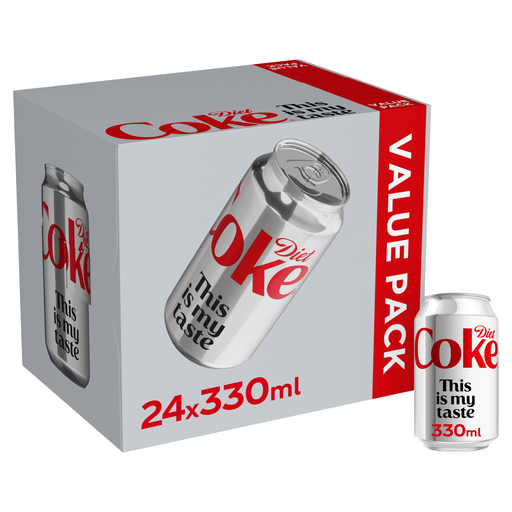
Coca-Cola Diet Coke 24 × 330ml cans
The 24-can format provides separate servings for a shared cupboard. Check this variant's nutrition panel, caffeine status and ingredients against your household's requirements.
View on Joybuy
 No image available
Pepsi MAX Caffeine Free 24 × 330ml cans
This pack combines individual cans with a caffeine-free variant. Pepsi UK lists 0g sugars per 100ml for Pepsi MAX No Caffeine; its cited recipe contains aspartame and acesulfame K and states that it contains a source of phenylalanine.
View on Joybuy
 No image available
Pepsi MAX 24 × 330ml cans
The 24-can pack suits households using cola a serving at a time. Pepsi UK lists 0g sugars per 100ml for standard Pepsi MAX; this variant contains caffeine, aspartame and acesulfame K.
View on Joybuy
 No image available
Coca-Cola Zero Sugar 24 × 330ml cans
Separate cans provide unopened servings for pantry stocking. Coca-Cola Great Britain lists 0g sugars per 100ml for this cola; its standard recipe contains caffeine and sweeteners, including aspartame.
View on Joybuy
 No image available
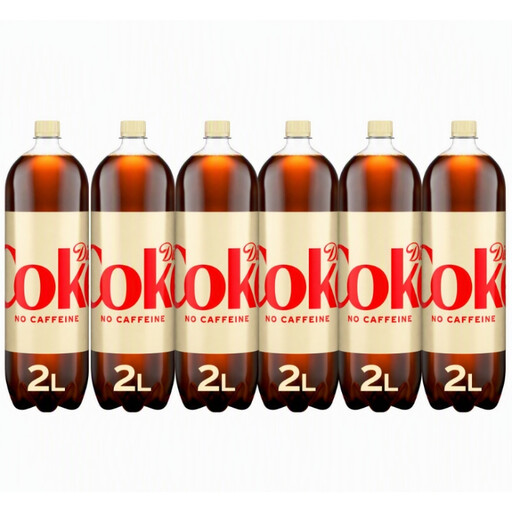
Diet Coke Caffeine Free 2L × 6
This six-bottle bundle is a larger-format caffeine-free option for households using bottles regularly. Check the pack's sugar figure, ingredients and instructions for storing each bottle after opening before choosing it for pantry stock.
View on Joybuy
Common questions
Is ‘no added sugar’ the same label check as ‘zero sugar’?
No: check the sugars figure per 100ml and ingredients of the exact cola rather than relying on either phrase alone. Coca-Cola Great Britain and Pepsi UK list 0g sugars per 100ml for Coca-Cola Zero Sugar and Pepsi MAX, while ASDA describes its Cola Zero as a zero-added-sugar drink with sweeteners.
Are zero-sugar colas caffeine-free?
Not necessarily. Standard Coca-Cola Zero Sugar and Pepsi MAX contain caffeine; Coca-Cola Zero Sugar Zero Caffeine and Pepsi MAX No Caffeine are separately identified variants. Check the name and ingredients of the pack you are buying.
How long can an opened 2-litre bottle be kept?
ASDA and Sainsbury's instruct buyers to refrigerate their cited own-label 2-litre zero colas and use them within 3 days of opening. Follow the instructions on your particular bottle rather than applying that period to every cola.
Does zero sugar mean no sweeteners?
No. The cited Coca-Cola Zero Sugar and Pepsi MAX recipes contain aspartame and acesulfame K, while ASDA lists acesulfame K and sucralose for its Cola Zero. Read the exact product's ingredients if the sweetener used matters to your household.
Is zero-sugar fizzy cola suitable for babies and young children?
The NHS does not recommend diet or reduced-sugar drinks for babies and young children. It also says fizzy drinks are acidic and can damage tooth enamel; a zero-sugar label does not change that guidance.


