Choose the cola your household is likely to drink, then check the exact pack for sugar, caffeine and size. Coca-Cola describes Zero Sugar as closer to its Original Taste and Diet Coke as lighter; standard Pepsi MAX is another zero-sugar option, while caffeine avoidance calls for a variety explicitly labelled caffeine free. For a weekly shop, weigh individual cans against how quickly you would finish an opened bottle, and remember that sugar-free fizzy drinks can still be acidic.
Who is shopping for cola?
Households switching from regular cola
If reducing sugar from fizzy drinks is the aim, compare the sugars figure per 100ml on the exact variety. The NHS suggests sugar-free, diet or no-added-sugar drinks instead of sugary fizzy drinks; Coca-Cola GB and Pepsi UK list 0g sugars per 100ml for Coca-Cola Zero Sugar and standard Pepsi MAX respectively.
Households choosing bottles or multipacks
Match the format to how the household will use it. Sainsbury's lists eight 250ml servings in its Cola Zero 2L bottle and instructs shoppers to refrigerate it and use it within three days of opening. Individual 330ml cans offer a different way to divide up a weekly purchase.
Shoppers avoiding caffeine
Look for an explicitly caffeine-free variety, not just the words “diet” or “zero sugar”. Coca-Cola GB and Pepsi UK list caffeine in standard Coca-Cola Zero Sugar and Pepsi MAX; the separately labelled Pepsi MAX No Caffeine product is described as having no sugar and no caffeine.
What should you check before choosing?
Start with the flavour and ingredients that matter to your household, then choose a pack size you can use as intended.
| Priority |
What to check |
Your needs |
| Sugar |
Read sugars and energy per 100ml on the exact pack. Do not use “diet” or “zero” in the name as a substitute for the nutrition panel. |
I want to replace sugary cola while keeping a cola option in the weekly shop. The NHS suggests choosing sugar-free, diet or no-added-sugar drinks instead of sugary fizzy drinks. |
| Flavour |
Check the named variety before committing to a large pack. Coca-Cola GB describes Zero Sugar as closer to Coca-Cola Original Taste and Diet Coke as having a lighter, distinct flavour; that is the manufacturer's description, not a taste test. |
Will everyone drinking it prefer that variety? I would rather choose a familiar flavour than leave a large pack unused. |
| Caffeine and ingredients |
Look for explicit caffeine-free wording if required. Read the sweeteners and phenylalanine statement on the exact variety, including any caffeine-free version. |
Someone in my household avoids caffeine or must check for phenylalanine. A zero-sugar label alone does not answer either question. |
| Pack format |
Compare total volume and serving size with likely use and fridge space. For Sainsbury's Cola Zero 2L, the label says to refrigerate and use within three days after opening. |
We might share a bottle promptly, or prefer individually sealed cans for drinks spread across the week. |
| Acidity |
Consider how often fizzy drinks will be consumed as well as their sugar content. Norfolk and Suffolk NHS notes that even sugar-free fizzy drinks can be acidic and erode enamel. |
Reducing sugar matters to me, but I do not want to assume that “zero sugar” removes every consideration associated with fizzy drinks. |
Common buying mistakes
-
Assuming zero sugar removes the acidity concern
Norfolk and Suffolk NHS notes that sugar-free fizzy drinks can still be acidic and can erode enamel. Sugar content and acidity are separate considerations.
Use the nutrition panel to check sugar, but consider how often the household drinks fizzy cola too.
-
Assuming diet or zero-sugar cola is caffeine free
Standard Coca-Cola Zero Sugar and Pepsi MAX list caffeine, while caffeine-free varieties are separately labelled.
If caffeine avoidance matters, check the full variety name and ingredients on the pack before buying.
-
Overlooking the phenylalanine statement
Coca-Cola GB and Pepsi UK state that their standard zero-sugar varieties contain a source of phenylalanine; the listed Pepsi MAX No Caffeine product carries that statement too.
For anyone who must avoid phenylalanine, check the warning on the exact pack rather than relying on the brand or caffeine status.
-
Opening a large bottle for occasional drinks
Sainsbury's instructs shoppers to refrigerate its Cola Zero 2L bottle and use it within three days after opening.
If the household is unlikely to finish that bottle within its labelled period, consider individual cans or a smaller format.
Brand and own-label references
Coca-Cola
Coca-Cola Zero Sugar and Diet Coke offer different flavour profiles for shoppers comparing sugar-free cola.
- Coca-Cola GB describes Zero Sugar as closer to Original Taste and Diet Coke as lighter; it describes both as sugar free and calorie free.
- Coca-Cola Zero Sugar lists caffeine flavouring, sweeteners and a source of phenylalanine. Check the exact variety when those ingredients matter.
Pepsi
Pepsi MAX is a zero-sugar cola route, with a separately labelled No Caffeine variety for shoppers avoiding caffeine.
- Pepsi UK lists 0g sugars per 100ml for standard Pepsi MAX; the Pepsi MAX No Caffeine product is labelled no sugar and no caffeine.
- Standard Pepsi MAX lists caffeine and a source of phenylalanine. The No Caffeine product also states that it contains a source of phenylalanine.
Sainsbury's
Sainsbury's Cola Zero 2L is an own-label bottle option for shoppers considering a shared format.
- Sainsbury's lists sugars below 0.5g per 100ml and eight 250ml servings for this bottle.
- The listed recipe contains caffeine and uses sucralose and acesulfame K. Once opened, the bottle should be refrigerated and used within three days.
Cola multipacks on Joybuy
These can multipacks cover standard and caffeine-free Pepsi MAX, Diet Coke and Coca-Cola Zero Sugar choices. Compare the number of cans with your household's likely use, and check the exact ingredients before choosing.
 No image available
Pepsi MAX Caffeine Free, 24 x 330ml
An individual-can format for a household choosing caffeine-free Pepsi MAX. The listing states 0g sugars per 100ml and a pack of 24 x 330ml cans. It contains a source of phenylalanine, so check the exact pack label if that matters.
View on Joybuy
 No image available
Pepsi MAX, 24 x 330ml
A multipack for households choosing standard Pepsi MAX rather than a caffeine-free variety. The listing states 0g sugars per 100ml and 24 x 330ml cans. Its ingredients include caffeine-containing flavourings, and the label states that it contains a source of phenylalanine.
View on Joybuy
 No image available
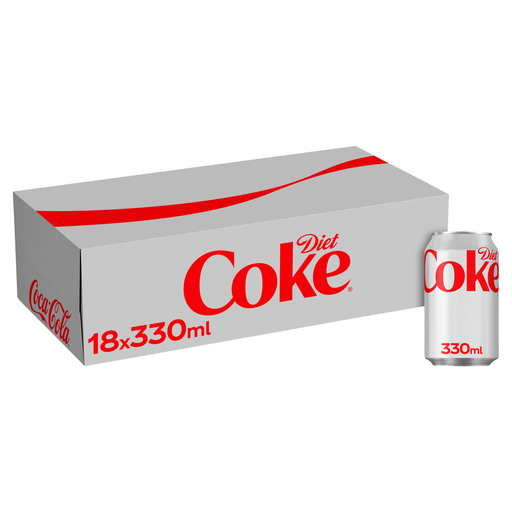
Diet Coke, 18 x 330ml
Individual cans for a household that prefers the lighter flavour Coca-Cola attributes to Diet Coke. This pack contains 18 x 330ml cans, and its listing states 0g sugars per 100ml. It lists caffeine-containing flavourings and a source of phenylalanine.
View on Joybuy
 No image available
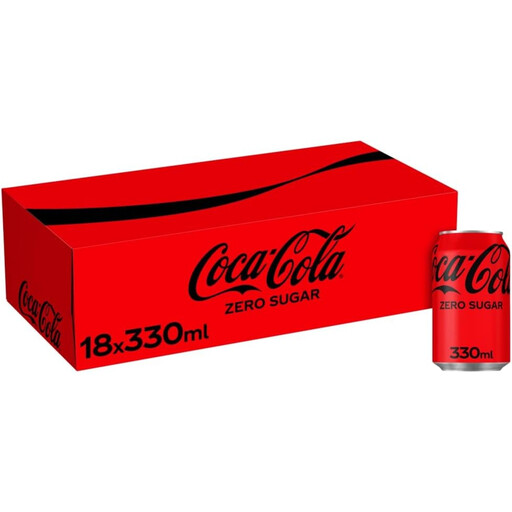
Coca-Cola Zero Sugar, 18 x 330ml
A can multipack for shoppers interested in the flavour Coca-Cola describes as closer to Original Taste. The listing states 0g sugars per 100ml and 18 x 330ml cans. This variety contains caffeine and a source of phenylalanine.
View on Joybuy
 No image available
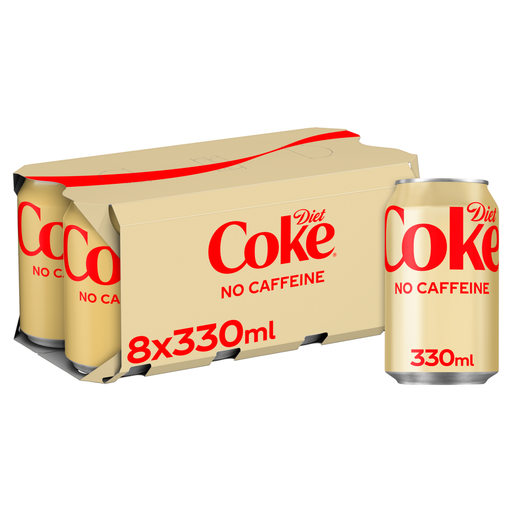
Diet Coke Caffeine Free, 8 x 330ml
A smaller can multipack for shoppers choosing caffeine-free Diet Coke. It contains 8 x 330ml cans, and the listing states 0g sugars per 100ml. The label states that it contains a source of phenylalanine.
View on Joybuy
Frequently asked questions
What is the difference between Coca-Cola Zero Sugar and Diet Coke?
Coca-Cola GB describes both as sugar free and calorie free, but says Zero Sugar is closer to Coca-Cola Original Taste while Diet Coke has a lighter flavour from a different blend. Choose the flavour your household prefers rather than treating the names as interchangeable.
Are diet and zero-sugar colas always caffeine free?
No. Standard Coca-Cola Zero Sugar and Pepsi MAX list caffeine. If avoiding caffeine is necessary, choose an explicitly labelled caffeine-free variety and check the exact pack.
What should someone avoiding phenylalanine check?
Check the ingredient and warning information on the exact cola pack. Coca-Cola Zero Sugar, standard Pepsi MAX and the listed Pepsi MAX No Caffeine product all state that they contain a source of phenylalanine; caffeine-free wording does not settle this separate question.
How long can an opened 2L cola bottle be kept?
For Sainsbury's Cola Zero 2L, the label says to refrigerate after opening and use within three days. Follow the instructions on the particular bottle you buy, as storage directions can differ between products.


