What should you check before choosing?
Decide what the drink needs to contribute to the ride before comparing sugar claims or can sizes.
Carbohydrate-containing sports drink
Consider it when: You want drink-based carbohydrate as part of a planned longer-ride intake.
Trade-off: Its carbohydrate needs to be counted alongside what you eat, rather than added automatically to every ride.
Zero-sugar energy drink
Consider it when: You want flavour or caffeine without relying on the drink for carbohydrate.
Trade-off: You must plan any needed ride fuel separately and check the caffeine in the portion you drink.
Sugared energy drink
Consider it when: You intend to count its stated carbohydrate towards your ride plan.
Trade-off: Sugar content alone does not tell you whether its caffeine or other ingredients fit that plan.
| Priority | What to check | Your needs |
|---|
| Ride fuel |
Read carbohydrate per serving and the amount you expect to drink. Count it alongside food taken during the ride. |
For a longer ride, I want to know where my carbohydrate will come from; a zero-sugar can is not my carbohydrate plan. |
| Caffeine amount |
Compare mg per can with mg per 100 ml, then calculate the amount in your intended portion. Include caffeine from other drinks and products. |
If I choose caffeine, I want to know the total I am planning to consume, not just the concentration printed on the label. |
| Sugar and variant |
Check the exact product’s sugars, total carbohydrate and serving size; drinks in the same brand range can differ. |
I may want a sweet-tasting drink without sugar, or I may deliberately count a sugared drink towards ride fuel. |
| Fluids and electrolytes |
Plan the fluid you will carry and check electrolyte information on the exact drink if it has a role in that plan. |
On a long or warm ride, I do not want to assume that an energy drink covers everything I intend to drink. |
Brand and retailer references
These examples show why the exact variant and container matter; they are not a list of products available in the Joybuy selection below.
Red Bull
Red Bull UK states that a 250 ml can of Red Bull Sugarfree contains 80 mg caffeine.
- The stated amount is for a single, identifiable can.
- Sugarfree is not a source of sugar-based ride carbohydrate.
Monster
Monster Energy UK lists its 500 ml Monster Ultra as a zero-sugar drink with 150 mg caffeine.
- The manufacturer states caffeine for the full 500 ml can.
- Count that full-can amount if you intend to drink it all; zero sugar does not replace planned carbohydrate.
Relentless
Relentless lists sucrose, glucose and caffeine in its Cherry drink.
- Its ingredient list distinguishes Cherry from a zero-sugar choice.
- Check the nutrition and caffeine information for your portion before counting it towards ride fuel.
Lucozade
Sainsbury’s lists Lucozade Energy Zero Sugar Orange without sugar, while Tesco lists standard Lucozade Energy products.
- The named zero-sugar variant offers a distinct choice from standard Energy products.
- Check the precise Lucozade product rather than assuming the range has one sugar, carbohydrate or caffeine profile.
Tesco
Tesco lists its 1 litre Blue Spark Sugar Free with 30 mg caffeine per 100 ml.
- The per-100 ml figure lets you calculate caffeine for the portion you pour.
- The full litre would contain 300 mg caffeine, so the bottle should not be mistaken for a single small serving.
Sainsbury’s
Sainsbury’s lists zero-sugar energy drinks and states that it does not sell high-caffeine energy drinks to under-16s.
- Its listings include named zero-sugar variants that can be checked individually.
- Its under-16 rule is a retailer policy, not evidence of a UK-wide statutory ban.
Joybuy drinks for different ride plans
These Joybuy options include zero-sugar energy drinks for cyclists considering caffeine, a sugared energy drink whose carbohydrate can be counted, and a carbohydrate-containing sports drink. Compare the exact serving with what you intend to eat and drink on the ride.
 No image available
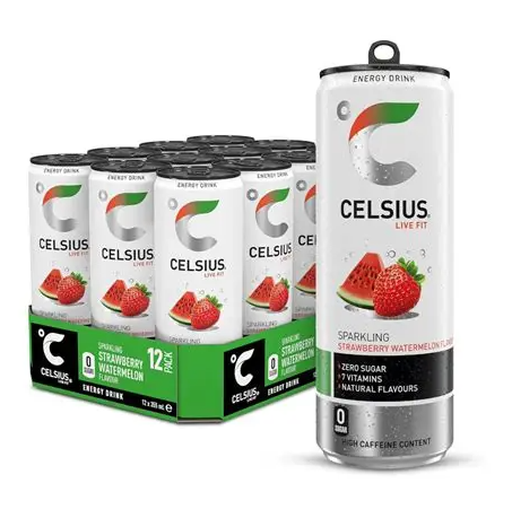
CELSIUS Watermelon Strawberry, 12 × 355 ml
For an adult choosing caffeine without drink-based carbohydrate, the listed figures are 113.6 mg caffeine, 0 g sugars and 0 g carbohydrate per 355 ml can. Plan any ride fuel separately and count caffeine from other sources; the product information advises against use by children, pregnant or breastfeeding women, and people sensitive to caffeine.
View on Joybuy
 No image available
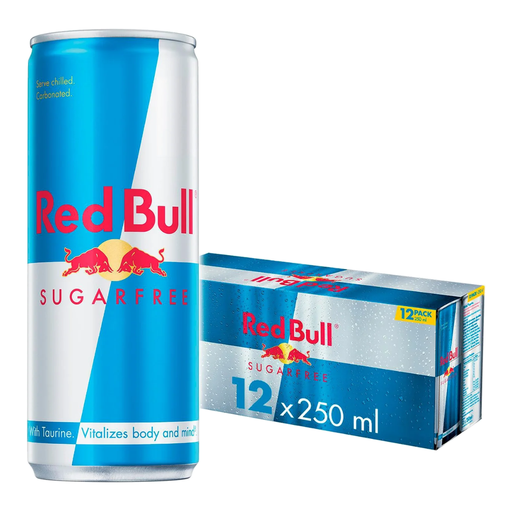
Red Bull Sugarfree, 12 × 250 ml
The 250 ml can provides a stated 80 mg caffeine, 0 g sugars and 0 g carbohydrate, so it suits a choice to measure caffeine rather than obtain ride fuel. Plan carbohydrate separately where needed. The product information identifies a source of phenylalanine and advises against use by children, pregnant or breastfeeding women, and people sensitive to caffeine.
View on Joybuy
 No image available
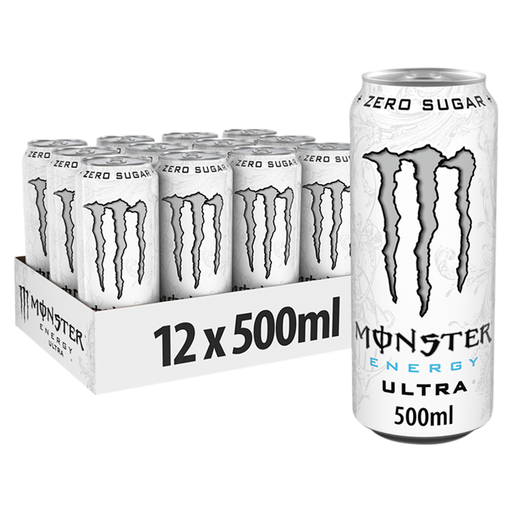
Monster Ultra White, 12 × 500 ml
This zero-sugar option is listed with 160 mg caffeine, 0 g sugars and 4.4 g carbohydrate per 500 ml can. Its carbohydrate figure is not a substitute for planned ride fuelling. Count the caffeine in the amount you intend to drink; do not assume its stated salt figure makes it an electrolyte drink for your ride plan.
View on Joybuy
 No image available
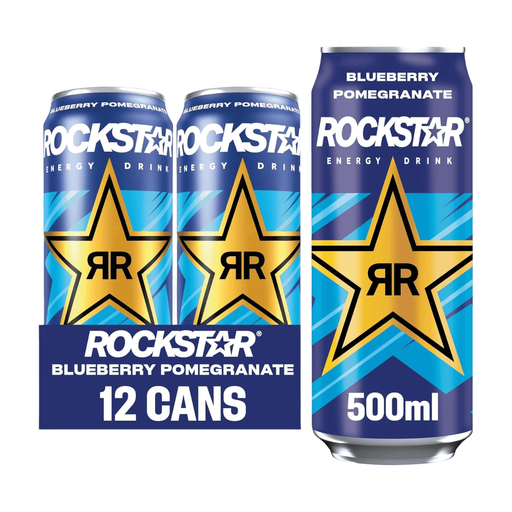
Rockstar Blueberry & Pomegranate, 12 × 500 ml
This is a sugared option to consider only if you intend to count drink carbohydrate in your ride plan. Its listed sugars are 4.2 g per 100 ml, and caffeine is 200 mg per 500 ml can. Check the total carbohydrate on the label and include other caffeine sources before deciding on a portion; sugar content alone does not establish its suitability as a sports drink.
View on Joybuy
 No image available
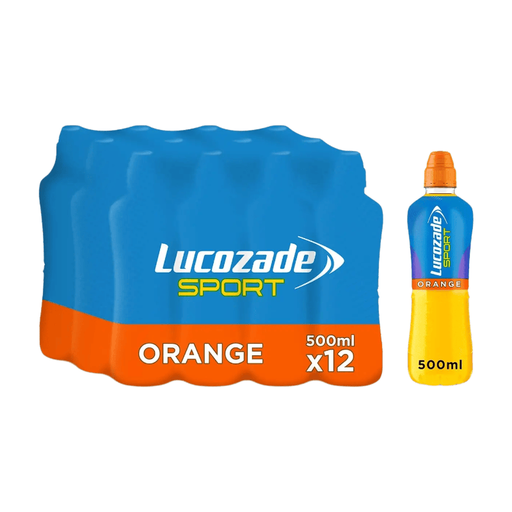
Lucozade Sport Orange, 12 × 500 ml
This carbohydrate-containing sports drink is a different choice from a zero-sugar energy drink when drink-based carbohydrate is part of a longer-ride plan. The 500 ml bottle has a sports cap; the product information lists carbohydrate, salt and sodium citrate. Check the current label for the amounts you need per bottle, including electrolyte quantities and caffeine information, before using it to plan intake.
View on Joybuy
Questions about cycling and energy drinks
Can a zero-sugar energy drink fuel a long bike ride?
It cannot provide sugar-based carbohydrate for the ride. British Cycling’s event-day guidance describes taking on carbohydrate during cycling, so plan that intake through food or a carbohydrate-containing drink if it is part of your ride plan. Treat caffeine as a separate choice.
How should I compare caffeine between cans?
Use the caffeine amount for the portion you will drink, not the pack size or a per-100 ml figure on its own. Add caffeine from other sources and consider your own sensitivity. The European Food Safety Authority’s caffeine assessment concerns the general healthy population, so its conclusions should not be assumed to apply to everyone.
Does caffeine improve cycling performance?
Research reviewed in the 2021 International Society of Sports Nutrition position stand reports improved exercise performance with caffeine doses of 3–6 mg per kg of body mass, but individual responses differ. That finding does not establish that every cyclist needs caffeine, or that an energy drink is the right way to obtain it.
Can a sugared energy drink replace a sports drink?
Do not assume so from its sugar content. Count the carbohydrate in the portion you intend to drink, check its caffeine, and compare its other label information with the role you want the drink to play in your ride plan.
Is there a UK-wide ban on selling energy drinks to under-16s?
Do not treat a retailer’s age rule as proof of UK-wide law. On 16 July 2026, the Department of Health and Social Care described an intended restriction on sales of high-caffeine energy drinks to children in England that would require secondary legislation. Sainsbury’s separately states that it does not sell high-caffeine energy drinks to under-16s. Check the current law in the relevant UK nation and the retailer’s current policy.


