What should you check first?
Start with the exact variant and its nutrition panel, then check caffeine and ingredients separately. Flavour and pack size can help narrow the remaining options for the snack occasion.
| Priority |
What to check |
Your needs |
| Listed sugars |
Compare sugars on the exact regular and diet or zero-sugar packs. Use the same basis, such as per 100 ml, when comparing different sizes. |
I want a fizzy drink for a snack without assuming the regular and zero-sugar versions contain the same amount of sugar. |
| Caffeine |
Look for an explicit caffeine-free variant and check its ingredients. Pepsi UK identifies Pepsi Max Caffeine Free as a zero-sugar, zero-caffeine option; its standard Pepsi Max product lists caffeine. |
If caffeine avoidance matters in our household, a zero-sugar claim alone does not answer my question. |
| Sweeteners and phenylalanine |
Read the ingredients and any source-of-phenylalanine statement on the chosen pack. Formulations can differ between variants. |
Someone following a prescribed diet may need the exact ingredient and label information before I serve the drink. |
| Flavour and format |
Check whether the variant is cola, citrus or fruit-flavoured, and confirm the can size and number in a multipack. |
We might prefer a non-cola flavour or want individual cans for several snack occasions. |
| Where it is served |
Distinguish a family snack at home from food supplied by a school. Department for Education school-food guidance concerns provision in state-funded schools in England. |
I am buying for home during half term, rather than choosing drinks to be supplied through a school. |
Brand and own-label references
These examples show why the full variant name matters; a brand name alone does not establish a drink’s sugar, caffeine or ingredient details.
Coca-Cola
Coca-Cola Zero Sugar is a cola option for shoppers comparing regular and zero-sugar variants.
- Coca-Cola Great Britain lists 0 g sugars per 100 ml for Coca-Cola Zero Sugar.
- Its ingredient information lists caffeine flavouring and a source-of-phenylalanine statement; zero sugar does not mean caffeine-free.
Pepsi
Pepsi has distinct zero-sugar cola variants for different caffeine requirements.
- Pepsi UK identifies Pepsi Max Caffeine Free as containing zero sugar and zero caffeine.
- Standard Pepsi Max lists caffeine. The caffeine-free variant still lists sweeteners and a source of phenylalanine.
Sprite
Sprite Zero offers a lemon-and-lime route for shoppers who do not want cola.
- Coca-Cola Great Britain identifies Sprite Zero as a no-sugar variant.
- The regular Sprite and Sprite Zero variants have different sugar information; Sprite Zero also lists sweeteners and a source of phenylalanine.
Fanta
Fanta gives fruit-flavour shoppers regular and zero-sugar variants to distinguish.
- Tesco Groceries lists Fanta Zero Orange among its fizzy-drink options.
- Coca-Cola Great Britain lists sugars for regular Fanta Orange. Check the nutrition and ingredients of the exact Fanta Zero flavour you choose.
Dr Pepper
Dr Pepper is another flavour to consider when comparing regular and zero variants.
- Tesco Groceries lists Dr Pepper Zero in a multipack format.
- A category listing does not establish the nutrition or caffeine details of every Dr Pepper variant; check the selected product label.
Tesco
Tesco own-label drinks provide additional diet and zero-sugar variants to compare with branded options.
- Tesco Groceries lists own-label options including Tesco Diet Lemonade and Tesco Lemon & Lime Zero.
- The own-label name does not establish that different flavours have identical ingredients or caffeine information.
Joybuy fizzy-drink options
These are cola and non-cola options for half-term snacks, including cans labelled caffeine-free and drinks labelled zero sugar or sugar-free. Check the exact pack when sugar, caffeine or a particular ingredient determines your choice.
 No image available
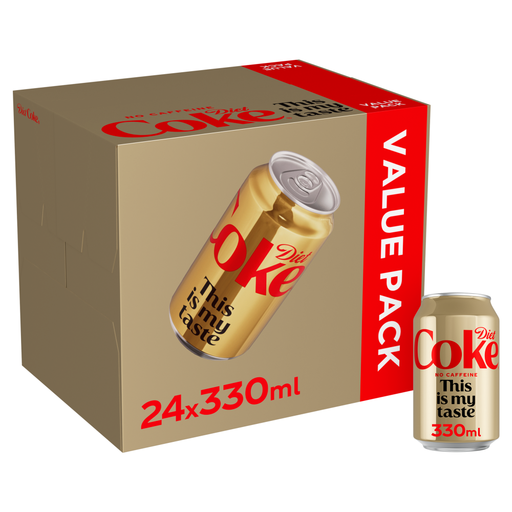
Diet Coke No Caffeine, 24 × 330 ml
This cola multipack is labelled No Caffeine, a distinction to look for when caffeine avoidance matters. Check the exact pack’s sugar information, ingredients and phenylalanine statement if they affect your choice.
View on Joybuy
 No image available
Pepsi Max Caffeine Free, 24 × 330 ml
For a cola choice where both sugar and caffeine matter, Pepsi UK identifies this variant as zero sugar and zero caffeine. The 24 × 330 ml pack contains cans; check the exact pack’s sweeteners and source-of-phenylalanine statement where relevant.
View on Joybuy
 No image available
Coca-Cola Zero Sugar, 24 × 330 ml
This 24-can cola pack is an option when choosing the Zero Sugar variant rather than a regular cola. Coca-Cola Great Britain lists 0 g sugars per 100 ml, but its ingredient information includes caffeine flavouring and a source-of-phenylalanine statement.
View on Joybuy
 No image available
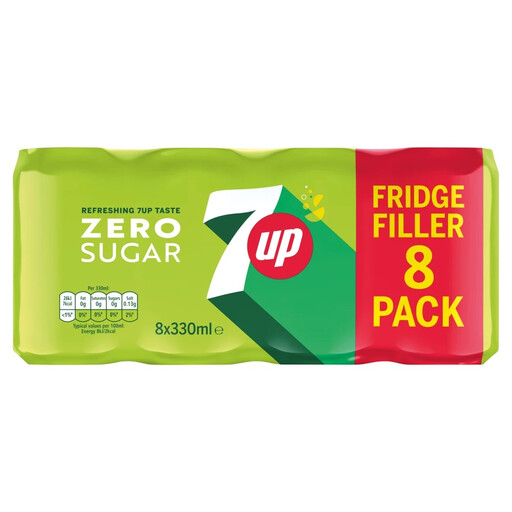
7UP Zero, 8 × 330 ml
This eight-can pack offers a non-cola option labelled Zero. Check the exact pack’s nutrition and ingredients if caffeine avoidance or a prescribed dietary restriction matters.
View on Joybuy
 No image available
Tango Apple Sugar-Free, 24 × 330 ml
For a fruit-flavoured option, this sugar-free apple variant comes as 24 × 330 ml cans. Check the exact pack for caffeine and any phenylalanine statement before choosing it for someone to whom either matters.
View on Joybuy
Frequently asked questions
Does zero sugar mean a fizzy drink is caffeine-free?
No. Coca-Cola Great Britain lists caffeine flavouring for Coca-Cola Zero Sugar, and Pepsi UK lists caffeine in standard Pepsi Max. If caffeine avoidance matters, choose an explicitly caffeine-free variant and check its ingredients; Pepsi Max Caffeine Free is one zero-sugar example.
Can I assume diet and regular versions have the same sugar content?
No. Regular and zero-sugar variants can list different amounts of sugar. Compare the full product name and the nutrition panel on the exact can or bottle, using the same quantity basis when comparing different serving sizes.
Do England’s school-food rules govern half-term snacks bought for home?
No. Department for Education guidance on school food concerns food and drink provided in state-funded schools in England, not a family’s snack purchase for home. If you are arranging school provision, check the rules applicable to that setting rather than applying a home-shopping choice.
When does a phenylalanine statement matter?
It matters when someone’s prescribed diet requires that ingredient information. Several zero-sugar variants, including Coca-Cola Zero Sugar and Pepsi Max, carry a source-of-phenylalanine statement; check the exact pack and follow the person’s dietary advice rather than relying on a generic “diet” or “zero” label.


