
24/7 Customer Support

Free returns

Same-day & Next-day Delivery

Quality Guaranteed

Unlock Your Welcome Offers: FREE Delivery | Up to 80% OFF | Free 30-day JoyPlus trial
Download the APP
Choosing zero sugar drinks can seem straightforward until a promising multipack turns out to be unsuitable for your household, difficult to store or different from what the front-of-pack wording suggests. Whether you are stocking a student flat, office fridge, family cupboard or party table, the label matters more than the marketing message.
This guide explains the common buying traps, the specifications worth checking and a selection of drinks matched to different shopping needs.
These terms are not interchangeable. A drink labelled no added sugar may still contain naturally occurring sugars from fruit or juice. For example, a standard fruit drink can contain sugar even when no sugar has been added during production.
Check the nutrition table, particularly:
Ribena Blackcurrant Juice Drink No Added Sugar 24x250ml, for example, lists 4.7g of sugars and 20kcal per 100ml. By contrast, Ribena Conc Blackcurrant No Added Sugar 1.5L lists 0g of sugars per 100ml but still provides 18kcal per 100ml before dilution. The wording on the front is only part of the story.
Many low-calorie drinks contain very little energy, but not necessarily exactly zero. A flavoured drink may include fruit juice, carbohydrates or other ingredients that contribute a small amount of energy.
Always compare the per-can or per-bottle figures, not only the per-100ml information. A 330ml can and a 500ml bottle can feel similar in a shopping basket but contain different total amounts.
A 24-can fizzy drinks multipack may offer convenience for regular consumption, but it also takes up cupboard, fridge or utility-room space. Bottles can be easier to carry individually, while cans are convenient for portioning and serving guests.
Before ordering, check:
For a genuine zero-sugar choice, look for 0g sugars per 100ml and confirm the same information for the stated serving. Products may use sweeteners such as aspartame, acesulfame K, sucralose, steviol glycosides or cyclamates.
Some drinks contain a source of phenylalanine because of aspartame. This is clearly relevant for people who need to avoid this ingredient. Always read the latest label, as formulations can change.
The category includes more than cola. Consider whether you want:
Carbonation, caffeine and acidity can also affect when and how you prefer to drink a product. A caffeine-free lemon-and-lime drink may suit an evening gathering, while cola or tea may be more appropriate for shoppers who prefer a caffeinated beverage.
A low shelf price does not always mean lower cost per serving. Divide the pack price by the number of cans, bottles or prepared servings. Concentrates require an additional calculation based on the dilution instructions.
For drinks for home and office, larger multipacks can reduce the frequency of reordering. Smaller packs may be more practical if you are testing a flavour or have limited storage.
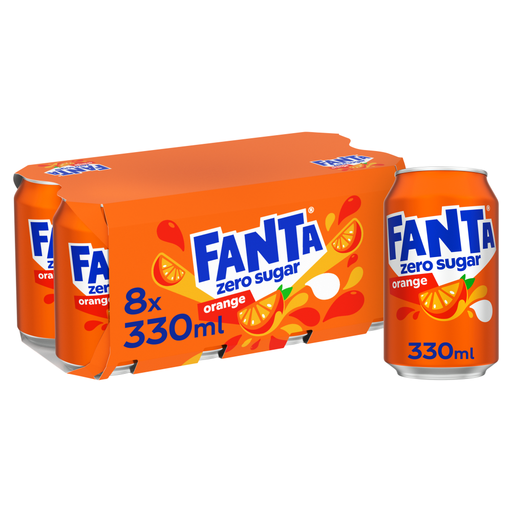
Why This Fits Their Persona: An eight-can pack is a manageable starting point for flats, small households or shoppers comparing sugar-free orange drink options.
The listed nutrition information states 0.4g sugars and 3.1kcal per 100ml, so shoppers can assess the actual figures rather than relying only on “zero sugar” wording.
330ml cans; orange juice from concentrate is listed at 4%; suitable for chilled everyday serving.
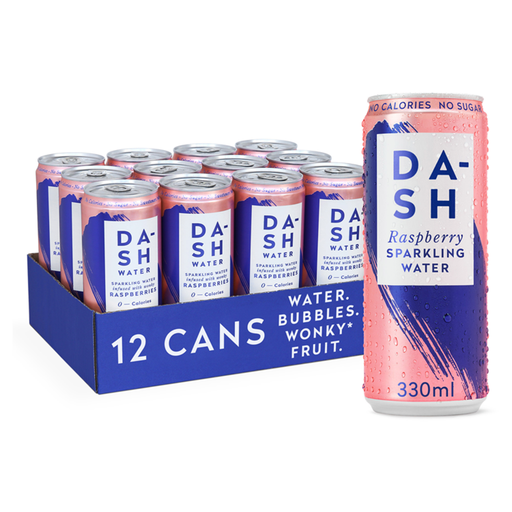
Why This Fits Their Persona: A useful option for shoppers who prefer sparkling water with fruit flavour but do not want sugar or sweeteners.
The ingredient list identifies carbonated spring water, natural flavourings, raspberry extract and citric acid, with no listed sugar or sweetener.
330ml cans; 1kcal per 100ml; best served ice cold and stored as directed.

Why This Fits Their Persona: The 24-can format suits offices, shared homes, party hosts and regular cola drinkers who want a substantial cupboard stock.
Each 330ml can is listed at 0g sugar and 1kcal. The label also identifies caffeine and a source of phenylalanine, helping buyers check suitability before ordering.
24 x 330ml format; sugar-free cola flavour; cans are listed as 100% recyclable.

Why This Fits Their Persona: Fifteen portable bottles are convenient for desks, commuting, packed lunches and shared office refreshment.
The supplied nutrition information lists 0g sugar, 0g fat and 0kcal per 100ml, while the ingredients list identifies oolong tea leaves and vitamin C.
500ml ready-to-drink bottles; no brewing required; suitable for chilled serving.
We have compiled a complete, real-time list of products that fully satisfy these strict selection criteria and UK safety regulations.
They can fit into different routines, but individual preferences and dietary requirements vary. Check the sweeteners, caffeine, acidity and allergen information on each product, and consume drinks as part of a balanced diet. Water and unsweetened drinks can also be included in your regular rotation.
A multipack may reduce the price per serving, particularly for products you already know you enjoy. Compare the total pack price with the number of cans or bottles, and factor in storage space. An eight-can pack may be more economical for occasional use if a larger case could remain unopened for too long.
Unopened cans and bottles generally carry a best-before date printed on the packaging. Store them according to the manufacturer’s instructions, usually in a cool, dry place away from direct sunlight. Once opened, follow the label guidance: concentrates and ready-to-drink tea may require refrigeration and prompt consumption. Always check the packaging received before serving.