Who are the drinks for?
A shared brunch table is easier to plan when guests can choose between a plain sparkling drink and distinctly labelled flavoured options.
Hosts serving different preferences
Offer plain sparkling water for guests who do not want a sweet flavour, then select flavoured drinks by the preferences of the people attending. Check the exact bottles or cans rather than relying on a brand name to distinguish sugar and caffeine options.
Guests choosing a zero-sugar drink
A zero-sugar cola offers a cola flavour without the sugar listed for a standard cola. Coca-Cola GB lists 0g sugars per 100ml for Coca-Cola Zero Sugar, but its ingredients also list sweeteners and caffeine flavouring.
Guests checking caffeine or aspartame
A caffeine-free variant needs to be identified separately from a zero-sugar one. For anyone with phenylketonuria (PKU), the NHS says aspartame is not suitable; check the ingredients and any phenylalanine statement on the exact drink.
What should you check before choosing?
Choose the flavours guests will drink, then compare the labels of the exact variants for sugar, caffeine and sweeteners. Pack size and storage instructions matter when buying for a group.
| Priority | What to check | Your needs |
|---|
| Sweetness and sugar |
Compare sugars per 100ml and the size of the container you plan to serve. Coca-Cola GB lists 10.6g sugars per 100ml for Coca-Cola Original Taste and 0g per 100ml for Coca-Cola Zero Sugar; Tesco describes its British Natural Mineral Water Sparkling as carbonated natural mineral water. |
I’d like guests to have a plain sparkling choice as well as a cola or fruit flavour, without assuming every fizzy drink has the same sugar content. |
| Caffeine |
Read the exact variant name and ingredients. Coca-Cola Zero Sugar and Pepsi Max list caffeine-containing flavourings, while Pepsi UK identifies Pepsi Max No Caffeine as a separate product and Coca-Cola GB describes Fanta Orange as caffeine free. |
Some guests may want to avoid caffeine, so I need an option identified as caffeine free rather than assuming a zero-sugar cola qualifies. |
| Sweeteners |
Check the ingredients for aspartame or E951 and read any phenylalanine statement. Coca-Cola Zero Sugar and Pepsi Max list aspartame and state that they contain a source of phenylalanine; the NHS says aspartame is not suitable for people with PKU. |
If a guest needs to avoid aspartame, I cannot choose their drink from a front-of-pack zero-sugar description alone. |
| Pack and storage |
Check the number and size of containers against the drinks you expect to serve. Follow the opened-product instructions on the bottle; Tesco says its British Natural Mineral Water Sparkling 2L should be refrigerated after opening and consumed within 3 days. |
For a group, I want enough convenient servings without overlooking what to do with an opened bottle after brunch. |
Brand and product-range references
A brand can offer several materially different drinks; use these named products as label-comparison examples, not as a substitute for checking the variant you buy.
Coca-Cola
The UK range includes Original Taste, Zero Sugar and a separately named zero-caffeine variant.
- Coca-Cola GB lists 10.6g sugars per 100ml for Original Taste and 0g per 100ml for Zero Sugar.
- Zero Sugar lists sweeteners, caffeine flavouring and a source of phenylalanine. Choose the specifically named zero-caffeine variant if caffeine is the deciding factor.
Pepsi
Pepsi, Pepsi Max and Pepsi Max No Caffeine give cola drinkers distinct variants to compare.
- Pepsi UK lists 4.5g sugars per 100ml for Pepsi and lists 0g sugars for Pepsi Max.
- Pepsi Max lists caffeine-containing flavourings and aspartame. Pepsi Max No Caffeine is a separate variant and also states that it contains a source of phenylalanine.
Sprite
Sprite and Sprite Zero Sugar are lemon-and-lime alternatives to cola.
- Coca-Cola GB identifies Sprite and Sprite Zero Sugar among its caffeine-free drinks.
- Check the exact UK label for sugar, sweeteners and ingredients rather than treating the two variants as interchangeable.
Fanta
Fanta Orange provides a fruit-flavoured alternative for guests who do not want cola.
- Coca-Cola GB describes Fanta Orange as caffeine free.
- Coca-Cola GB lists 4.5g sugars per 100ml for Fanta Orange. Caffeine free does not mean sugar free.
Tesco
Tesco British Natural Mineral Water Sparkling is a plain carbonated-water example for the brunch table.
- Tesco describes the referenced product as carbonated natural mineral water in a 2L bottle.
- For that bottle, Tesco says to refrigerate after opening and consume within 3 days. Check the label of the product purchased.
Joybuy options for the brunch table
These options cover plain sparkling water, cola, lemon-and-lime and orange drinks in different pack sizes. Compare their exact labels when sugar, caffeine or sweeteners determine what you serve.
 No image available
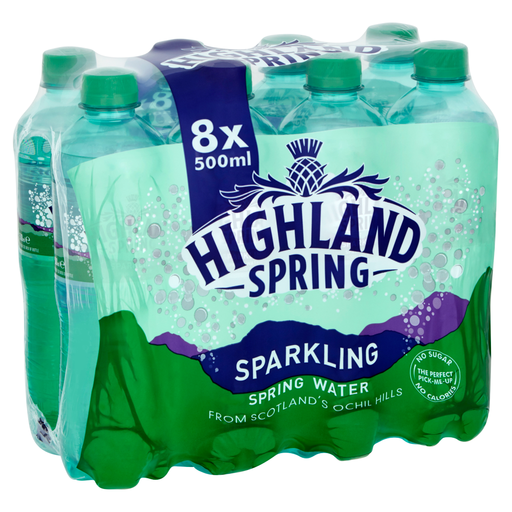
Highland Spring Sparkling Spring Water, 8 × 500ml
A plain sparkling-water option for guests who do not want a cola or fruit flavour. The pack contains eight 500ml bottles; check the bottle for storage instructions after opening.
View on Joybuy
 No image available
Pepsi Max Caffeine Free, 24 × 330ml
A cola option for guests looking for the separately named no-caffeine Pepsi Max variant. The pack contains 24 cans of 330ml; Pepsi UK lists a source of phenylalanine for Pepsi Max No Caffeine, so check the exact can where that matters.
View on Joybuy
 No image available
Coca-Cola Zero Sugar, 24 × 330ml
A zero-sugar cola choice in a pack of 24 cans of 330ml. Coca-Cola GB lists 0g sugars per 100ml for this variant, alongside caffeine flavouring, aspartame and a source of phenylalanine; it is not the zero-caffeine variant.
View on Joybuy
 No image available
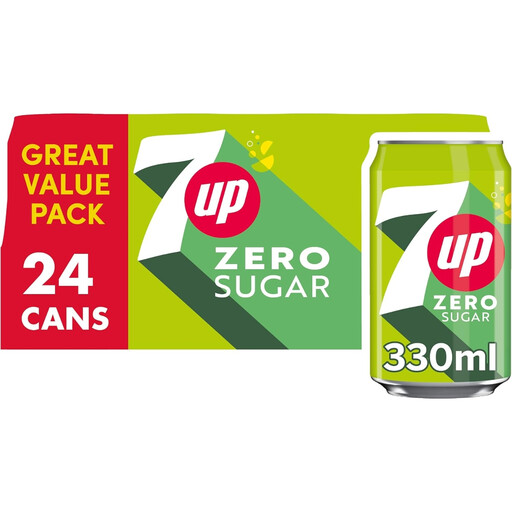
7UP Zero, 24 × 330ml
A non-cola fizzy-drink option in a pack of 24 cans of 330ml. Check the received cans for sugar, caffeine, sweeteners and phenylalanine information before serving guests with specific requirements.
View on Joybuy
 No image available
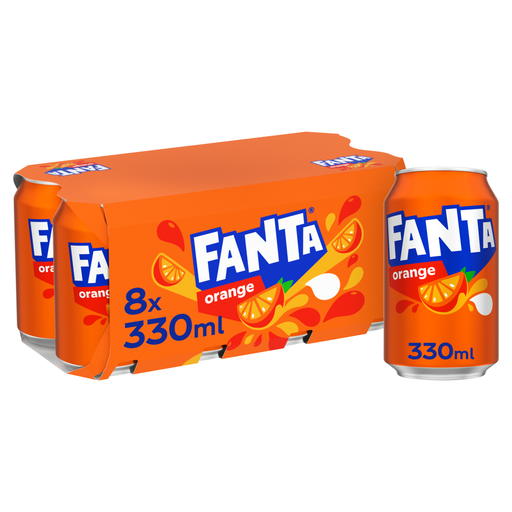
Fanta Orange, 8 × 330ml
An orange-flavoured alternative to cola in a pack of eight 330ml cans. Coca-Cola GB describes Fanta Orange as caffeine free and lists 4.5g sugars per 100ml; check the exact can rather than treating caffeine free as sugar free.
View on Joybuy
Sunday-brunch drinks: common questions
Should I serve standard cola or a zero-sugar drink?
Serve the flavour guests want, with plain sparkling water as another choice rather than assuming everyone wants cola. If sugar content guides the choice, Coca-Cola GB lists 10.6g sugars per 100ml for Original Taste and 0g per 100ml for Coca-Cola Zero Sugar; the NHS advises keeping the frequency and amount of sugary drinks as low as possible.
Are zero-sugar fizzy drinks caffeine free?
Not necessarily. Coca-Cola Zero Sugar and Pepsi Max list caffeine-containing flavourings. For a guest avoiding caffeine, check for a specifically identified no-caffeine variant, such as Pepsi Max No Caffeine, or a drink described as caffeine free, such as Fanta Orange.
What should I check if a guest has PKU?
Check the exact drink’s ingredients for aspartame or E951 and read its phenylalanine statement; do not assume a zero-sugar drink is suitable. The NHS says aspartame is not suitable for people with phenylketonuria (PKU), and the referenced Coca-Cola Zero Sugar and Pepsi Max products state that they contain a source of phenylalanine.
Is a caffeine-free fruit drink also sugar free?
Not by definition. Coca-Cola GB describes Fanta Orange as caffeine free but lists 4.5g sugars per 100ml. Compare the sugar information on the particular fruit-flavoured drink you plan to serve.
How should I keep opened sparkling water after brunch?
Follow the instructions on the bottle purchased. For Tesco British Natural Mineral Water Sparkling 2L, Tesco says to refrigerate after opening and consume within 3 days; that instruction should not be assumed to apply to every sparkling water.


