What should you check before buying?
Start with the whole-can declarations, then check ingredients and warnings on the packs you intend to serve.
| Priority |
What to check |
Your needs |
| Sugar |
Read sugars per 100 ml and per can where stated. Distinguish “no added sugars” from the sugars shown in the nutrition panel. |
I want guests to be able to tell a zero-sugar option from a drink that contains sugars, even if none were added. |
| Caffeine and serving size |
Compare caffeine in the whole can, not just per 100 ml, and note the can volume. Red Bull states 80 mg per 250 ml Sugarfree can; Monster Energy UK states 160 mg per 500 ml Absolutely Zero can. |
A smaller can may make more sense for my selection if guests want a smaller stated caffeine serving. I also need to account for caffeine they may get from other drinks. |
| Ingredients and calories |
Check the ingredients list for sweeteners and any ingredient-specific dietary needs. Compare calories using the same serving basis; Tesco lists 6 kcal and 0.5 g sugars per 250 ml can of Lucozade Alert Zero Sugar Mango Peachade. |
If I am comparing dietary details, I want the figures for the amount someone will actually drink, not just a front-of-pack description. |
| Guest warnings |
Read the exact pack warning. UK food-labelling guidance requires a high-caffeine warning on drinks containing more than 150 mg caffeine per litre; NHS pregnancy guidance also counts energy drinks towards daily caffeine intake. |
I need non-caffeinated choices available rather than assuming an energy drink, including a zero-sugar one, suits every guest. |
Brand and retailer references
These examples show why the exact product and serving size matter; a brand name alone does not establish a can's nutrition or caffeine content.
Red Bull
Red Bull Sugarfree is a 250 ml option for comparing small, individual cans.
- Red Bull states that one 250 ml Sugarfree can has no sugars and contains 80 mg caffeine.
- Its sugar-free formulation does not make it caffeine-free; check the pack ingredients for individual dietary requirements.
Monster
Monster Energy Absolutely Zero provides a larger can to compare with the 250 ml examples.
- Monster Energy UK lists Absolutely Zero as a 500 ml can with 0 g sugar and 160 mg caffeine.
- Use that figure for Absolutely Zero specifically, rather than assuming every Monster zero-sugar variant has the same caffeine content.
Lucozade
Lucozade Alert Zero Sugar Mango Peachade is another stated 250 ml serving.
- Tesco lists 80 mg caffeine, 6 kcal and 0.5 g sugars per 250 ml can.
- Check the current pack panel if the precise sugar, calorie or ingredient declaration affects your choice.
Tesco
Tesco Blue Spark Sugar Free illustrates why a shared bottle needs portion planning.
- Tesco lists a 1 L bottle and 30 mg caffeine per 100 ml.
- Caffeine per 100 ml is not the amount in a larger pour; check how much will be served.
Sainsbury's
A supermarket drinks range can help a host compare own-label and branded options.
- Sainsbury's has listed Blue Bolt Zero alongside branded sugar-free energy drinks.
- A category listing does not establish that those drinks have equivalent ingredients or caffeine amounts; read each product's label.
Joybuy energy-drink options
These packs cover smaller Red Bull Sugarfree cans, a Monster Zero Sugar pack and a PerfectTed option for shoppers comparing a different sugar declaration. Check each exact variant's label when choosing drinks for guests.
 No image available
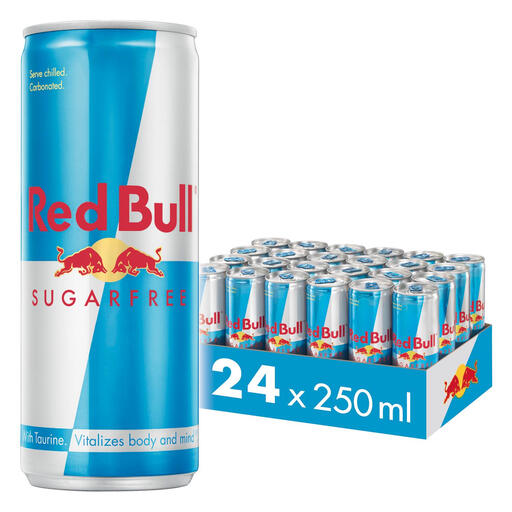
Red Bull Sugarfree 250 ml, 24-pack
The individual 250 ml cans give adult guests a defined serving; Red Bull states that Sugarfree contains no sugars and has 80 mg caffeine per can. Check the pack ingredients and warnings before offering it to guests with specific dietary requirements.
View on Joybuy
 No image available
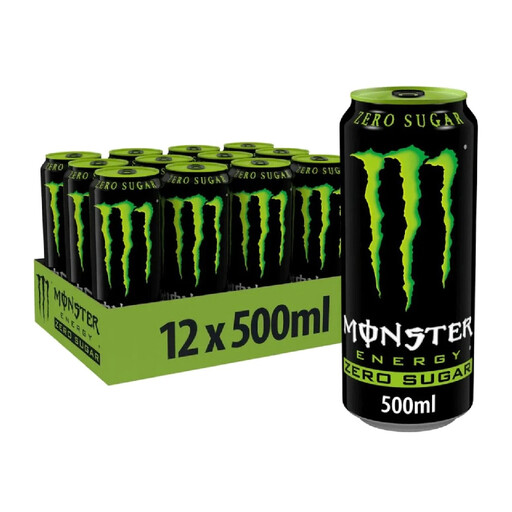
Monster Energy Green Zero Sugar, 12 cans
This 12-can pack offers a Zero Sugar variant for an adult party selection. Check this exact variant's can volume, caffeine per can and ingredients rather than applying figures from a different Monster product.
View on Joybuy
 No image available
Red Bull Sugarfree 250 ml, 4-pack
The four-pack provides individual 250 ml cans when fewer servings are needed. Red Bull states that Sugarfree has no sugars and contains 80 mg caffeine per 250 ml can; check the pack panel for ingredients and calories.
View on Joybuy
 No image available
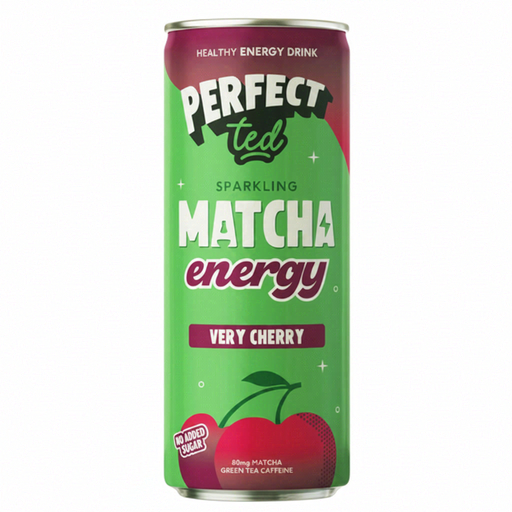
PerfectTed Matcha Energy Very Cherry, 4 × 250 ml
This four-pack is an alternative to compare when choosing individual 250 ml energy drinks. Check sugars on the nutrition panel as well as any “no added sugars” wording, and read the caffeine amount and warnings on this exact can.
View on Joybuy
Questions about sugar, caffeine and guests
Does zero sugar mean an energy drink is caffeine-free?
No. Red Bull states that Sugarfree contains 80 mg caffeine per 250 ml can, Tesco lists 80 mg for a 250 ml Lucozade Alert Zero Sugar Mango Peachade can, and Monster Energy UK lists 160 mg for a 500 ml Absolutely Zero can. Check the caffeine declaration on the exact product and consider other caffeinated drinks.
What should a pregnant guest check before having an energy drink?
NHS guidance says caffeine intake during pregnancy should not exceed 200 mg a day and identifies energy drinks as one source. Monster Energy UK lists 160 mg in a 500 ml Absolutely Zero can, so caffeine from other food and drinks matters too; read the product's warning and offer a non-caffeinated choice.
What does the high-caffeine warning on a UK drink tell me?
UK food-labelling guidance requires drinks with more than 150 mg caffeine per litre to say: “High caffeine content. Not recommended for children or pregnant or breast-feeding women”. Read that warning alongside the caffeine amount, ingredients and nutrition panel on the pack you are buying.
Is there an under-16 energy-drink sales ban across the UK?
The Department of Health and Social Care announced in July 2026 that England would ban sales of high-caffeine energy drinks to under-16s from April 2027, subject to Parliamentary approval. That announcement does not establish the position in Scotland, Wales or Northern Ireland; check the rules applicable where you buy and the warning on the drink.


