Sugar-conscious energy-drink shoppers
If you want a drink without sugar, compare the caffeine in a complete can as well as the sugar declaration before adding a multipack to your basket.


Choose a zero-sugar energy drink by comparing caffeine per whole can and pack size, not the word ‘zero’ alone. Red Bull lists 80 mg caffeine in a 250 ml Red Bull Zero can, while Monster Energy lists 160 mg in a 500 ml Monster Energy Zero Sugar can. If avoiding sugar matters more than buying an energy drink, Lucozade Zero is a separate soft-drink option; check the exact listing and delivery conditions before ordering.
If you want a drink without sugar, compare the caffeine in a complete can as well as the sugar declaration before adding a multipack to your basket.
A 250 ml can or a smaller multipack may suit you if you do not want to order several larger cans at once. Check the number of cans as well as their individual size.
A zero-sugar label does not establish that a caffeinated drink is suitable for children. Check the product warning and any age checks that apply to your delivery.
Decide whether you want an energy drink or simply a zero-sugar soft drink, then compare the exact can and pack you intend to order.
Consider this when: You want a smaller zero-sugar can; Red Bull states that each 250 ml Red Bull Zero can contains 80 mg caffeine.
Bear in mind: Zero sugar does not mean caffeine-free, and the number of cans in a pack still matters.
Consider this when: You want the larger format; Monster Energy states that a 500 ml Monster Energy Zero Sugar can contains 160 mg caffeine.
Bear in mind: That is twice the stated whole-can caffeine of the 250 ml Red Bull Zero example, although the cans also differ in size.
Consider this when: Your main requirement is a zero-sugar flavoured soft drink rather than an energy drink; Lucozade describes its Zero range as zero sugar.
Bear in mind: Do not assume its caffeine declaration matches an energy drink’s; check the particular product label.
| Priority | What to check | Your needs |
|---|---|---|
| Sugar and drink type | Read the sugar declaration for the exact flavour. Check whether the listing is for an energy drink or a soft drink. | I want to avoid sugar, but I also need to know what kind of drink I am ordering. |
| Caffeine per can | Check the caffeine declaration and can volume. If caffeine is listed per 100 ml, use the full can size to compare servings. | A ‘zero’ label is not enough for me to judge caffeine, especially if I also drink coffee, tea or cola. |
| Pack format | Compare can count and can size. Tesco Groceries has listed Red Bull Zero as 4 × 250 ml and Monster Energy Zero Sugar as 4 × 500 ml; check the current listing before ordering. | I want a pack that fits how often I expect to use it and the space I have to store it. |
| Delivery age checks | Read the product warning and the retailer’s delivery requirements. For an address in England, distinguish current checks from the announced under-16 rule scheduled for April 2027, subject to Parliamentary approval. | If my household includes children, I need to know who can receive a high-caffeine drink at delivery. |
Red Bull lists 80 mg caffeine in a 250 ml Red Bull Zero can, and Monster Energy lists 160 mg in a 500 ml Monster Energy Zero Sugar can.
Compare caffeine for the complete can and account for other sources, including coffee, tea and cola.
Four 250 ml cans and four 500 ml cans contain different total drink volumes, even though both listings describe a four-pack.
Check the can count, volume and caffeine per can before substituting one listing for another.
In July 2026, the Department of Health and Social Care and Department for Education announced an England-only under-16 sales ban for drinks other than tea or coffee containing more than 150 mg caffeine per litre. It is scheduled for April 2027, includes online sales and remains subject to Parliamentary approval.
Check current retailer delivery requirements. For addresses outside England, check the rules applicable there rather than relying on the England announcement.
These brand examples help distinguish drink types and can formats; they do not establish that every product in a range has the same ingredients or caffeine content.
Red Bull Zero is a smaller-can energy-drink example for shoppers comparing sugar and whole-can caffeine.
Monster Energy Zero Sugar offers a 500 ml energy-drink format.
Lucozade Zero is a soft-drink route when avoiding sugar matters more than choosing an energy drink.
Relentless Cherry provides a comparison with an energy drink whose listed ingredients include sugars.
These Joybuy options are zero-sugar Monster and Red Bull energy drinks in different can and multipack formats. Compare the label for the exact variant, particularly its caffeine declaration.
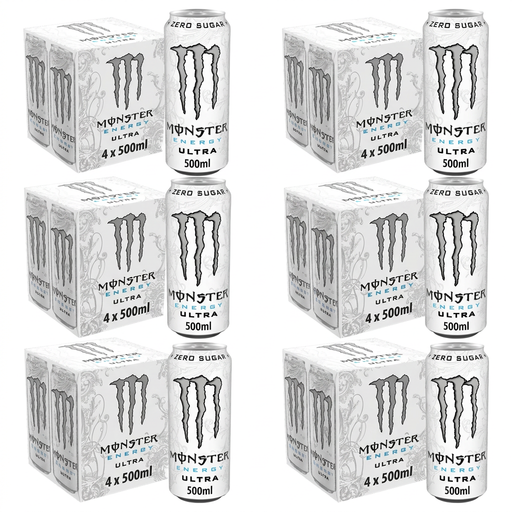 No image available
This larger multipack is an option if you want zero-sugar energy drinks in 500 ml cans. Check caffeine per complete can on the exact product label and allow space to store the pack.
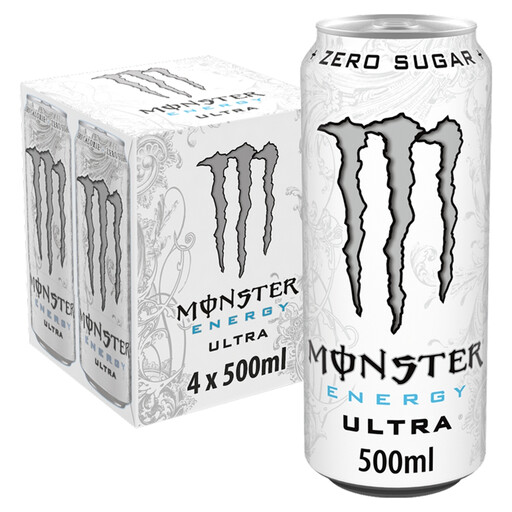 No image available
This four-pack suits an order for 500 ml zero-sugar energy-drink cans without choosing the larger 6 × 4 pack above. Use the caffeine declaration for this exact variant when comparing whole cans.
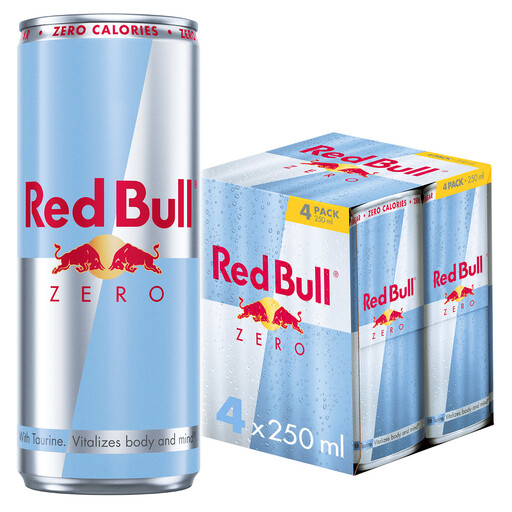 No image available
This four-pack offers smaller, zero-sugar energy-drink cans. Red Bull states that each 250 ml Red Bull Zero can contains 80 mg caffeine; check the delivered label and its usage warning.
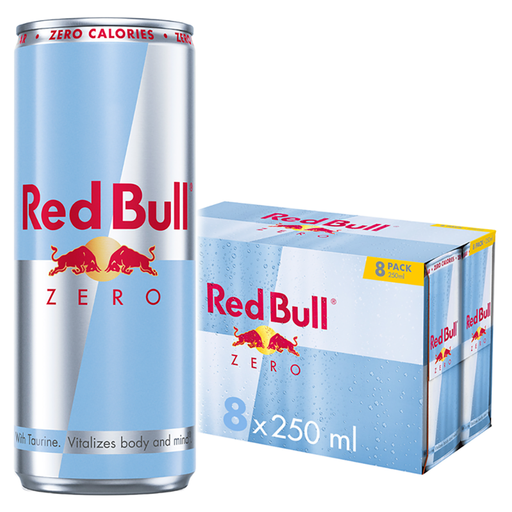 No image available
This eight-pack keeps the 250 ml can format while providing more cans per order than the four-pack. Red Bull lists 80 mg caffeine per 250 ml Red Bull Zero can; read the warning on the pack you receive.
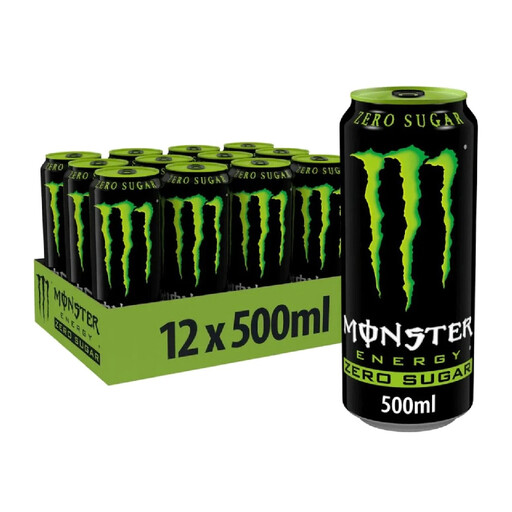 No image available
This 12-can zero-sugar energy-drink pack is worth considering if the can count fits your intended use and storage space. The Joybuy product description identifies 500 ml cans; check its own caffeine declaration rather than borrowing a figure from another Monster variant.
No. Red Bull lists 80 mg caffeine per 250 ml Red Bull Zero can, and Monster Energy lists 160 mg per 500 ml Monster Energy Zero Sugar can. Read the caffeine declaration for the exact drink and compare complete cans.
Add caffeine from the energy drink to caffeine from other sources, including coffee, tea and cola. The European Food Safety Authority’s 2015 assessment considers both single doses and daily intake from all sources for generally healthy adults; its assessment for pregnancy is different. Those assessments are not suggested amounts to consume.
Yes, if it takes effect as announced. In July 2026, the Department of Health and Social Care and Department for Education said the planned England-only ban would cover online sales of drinks other than tea or coffee containing more than 150 mg caffeine per litre to under-16s from April 2027, subject to Parliamentary approval. Do not assume that announcement describes the current position or the rules elsewhere in the UK.
Follow the storage instructions and best-before date on the delivered pack. Do not consume a can that is leaking or severely damaged, and check its label against the flavour and format you ordered.