Festival-goers reducing drink sugar
If your food or dessert may contain sugar, a sugar-free drink lets you avoid adding sugar from the can. Check the exact variety rather than assuming every drink from a familiar brand has the same formulation.


If you want to avoid adding sugar from your drink, choose a sugar-free or zero-sugar can, but compare caffeine for the whole can: Red Bull lists 80 mg for its 250 ml Sugarfree can, while Monster lists 150 mg or 160 mg for the 500 ml zero-sugar varieties discussed here. A larger can may suit your flavour or serving preference, but the sugar label does not tell you whether its caffeine content fits your day or whether an energy drink is suitable for you.
The useful starting point is whether you want to change the sugar contributed by the drink, manage its caffeine, or avoid an energy drink altogether.
If your food or dessert may contain sugar, a sugar-free drink lets you avoid adding sugar from the can. Check the exact variety rather than assuming every drink from a familiar brand has the same formulation.
If tea, coffee, cola or another caffeinated drink is also part of the day, compare caffeine in milligrams per complete can. A 250 ml can and a 500 ml can are not interchangeable servings.
Pregnant people, those sensitive to caffeine and adults choosing drinks for children need to consider product warnings and applicable sales rules before flavour or sugar content. Zero sugar does not remove caffeine.
Choose the sugar and flavour profile you want, then check the caffeine amount for the container you would actually drink.
| Priority | What to check | Your needs |
|---|---|---|
| Sugar from the drink | Check the exact variety’s sugar declaration, including the amount for the full can. Read the ingredients if particular sweeteners matter to you. | I want my drink to add no sugar alongside festival food, without treating that choice as a judgement about the whole meal. |
| Caffeine per can | Compare milligrams for the complete can and count other caffeine consumed that day. Red Bull states 80 mg in 250 ml Sugarfree; Monster states 150 mg in 500 ml Ultra and 160 mg in 500 ml Energy Zero Sugar. | There may be coffee, tea or cola later, so I want to know what one can contributes before choosing a larger serving. |
| Format and flavour | Check can volume, pack size and the exact flavour description. Monster describes Ultra as a lighter citrus variety and Energy Zero Sugar as an original-style alternative; flavour preference does not determine caffeine content. | A smaller can may fit what I plan to drink with food, or I may prefer a larger can and a different stated flavour. |
| Suitability | Read the product’s caffeine warnings. If buying for someone under 16, check the rules that apply where the drink is sold; an England-specific change is scheduled for April 2027. | For someone who is pregnant, sensitive to caffeine or under 16, I need to consider the warnings and sales conditions rather than choose by a zero-sugar label. |
Monster Energy lists 150 mg of caffeine in a 500 ml Ultra can and 160 mg in a 500 ml Energy Zero Sugar can. Neither drink’s sugar declaration describes its caffeine dose.
Read the caffeine amount for the whole can, then account for other caffeinated drinks you expect to have that day.
Red Bull states 80 mg of caffeine for its 250 ml Sugarfree can; Monster’s stated amounts above are for 500 ml cans. The figures describe different container sizes.
Choose the serving size deliberately and compare the stated milligrams per can, not just the names on the front.
Removing sugar from the drink does not remove its caffeine. Pregnancy, caffeine sensitivity and rules affecting sales to children require separate attention.
Follow the warning on the exact product. For a child, check the applicable nation’s rules and the retailer’s conditions rather than assuming a UK-wide rule.
These brand examples help distinguish particular cans; a brand name alone does not establish the sugar or caffeine content of every variety.
Red Bull Sugarfree is a smaller-can option in this comparison.
Monster’s UK information distinguishes two 500 ml zero-sugar varieties by caffeine amount and stated flavour profile.
Tesco lists Relentless Origin in a 500 ml format among energy drinks.
These are smaller-can, fruit-flavoured and larger-can options for comparing drinks alongside festival food. Check the exact pack and can label for sugar, caffeine and warnings before deciding.
 No image available
A smaller sugar-free can to consider when you want to keep the drink separate from the sugar in your food. The pack contains four 250 ml cans; Red Bull states 80 mg caffeine per 250 ml Sugarfree can. Check the ingredients for sweeteners and follow the caffeine warning.
 No image available
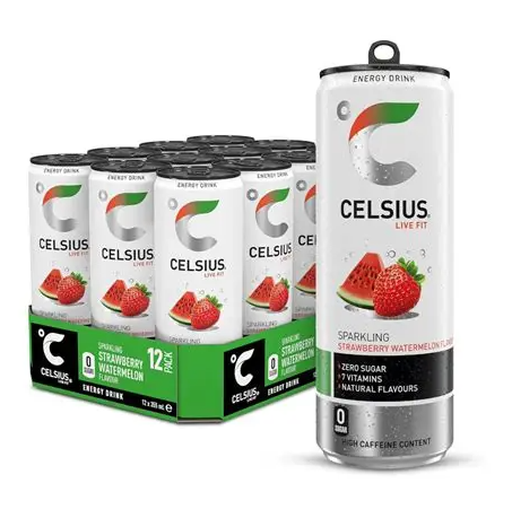
A watermelon-and-strawberry option if flavour is part of your festival-food choice. The pack contains twelve 355 ml cans. Check the can’s sugar declaration, caffeine amount and warnings before choosing it for a sugar-reduction plan.
 No image available
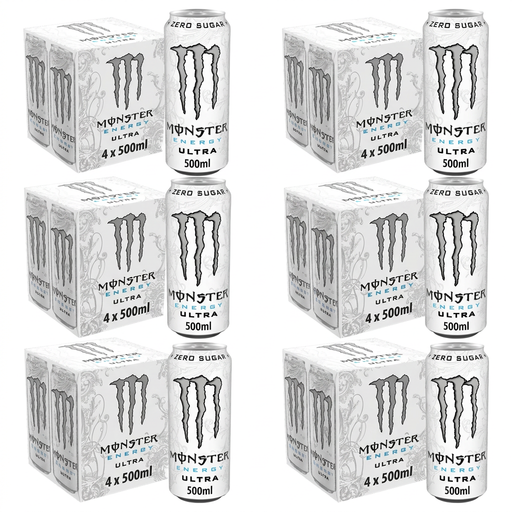
A larger zero-sugar can for someone who prefers Monster Ultra’s stated citrus flavour profile. The listed pack is 6 × 4 × 500 ml; Monster’s UK information states 0 g sugar and 150 mg caffeine per 500 ml Ultra can. Include that full-can amount when considering other caffeine during the day.
 No image available
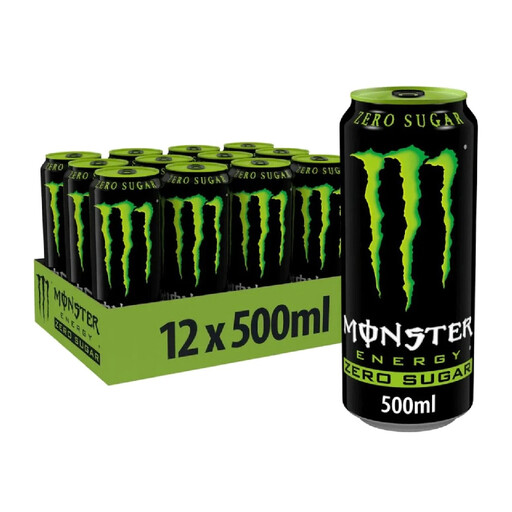
An original-style Monster flavour option for someone looking to avoid sugar from the drink. The listing identifies a 12-can pack. Check its exact can size, caffeine declaration and warnings rather than applying figures from a differently named Monster variety.
No. Monster Energy lists 150 mg caffeine per 500 ml Ultra can and 160 mg per 500 ml Energy Zero Sugar can. Read the caffeine amount for the complete can separately from its sugar declaration.
The European Food Safety Authority’s scientific opinion gives reference amounts of up to 200 mg for a single dose and 400 mg per day from all sources for healthy adults in the general population. They are not individual targets: include tea, coffee and other sources, and take account of personal caffeine sensitivity and medical advice.
No: a sugar-free label does not remove caffeine. Check the warning on the exact product and discuss caffeine intake with your maternity care team rather than judging suitability by sugar content.
Do not assume one rule applies across the UK. In July 2026, the Department of Health and Social Care announced an England ban on sales of high-caffeine energy drinks to under-16s from April 2027; that announcement does not establish an identical rule for Scotland, Wales or Northern Ireland. Check the rules and retailer conditions where the drink is sold.
No. A zero-sugar drink changes the sugar contributed by the drink, not the ingredients or nutrition of the food beside it, and it may still contain caffeine. Check food, mixers and the drink separately if you are comparing what you consume over the day.