People with diabetes choosing an occasional energy drink
Compare the sugars and caffeine in the exact can. A diet or zero-sugar name identifies a variant, but does not tell you its serving size or make it caffeine-free.


If you have diabetes and specifically want an energy drink, a zero-sugar version avoids the listed sugars in a regular sugary drink; Diabetes UK advises choosing sugar-free alternatives to sugary fizzy drinks except when treating a hypo. Check the exact can’s caffeine amount as well as its sugars. A zero-sugar drink cannot supply the fast-acting carbohydrate needed to treat a hypo.
Compare the sugars and caffeine in the exact can. A diet or zero-sugar name identifies a variant, but does not tell you its serving size or make it caffeine-free.
Keep this decision separate from choosing an ordinary drink. Diabetes UK advises adults to treat a hypo promptly with 15–20g of fast-acting carbohydrate; a zero-sugar energy drink cannot supply that amount.
Read the amount for the whole can and any high-caffeine warning. A Sainsbury’s listing for Monster Zero Sugar warns that it is not recommended for children, pregnant or breastfeeding people, or people sensitive to caffeine.
Start with the exact variant and can size, then compare its sugars and total caffeine. Choosing a drink for a hypo is a separate decision.
| Priority | What to check | Your needs |
|---|---|---|
| Sugars | Check the sugars for the exact variant and can size. Do not assume the regular and zero-sugar versions have the same formulation. | If I want an energy drink without the sugars listed in a regular sugary version, I need to choose the zero-sugar variant. Diabetes UK advises sugar-free alternatives to sugary fizzy drinks outside hypo treatment. |
| Caffeine per can | Compare mg per whole can alongside its volume. Red Bull UK lists 80mg in 250ml of Sugarfree; Monster Energy UK lists 150mg in 500ml of Ultra and 160mg in 500ml of Zero Sugar. | I want to know how much caffeine is in the can I would actually drink, not just whether its front label says zero sugar. If I am pregnant, I also need to count other caffeine sources; the NHS advises no more than 200mg a day during pregnancy. |
| Hypo treatment | Check your diabetes plan and the fast-acting carbohydrate amount in the treatment you use. Diabetes UK advises 15–20g for adults treating a hypo. | If I need to treat a hypo, I need fast-acting carbohydrate rather than a zero-sugar energy drink. |
The sugar claim does not describe the stimulant content. Red Bull UK lists 80mg caffeine in a 250ml Sugarfree can, while Monster Energy UK lists 150mg in a 500ml Ultra can and 160mg in a 500ml Zero Sugar can.
Compare caffeine in mg for the whole can, as well as can volume, before choosing.
A zero-sugar drink does not provide the fast-acting carbohydrate needed to treat low blood glucose.
Follow your individual hypo plan. Diabetes UK advises adults to treat a hypo promptly with 15–20g of fast-acting carbohydrate.
Diabetes UK advises choosing sugar-free alternatives to sugary fizzy drinks, reserving the sugary versions for hypo treatment.
If you specifically want an energy drink for ordinary use, check a zero-sugar variant’s label. If you simply want a drink without caffeine, consider water instead.
Brand names cover different drinks and can sizes, so compare the exact variant rather than relying on the range name.
Red Bull Sugarfree provides a 250ml reference can for comparing caffeine amounts.
Monster has distinct 500ml zero-sugar energy-drink variants.
Lucozade describes Zero as a zero-sugar soft-drink range.
Relentless has an energy-drink range.
These options cover a 500ml Monster Ultra can sold as a bundle and 250ml Red Bull Sugarfree cans sold as a four-pack. Compare caffeine per individual can, not per pack.
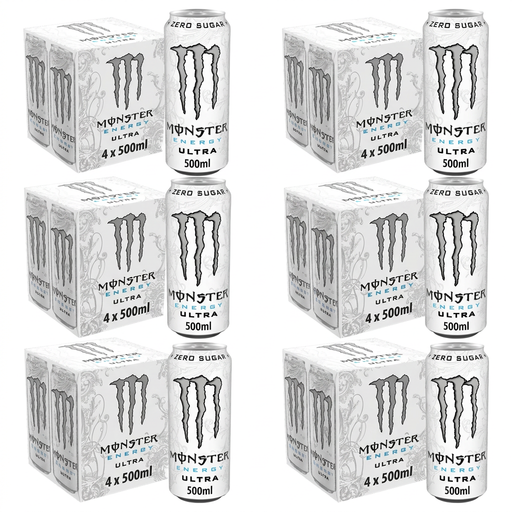 No image available
A zero-sugar energy-drink option for someone considering a 500ml can. Monster Energy UK lists 150mg caffeine per 500ml Ultra can. Check the can’s caffeine warning; this drink is not a source of fast-acting carbohydrate for a hypo.
 No image available
A Sugarfree energy drink in smaller, 250ml cans. Red Bull UK lists 80mg caffeine per can. Sugarfree does not mean caffeine-free, and this drink is not a source of fast-acting carbohydrate for a hypo.
If you specifically want an energy drink for ordinary use, a zero-sugar variant avoids the listed sugars in a regular sugary version, in line with Diabetes UK’s advice to choose sugar-free alternatives to sugary fizzy drinks outside hypo treatment. Check the exact can’s caffeine amount and your individual diabetes plan; zero sugar alone does not settle whether the drink suits you.
No. It cannot supply the fast-acting carbohydrate needed for hypo treatment. Diabetes UK advises adults to treat a hypo promptly with 15–20g of fast-acting carbohydrate; follow your individual treatment plan.
Compare sugars, caffeine in mg per whole can and can size, then read the high-caffeine warning. Red Bull UK lists 80mg caffeine per 250ml Sugarfree can; Monster Energy UK lists 150mg per 500ml Ultra can and 160mg per 500ml Zero Sugar can.
No: the sugar claim does not address caffeine. The NHS advises no more than 200mg of caffeine a day during pregnancy, counting all sources. Read the exact can’s warning too; a Sainsbury’s listing says Monster Zero Sugar is not recommended for pregnant or breastfeeding people.