Hosts cutting down on sugar
If you are serving several people but still want a fizzy option, check the exact drink’s “of which sugars” figure per 100ml. A familiar flavour or pack colour does not tell you its sugar content.


For a Sunday brunch where reducing sugar matters, choose a diet or zero-sugar drink after checking the exact pack’s nutrition label; the NHS identifies these drinks as alternatives to sugary fizzy drinks. If guests want cola without caffeine, choose an explicitly caffeine-free variant, or offer a zero-sugar non-cola drink for a different flavour. Zero sugar does not remove the dental considerations associated with acidic carbonated drinks, and anyone with PKU needs to check for aspartame.
If you are serving several people but still want a fizzy option, check the exact drink’s “of which sugars” figure per 100ml. A familiar flavour or pack colour does not tell you its sugar content.
A zero-sugar cola is not necessarily caffeine free. Look for a variant explicitly labelled caffeine free and check the current pack before serving it to someone avoiding caffeine.
For someone with phenylketonuria (PKU), the sweetener matters as well as the sugar figure. The NHS says aspartame is unsuitable for people with PKU, so check the ingredients and phenylalanine warning on the exact drink.
Start with the sugar figure, then choose the flavour and caffeine status your guests want. Check sweeteners and the pack label before settling on a drink for someone with a specific ingredient requirement.
| Priority | What to check | Your needs |
|---|---|---|
| Sugar | Read “of which sugars” per 100ml on the exact variant. Distinguish zero-sugar drinks from products that merely have less sugar. | I want a fizzy choice while cutting down on sugar. The NHS identifies sugar-free, diet and no-added-sugar drinks as alternatives to sugary fizzy drinks. |
| Caffeine | Look for an explicit caffeine-free label and check the ingredients. Coca-Cola Great Britain and Pepsi UK list caffeine in their standard Zero Sugar and Pepsi Max colas respectively, while offering separately named caffeine-free variants. | I would like to serve cola without caffeine; a zero-sugar label alone will not settle that choice. |
| Flavour | Choose between cola and a non-cola flavour, then check the sugar figure for that particular drink. Pack size also matters when several guests are serving themselves. | Some guests may prefer lemon-lime or apple to cola, so I want more than one flavour on the table. |
| Ingredients | Check for aspartame and a phenylalanine warning on the current pack. Do not assume drinks with similar names use the same ingredients. | If someone has PKU, I need to check the exact drink: the NHS says aspartame is unsuitable for people with PKU. |
| Acidity | Do not treat “zero sugar” as a claim that a carbonated drink is tooth-neutral. The NHS associates carbonated drinks with dental erosion because of their acid content. | I may also put out water for guests who do not want a fizzy drink with brunch. |
Coca-Cola Great Britain lists caffeine flavouring in Coca-Cola Zero Sugar, and Pepsi UK lists caffeine in Pepsi Max and Diet Pepsi. Their separately named caffeine-free variants answer a different need.
If caffeine matters to a guest, choose a drink explicitly labelled caffeine free and check its current pack.
Removing sugar does not remove the acid-content consideration for a fizzy drink. The NHS associates carbonated drinks with dental erosion.
Offer water alongside fizzy choices rather than presenting a zero-sugar drink as a tooth-neutral substitute.
Several of the zero-sugar cola and lemon-lime formulations discussed here contain aspartame or carry a phenylalanine warning. The NHS says aspartame is unsuitable for people with PKU.
For a guest with PKU, read the ingredients on the exact pack before choosing a drink; do not rely on “zero sugar” wording.
These ranges illustrate different flavours and label distinctions; a brand name alone does not establish the ingredients of every variant.
Coca-Cola Great Britain lists both Coca-Cola Zero Sugar and a separately named zero-sugar, caffeine-free cola.
Pepsi UK offers Pepsi Max, Diet Pepsi and a separately labelled Pepsi Max Caffeine Free.
Sprite Zero is a lemon-lime alternative for a brunch table where not everyone wants cola.
Dr Pepper Zero offers a different cola-style flavour among the reviewed zero-sugar drinks.
Tesco is a retailer reference for comparing branded and own-label diet or sugar-free colas, rather than a single drinks formulation.
These options cover a caffeine-free cola, a standard zero-sugar cola and two non-cola flavours for serving at brunch. Check the current pack if caffeine or a particular ingredient affects your choice.
 Image unavailable
A cola option for serving individual cans when caffeine is unwanted. Joybuy’s product information describes this 24-can variant as having no sugar and no caffeine; check the current ingredients for aspartame and the phenylalanine warning if PKU is relevant.
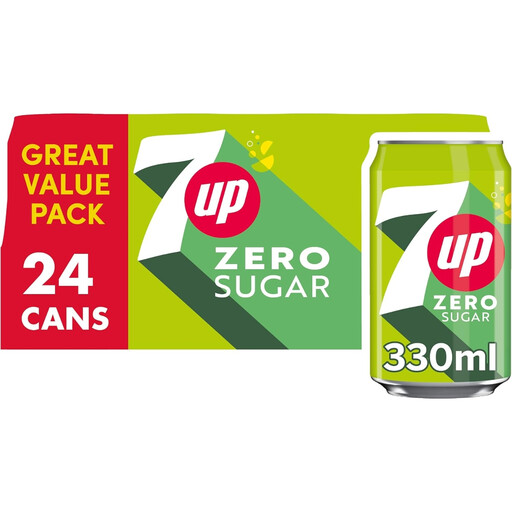 Image unavailable
A lemon-and-lime option when guests would rather have a non-cola flavour. The pack contains 24 cans of 330ml; check the current can for its sugar, caffeine and sweetener declarations if those determine your choice.
 Image unavailable
A 24-can cola option when sugar reduction matters and caffeine is acceptable. Coca-Cola Great Britain lists 0g sugars per 100ml for Coca-Cola Zero Sugar and includes caffeine flavouring in its ingredients; this is not the caffeine-free variant.
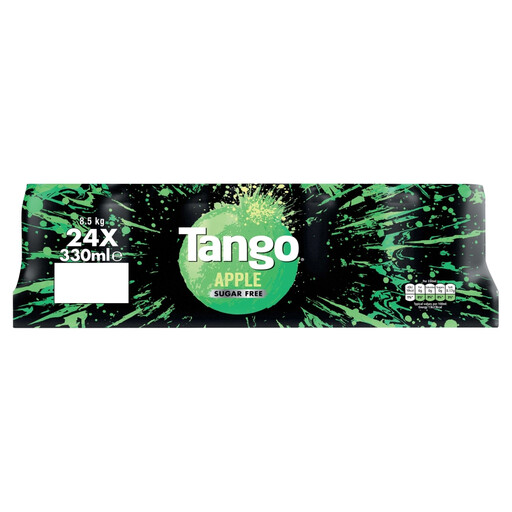 Image unavailable
An apple-flavoured fizzy option in a 24-can pack for guests who do not want cola. If caffeine avoidance or PKU suitability matters, check the current can’s ingredients and warnings before buying.
Yes, if the exact drink’s label confirms the sugar content you want. The NHS identifies sugar-free, diet and no-added-sugar drinks as alternatives to sugary fizzy drinks; check “of which sugars” per 100ml rather than relying on the pack design.
No. The NHS associates carbonated drinks with dental erosion because of their acid content, including when a drink has no sugar.
Coca-Cola Great Britain and Pepsi UK identify Coca-Cola Zero Sugar Caffeine Free and Pepsi Max Caffeine Free as caffeine-free variants. Their standard Coca-Cola Zero Sugar and Pepsi Max formulations list caffeine, so check the full variant name on the pack.
Check the exact drink’s ingredients for aspartame and its phenylalanine warning. The NHS says aspartame is unsuitable for people with PKU; a zero-sugar label alone does not establish suitability.