Shoppers cutting back on sugar
If you want fizzy drinks at home while reducing sugar, compare the sugars-per-100ml figure on each pack. The NHS suggests sugar-free, diet and no-added-sugar drinks as alternatives to sugary fizzy drinks.


If you want to reduce sugar while buying fizzy drinks, compare the current nutrition labels: Coca-Cola Zero Sugar and Pepsi Max each state 0g sugars per 100ml. Zero sugar does not mean caffeine-free; choose an explicitly caffeine-free variant if that matters, and check sweeteners and phenylalanine warnings when buying for someone with PKU. NHS dental guidance also cautions that diet and sugar-free drinks can be acidic.
If you want fizzy drinks at home while reducing sugar, compare the sugars-per-100ml figure on each pack. The NHS suggests sugar-free, diet and no-added-sugar drinks as alternatives to sugary fizzy drinks.
Choose the exact variant rather than relying on its zero-sugar name. Coca-Cola GB lists caffeine flavouring in Coca-Cola Zero Sugar, while Pepsi UK lists caffeine in Pepsi Max and separately identifies Pepsi Max No Caffeine.
Check the can count and volume against what your household will use. Multipacks come in different sizes, so the format matters as well as the drink you choose.
Start with the nutrition panel, then check the exact variant’s ingredients and pack format before adding it to your top-up shop.
| Priority | What to check | Your needs |
|---|---|---|
| Sugar | Read sugars per 100ml on the current pack, rather than relying on a brand family name. Coca-Cola GB and Pepsi UK each state 0g per 100ml for Coca-Cola Zero Sugar and Pepsi Max respectively. | I want a fizzy drink while cutting back on sugar. The NHS lists sugar-free, diet and no-added-sugar drinks as alternatives to sugary fizzy drinks. |
| Caffeine | Look for an explicit caffeine-free label on the exact variant. Coca-Cola Zero Sugar and standard Pepsi Max list caffeine; Pepsi UK separately identifies Pepsi Max No Caffeine. | If I am avoiding caffeine, a zero-sugar label alone does not answer my question. |
| Sweeteners | Read the ingredients and any phenylalanine statement. Coca-Cola Zero Sugar and Pepsi Max list aspartame and state that they contain a source of phenylalanine. | When buying for someone with PKU, I need to check the exact drink. The Food Standards Agency identifies aspartame as a possible risk for people with PKU. |
| Acidity | Do not treat a zero-sugar label as an indication that a drink is non-acidic. Wirral Community Health and Care NHS Foundation Trust notes that diet and sugar-free soft drinks can be very acidic and cause tooth wear. | For a routine between-meal drink, I do not want to assume fizzy drinks are interchangeable with water. |
| Pack size | Compare the number of cans and their volume, or the bottle volume. Check the exact label again if the retailer substitutes a different variant. | I want enough for a short household top-up without choosing a larger pack than I need. |
Coca-Cola GB lists caffeine flavouring in Coca-Cola Zero Sugar, and Pepsi UK lists caffeine in standard Pepsi Max.
If caffeine avoidance matters, choose a variant explicitly labelled caffeine-free and check its current ingredients.
Coca-Cola Zero Sugar and Pepsi Max list aspartame and a source of phenylalanine. The Food Standards Agency identifies aspartame as a possible risk for people with PKU.
Check the ingredients and warning on the exact pack before buying for someone with PKU.
Wirral Community Health and Care NHS Foundation Trust warns that diet and sugar-free soft drinks can be very acidic and cause tooth wear.
Keep that distinction in mind when choosing a routine between-meal drink; its dental guidance also advises against brushing straight after a soft drink.
Can counts do not show how much drink is in each can, and a large multipack may exceed a short top-up need.
Compare both the number of cans and their stated volume before choosing a format.
Coca-Cola Zero Sugar and Diet Coke are distinct cola names; check the exact variant when sugar or caffeine matters.
Pepsi Max and Pepsi Max No Caffeine address different caffeine needs.
Sprite Zero Sugar is a lemon-and-lime option to consider if you do not want cola.
Fanta Zero variants offer orange and fruit-flavour choices for a fizzy-drink top-up.
Dr Pepper Zero is a separately named option for shoppers who want that flavour.
Tesco’s own-label range includes diet, zero and no-added-sugar fizzy-drink names.
These can multipacks cover cola and fruit-flavoured choices for a fizzy-drink top-up, including variants explicitly named as caffeine-free. Check each pack’s current label against your sugar, caffeine and ingredient needs.
 No image available
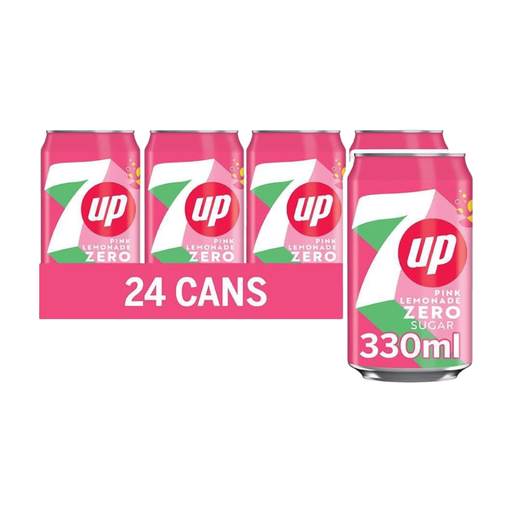
A lemonade-labelled Zero option in a 24 x 330ml can pack. Check the current nutrition and ingredient panels if sugar, caffeine or sweeteners affect your choice.
 No image available
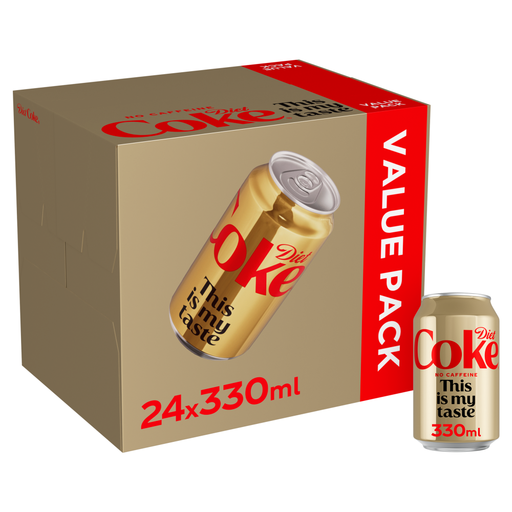
The No Caffeine variant is a cola option when that distinction matters. The pack contains 24 x 330ml cans; check its current sugar figure, sweeteners and any phenylalanine warning.
 No image available
For shoppers choosing cola without caffeine, this is the separately named caffeine-free variant in a 24 x 330ml pack. Pepsi UK states 0g sugars per 100ml for Pepsi Max No Caffeine; check the pack’s current sweeteners and warnings too.
 No image available
A 24 x 330ml cola pack for a sugar-focused top-up: Joybuy’s product information states 0g sugars per 100ml. Coca-Cola GB lists caffeine flavouring and aspartame for Coca-Cola Zero Sugar, so check the current label if either matters.
 No image available
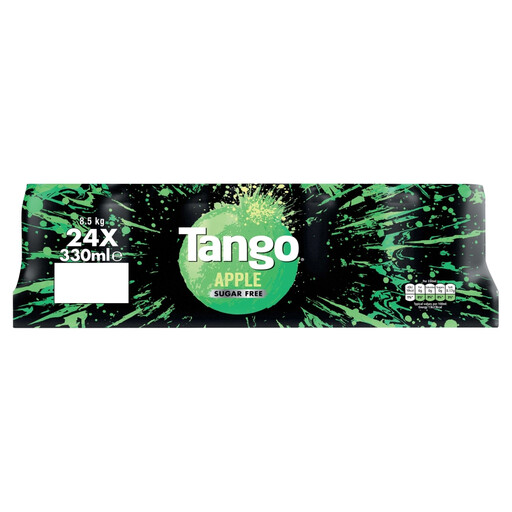
An apple-flavoured, sugar-free-labelled option in a 24 x 330ml can pack. Check the current nutrition and ingredients, particularly if you need to avoid caffeine or a specific sweetener.
No. Coca-Cola GB lists caffeine flavouring in Coca-Cola Zero Sugar, and Pepsi UK lists caffeine in standard Pepsi Max. If you are avoiding caffeine, choose an explicitly caffeine-free variant and check its current label.
Read the sugars-per-100ml figure on the exact pack. Coca-Cola GB and Pepsi UK state 0g sugars per 100ml for Coca-Cola Zero Sugar and Pepsi Max respectively; the name alone does not tell you about caffeine or sweeteners.
Check the exact ingredients and phenylalanine statement rather than relying on a zero-sugar label. Coca-Cola Zero Sugar and Pepsi Max list aspartame and a source of phenylalanine; the Food Standards Agency identifies aspartame as a possible risk for people with PKU.
No. Wirral Community Health and Care NHS Foundation Trust warns that sugar-free, diet and fizzy soft drinks can be very acidic and cause tooth wear. Removing sugar does not remove that acidity consideration.
Compare the can count and volume with what your household expects to use. Check the exact drink and variant on the pack as well, especially if a substitution would change your sugar, caffeine or ingredient choice.