A no-added-sugar or zero-sugar fizzy drink can be a flavour choice around a short or easy ride when you are not relying on it for fuel. For rides lasting more than 90 minutes, British Cycling advises additional fuel; choose carbohydrate-containing food or drink for that role, and check the exact variant if caffeine avoidance or the words ‘no added sugar’ matter to you.
Who is this choice for?
Cyclists on short or easy rides
If your food and hydration plan already covers the ride, a zero-sugar fizzy drink can be a choice of flavour rather than a source of cycling carbohydrate. Consider whether you would enjoy a carbonated drink during exercise or would rather have it afterwards.
Cyclists planning longer rides
British Cycling advises additional fuel for sessions lasting more than 90 minutes. If you are choosing a drink for that purpose, check its carbohydrate content: the zero-sugar products discussed here are not substitutes for carbohydrate-containing food or drink.
Cyclists who want to avoid caffeine
Sugar content will not tell you whether a cola contains caffeine. Pepsi Max No Caffeine is explicitly described by Pepsi UK as containing neither caffeine nor sugar; check the exact variant and its current ingredients rather than relying on the brand name alone.
What should you check?
Decide whether the drink is for flavour or for fuelling, then compare the exact pack for carbohydrate, sugars and caffeine.
| Priority |
What to check |
Your needs |
| Ride fuel |
Check ride duration and the carbohydrate stated per 100 ml or serving. British Cycling advises additional fuel for sessions over 90 minutes; a zero-sugar label does not establish that a drink supplies it. |
For a longer ride, I need a separate way to carry carbohydrate, such as suitable food or a carbohydrate-containing drink. |
| Caffeine |
Read the ingredients of the exact variant. Pepsi UK describes Pepsi Max No Caffeine as caffeine-free, while its standard Pepsi Max lists flavourings including caffeine. |
If I am avoiding caffeine, I want the pack to identify a caffeine-free variant rather than assuming every zero-sugar cola qualifies. |
| Exact variant |
Look for the wording you want on the pack, then read the sugars and carbohydrate lines of the nutrition panel. Coca-Cola GB lists 0 g sugars per 100 ml for Sprite Zero, while its standard Fanta Orange lists 4.5 g per 100 ml. |
I want to choose the sugar-free or no-added-sugar version deliberately, not pick up a standard drink because the brand looks familiar. |
| When to drink it |
Consider whether carbonation suits you during a ride and how the drink fits alongside your usual food and hydration plan. Do not use sweetness as a measure of carbohydrate content. |
For an easy ride or a drink afterwards, flavour may be what matters to me; during exercise, I would check that the drink is comfortable to use. |
Common buying mistakes
-
Using a zero-sugar drink as long-ride fuel
A drink with little or no carbohydrate cannot fill the fuelling role. British Cycling advises additional fuel for sessions lasting more than 90 minutes.
Plan a carbohydrate-containing drink or food separately; treat a zero-sugar fizzy drink as an optional flavour choice.
-
Assuming zero-sugar cola is caffeine-free
Coca-Cola GB lists caffeine flavouring in Coca-Cola Zero Sugar, and Pepsi UK lists caffeine in standard Pepsi Max. Their sugar claims do not answer a caffeine-avoidance question.
Check the ingredients and choose an explicitly caffeine-free variant if that distinction matters to you.
-
Choosing by brand instead of variant
Brand names cover different formulations. Coca-Cola GB lists 0 g sugars per 100 ml for Sprite Zero, while standard Fanta Orange lists 4.5 g sugars per 100 ml.
Read the exact variant name and its nutrition panel before deciding whether it fits your sugar preference.
-
Reading ‘no added sugar’ as ‘zero carbohydrate’
The wording on the front of a pack does not tell you how much carbohydrate the drink supplies for a ride.
If the precise ‘no added sugar’ wording matters, look for it on the pack. Check the carbohydrate and sugars lines separately when deciding what the drink can contribute.
Brand and variant references
These examples illustrate why the formulation and variant matter; a brand name alone does not settle the fuelling or caffeine question.
Tesco
Tesco No Added Sugar Cream Soda is an example for readers looking for that exact label wording.
- Tesco Groceries lists 0 g sugars and 0 g available carbohydrate per 100 ml for this Cream Soda.
- It does not supply carbohydrate for ride fuelling; check the current pack if the wording or formulation is decisive.
Pepsi
The distinction between standard Pepsi Max and Pepsi Max No Caffeine matters if you want a zero-sugar cola without caffeine.
- Pepsi UK describes Pepsi Max No Caffeine as containing no caffeine and no sugar.
- Standard Pepsi Max lists flavourings including caffeine. Neither variant should be chosen as a carbohydrate source for a ride.
Coca-Cola
Coca-Cola Zero Sugar is a cola option when zero sugar is the preference and caffeine is acceptable.
- Coca-Cola GB lists 0 g sugars and 0 g carbohydrate per 100 ml for Coca-Cola Zero Sugar.
- Its ingredients include caffeine flavouring, and its stated carbohydrate content does not meet a ride-fuelling need.
Sprite
Sprite Zero offers a lemon-and-lime alternative when you want a zero-sugar fizzy drink rather than a cola.
- Coca-Cola GB lists 0 g sugars and 0 g carbohydrate per 100 ml for Sprite Zero.
- That carbohydrate figure makes it a flavour option, not a source of fuel for a longer ride.
Dr Pepper
Dr Pepper Zero is another zero-sugar flavour choice when caffeine avoidance is not a requirement.
- Coca-Cola GB lists 0 g sugars and 0 g carbohydrate per 100 ml for Dr Pepper Zero.
- Its ingredients include caffeine, and it does not supply carbohydrate for ride fuelling.
Fanta
With Fanta, check the variant rather than assuming a fruit-flavoured drink is sugar-free.
- A clearly identified zero-sugar variant can be assessed using its own current nutrition panel.
- Coca-Cola GB lists 4.5 g sugars per 100 ml for standard Fanta Orange, so that product does not fit a zero-sugar choice.
Joybuy fizzy-drink options
These cola and fruit-flavoured fizzy drinks are options to consider for flavour around a ride, not a selection of carbohydrate drinks for on-bike fuelling. Compare the exact pack if caffeine avoidance or ‘no added sugar’ wording is important.
 Image unavailable
Pepsi Max Caffeine Free, 24 × 330 ml
For a cola-style flavour choice when avoiding caffeine: Pepsi UK describes this variant as containing no caffeine and no sugar. Joybuy lists 0.2 g carbohydrate per 330 ml can, so plan ride fuel separately when you need it. Check the pack if you specifically require the words ‘no added sugar’.
View on Joybuy
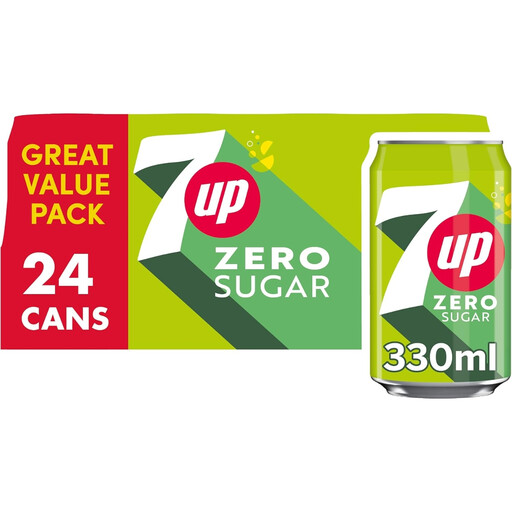 Image unavailable
7UP Zero, 24 × 330 ml
For a fizzy-drink choice around an easy ride, check this variant’s pack for sugars and carbohydrate before deciding how it fits your plans. Check its ingredients if avoiding caffeine, and choose a separate carbohydrate source when the ride requires fuel.
View on Joybuy
 Image unavailable
Coca-Cola Zero Sugar, 24 × 330 ml
For a zero-sugar cola choice when caffeine is acceptable. Coca-Cola GB lists 0 g sugars and 0 g carbohydrate per 100 ml and includes caffeine flavouring in the ingredients. It is not a source of carbohydrate for a ride; check the pack if you need the precise ‘no added sugar’ claim.
View on Joybuy
 Image unavailable
Tango Apple Sugar-Free, 24 × 330 ml
For an apple-flavoured, sugar-free fizzy-drink choice around an easy ride. Read the pack’s carbohydrate line before considering any drink for fuelling, and check its ingredients if caffeine avoidance matters. Confirm the front-of-pack wording if you specifically want a ‘no added sugar’ claim.
View on Joybuy
Questions about fizzy drinks and cycling
Will a no-added-sugar fizzy drink fuel a long bike ride?
Do not rely on the label claim for fuel: check the drink’s carbohydrate content. British Cycling advises additional fuel for sessions lasting more than 90 minutes, while the zero-sugar examples discussed here provide little or no carbohydrate. Plan carbohydrate-containing food or drink separately.
Can I have a zero-sugar fizzy drink around a short ride?
Yes, it can be a choice of flavour if you are not relying on it for carbohydrate or hydration. If you plan to drink it during exercise, consider how you personally find carbonation and sweetness rather than assuming it will suit the ride.
Do ‘no added sugar’ and ‘sugar-free’ tell me the same thing?
Do not use the phrases interchangeably when choosing a particular pack. Look for the exact wording you want, then check the sugars and carbohydrate figures in the nutrition panel; neither phrase alone tells you whether the drink will fuel a ride.
Which zero-sugar cola can I check if I want to avoid caffeine?
Pepsi UK describes Pepsi Max No Caffeine as containing no caffeine and no sugar. Check that you have selected that exact variant: standard Pepsi Max, Coca-Cola Zero Sugar and Dr Pepper Zero list caffeine or flavourings including caffeine.


