What should you check?
Start with the nutrition panel, then narrow the choice by caffeine, ingredients and how the drink will be served.
| Priority | What to check | Your needs |
|---|
| Listed sugars |
Compare total sugars per 100ml for the exact flavour. Coca-Cola GB lists 0g for Sprite Zero Sugar and 0.4g for Fanta Fruit Twist Zero, which contains fruit juice from concentrate. |
I want to know what the drink actually lists for sugars, even if its name says “Zero” or “no added sugar”. |
| Caffeine |
Look for an explicit caffeine-free designation and read the ingredients. Pepsi UK distinguishes Pepsi MAX Caffeine-Free from standard Pepsi MAX, whose ingredients include caffeine. |
If the drinkers are avoiding caffeine, a familiar cola name alone will not settle the choice. |
| Sweeteners |
Read the sweetener list and any source-of-phenylalanine statement on the current pack. Do not assume two sugar-free flavours have the same recipe. |
I need to check an ingredient or warning that matters to someone sharing the drinks. |
| Serving occasion |
Check the pack format and whether a shared bottle can be used within its stated period after opening. Tesco says to consume its No Added Sugar Cream Soda within 3 days of opening. |
Individual cans may suit separate servings; for children aged 3–11, Northern Care Alliance NHS Foundation Trust advises keeping drinks other than plain milk to mealtimes and using plain, non-fizzy water for thirst. |
Joybuy drink options
These multipacks offer caffeine-free cola and citrus choices, alongside an apple-flavoured drink whose caffeine status should be checked on the pack.
 No image available
Pepsi MAX Caffeine-Free 24 × 330ml
A cola choice when caffeine avoidance and individual cans matter: its product information states zero caffeine and lists 0g sugars per 100ml. The ingredients include aspartame and acesulfame K, with a source-of-phenylalanine statement; check the current label if those details matter.
View on Joybuy
 No image available
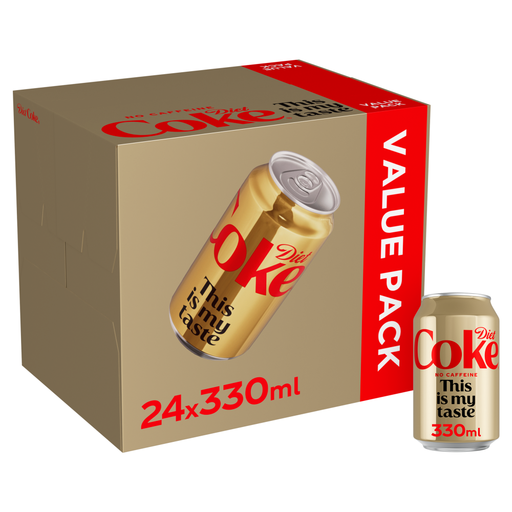
Diet Coke No Caffeine 24 × 330ml
Another caffeine-free cola in individual cans, with 0g sugars per 100ml listed in its product information. Its ingredients include aspartame and acesulfame K, and the description carries a source-of-phenylalanine statement.
View on Joybuy
 No image available
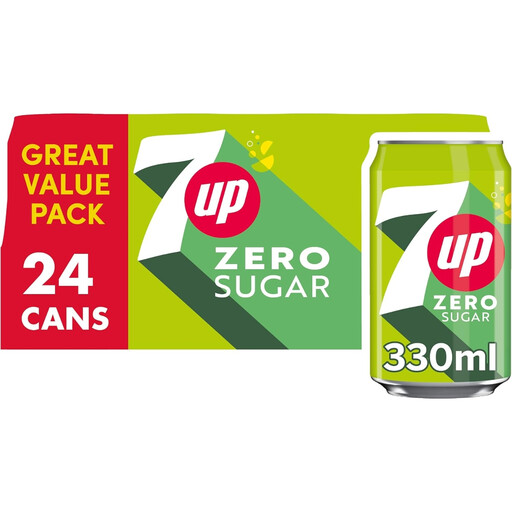
7UP Zero 24 × 330ml
For a lemon-lime flavour instead of cola, this 24-can pack is described as having zero caffeine and lists 0g sugars per 100ml. Its ingredients include aspartame and acesulfame K, and its description carries a source-of-phenylalanine statement.
View on Joybuy
 No image available
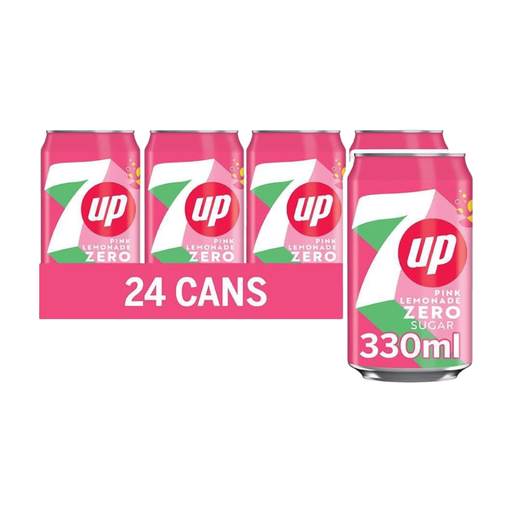
7UP Pink Lemonade Zero 24 × 330ml
This pink-lemonade variant offers a different citrus-style flavour in individual cans. Its description states zero caffeine and lists 0g sugars per 100ml; it also lists aspartame, sucralose and acesulfame K and carries a source-of-phenylalanine statement.
View on Joybuy
 No image available
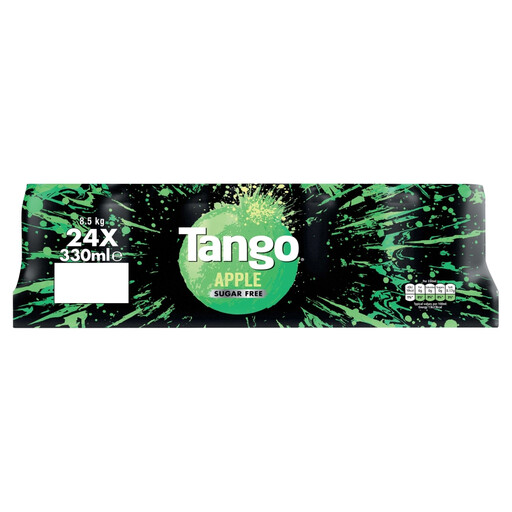
Tango Apple Sugar-Free 24 × 330ml
An apple-flavoured option in individual cans, with apple juice from concentrate among its ingredients and 0g sugars per 100ml listed on its product panel. It contains sucralose and acesulfame K; check the current pack for caffeine if avoiding it is important.
View on Joybuy
Frequently asked questions
Does “no added sugar” mean a drink lists 0g sugars?
Not necessarily: check total sugars per 100ml for the exact flavour. Tesco lists 0g for its No Added Sugar Cream Soda, while Coca-Cola GB lists 0.4g for Fanta Fruit Twist Zero, which contains fruit juice from concentrate.
Which fizzy drink should I check if I want to avoid caffeine?
Start with a product explicitly designated caffeine-free, such as Pepsi MAX Caffeine-Free, and confirm the exact pack. Pepsi UK lists caffeine in standard Pepsi MAX, while Coca-Cola GB lists it in Coca-Cola Zero Sugar.
Does a no-added-sugar drink still need an ingredient check?
Yes. Sugar wording does not identify the sweeteners or replace a source-of-phenylalanine warning. Read the current pack when a specific ingredient or warning matters to someone drinking it.
Is a sugar-free fizzy drink the same as water for a child’s thirst?
No. Northern Care Alliance NHS Foundation Trust advises keeping drinks other than plain milk to mealtimes for children aged 3–11 and identifies plain, non-fizzy water as a drink for thirst.
Can I use the same drink for a school-provided snack?
Do not assume a household choice is approved for a school setting. The Department for Education states that school-food standards apply to food and drink provided to pupils on school premises in England; check the applicable nation, organiser’s policy and current guidance for the particular drink before supplying it.


