Runners planning long-run fuel
For a session lasting more than 2.5 hours, World Athletics describes carbohydrate intake of up to 90g per hour. Check what your full drink-and-food plan supplies rather than treating lemonade as the fuel.


Choose no-added-sugar lemonade when you want a lemon-flavoured drink but are not relying on it for carbohydrate fuel. Tesco lists R. White's Diet Lemonade at 0g carbohydrate per 100ml, while Sainsbury's lists its Pink Lemonade Zero Added Sugar at less than 0.5g per 100ml; the Australian Institute of Sport describes 4–8g per 100ml for a carbohydrate-electrolyte sports drink. For a long run or marathon, plan and practise how you will obtain carbohydrate and fluid, whether through a suitable sports drink or separate drinks and foods.
The deciding question is whether the drink needs to supply carbohydrate during your run or is simply something you would like to drink alongside a separate fuelling plan.
For a session lasting more than 2.5 hours, World Athletics describes carbohydrate intake of up to 90g per hour. Check what your full drink-and-food plan supplies rather than treating lemonade as the fuel.
A no-added-sugar or diet lemonade can be a drink with a meal or alongside a training plan that obtains carbohydrate elsewhere. Its label still matters: products differ in carbohydrate and sweetener ingredients.
If phenylalanine warnings matter to you, check the ingredients on the exact pack. The Coca-Cola Company GB identifies Sprite Zero Sugar as a source of phenylalanine, and Tesco lists aspartame in R. White's Diet Lemonade.
Choose it when: You want a lemon-flavoured drink and will obtain any needed carbohydrate elsewhere.
Bear in mind: The low-carbohydrate examples listed by UK retailers do not serve as principal long-run fuel; check sweeteners on the pack.
Choose it when: Your run calls for carbohydrate during exercise, supplied through a suitable sports drink, foods or gels.
Bear in mind: Match what you consume across the whole session to its duration and practise the plan in training.
Start with the role the drink must play, then compare nutrition panels using the same units. A lemon flavour or a zero-sugar label does not identify a sports-drink formulation.
| Priority | What to check | Your needs |
|---|---|---|
| Carbohydrate during a run | Compare carbohydrate per 100ml and work out what your full plan supplies per hour. World Athletics describes 30–60g per hour for exercise lasting 1–2.5 hours and up to 90g per hour beyond 2.5 hours. | For a long session, I need to know where my carbohydrate will come from, rather than counting a zero-sugar lemonade as fuel. |
| Drink formulation | The Australian Institute of Sport describes sports drinks containing 4–8g carbohydrate and 23–69mg sodium per 100ml. Check both figures on any drink you intend to use for fluid and fuel. | I may want one drink to contribute to my fuelling plan; otherwise, I can choose a lemonade to drink while getting carbohydrate separately. |
| Lemonade nutrition | Read carbohydrate and sugars per 100ml, noting if a label instead uses per 100g. Tesco lists R. White's Diet Lemonade at 0g carbohydrate per 100ml; Sainsbury's lists Pink Lemonade Zero Added Sugar at less than 0.5g per 100ml. | When I choose lemonade for its flavour, I want its nutrition panel to match that purpose, not to assume all diet and no-added-sugar varieties are identical. |
| Sweeteners | Check the ingredient list and any phenylalanine warning on the pack. The Coca-Cola Company GB identifies Sprite Zero Sugar as a source of phenylalanine; Tesco lists aspartame in R. White's Diet Lemonade. | If I need to avoid aspartame because of phenylketonuria (PKU), the exact product ingredients matter more than its flavour or front-of-pack wording. |
| Acidity | Check whether the drink is fizzy and consider how often you drink it. The NHS associates carbonated drinks with dental erosion because of their acid content. | A sugar-free label would not settle my question about an acidic fizzy drink. |
Tesco lists R. White's Diet Lemonade at 0g carbohydrate per 100ml. By contrast, World Athletics describes hourly carbohydrate intakes for longer endurance exercise, so the drink alone cannot fill that fuelling role.
Read carbohydrate per 100ml and practise a complete drink-and-food plan during training.
Carbohydrate and ingredient lists differ between the lemonade examples listed by Tesco, Sainsbury's and Marks & Spencer. Their nutrition panels also do not all use the same measurement basis.
Compare the exact pack's nutrition and ingredients, keeping per 100ml and per 100g figures distinct.
Sprite Zero Sugar is identified by The Coca-Cola Company GB as a source of phenylalanine, while Tesco lists aspartame in R. White's Diet Lemonade. This distinction matters to someone managing PKU.
Check the pack for aspartame and its phenylalanine warning before choosing a drink.
The NHS associates carbonated drinks with dental erosion because of their acid content; removing sugar does not remove that consideration.
Consider the drink's acidity as well as its sugar content, particularly if you have questions about how often you drink fizzy lemonade.
These examples illustrate differences between specific UK-listed drinks; a brand name alone does not establish a product's carbohydrate content or ingredients.
Tesco lists a R. White's Diet Lemonade multipack.
The Coca-Cola Company GB lists a Sprite Zero Sugar lemon-and-lime drink.
Tesco's lemonade range lists No Added Sugar Cloudy Lemonade and Diet Lemonade cans.
Sainsbury's lists no-added-sugar lemonade styles, including a Pink Lemonade Zero Added Sugar.
Asda lists a 2L Diet Lemonade.
Marks & Spencer lists a Diet Cloudy Lemonade labelled no added sugar.
These zero-sugar lemon or lemon-and-lime drinks are options for when you want a flavoured drink and plan to obtain any needed carbohydrate separately. Check each pack's nutrition and ingredients before deciding whether it fits your run-day plan.
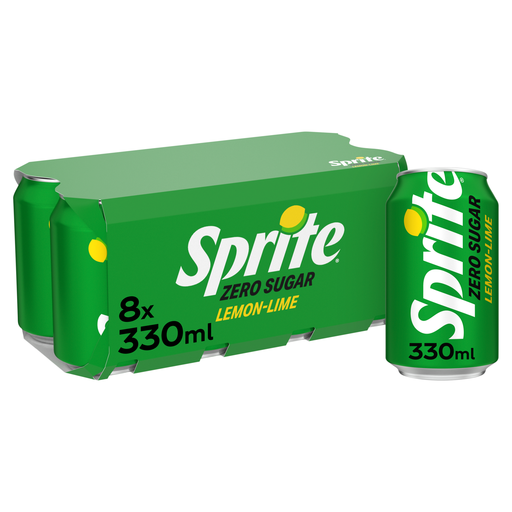 No image available
A no-sugar option for when carbohydrate fuel is supplied separately. The title specifies eight 330ml cans; check the pack's carbohydrate figure and sweetener ingredients before use.
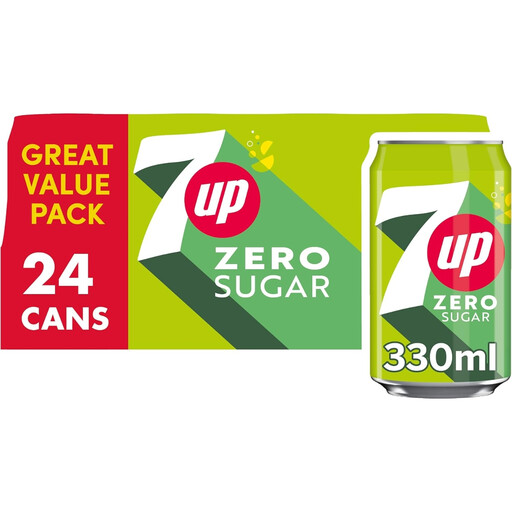 No image available
A zero-sugar drink to consider when the drink itself is not your planned carbohydrate source. This listing is for 24 cans of 330ml; read the pack for its carbohydrate figure, sweeteners and any phenylalanine warning.
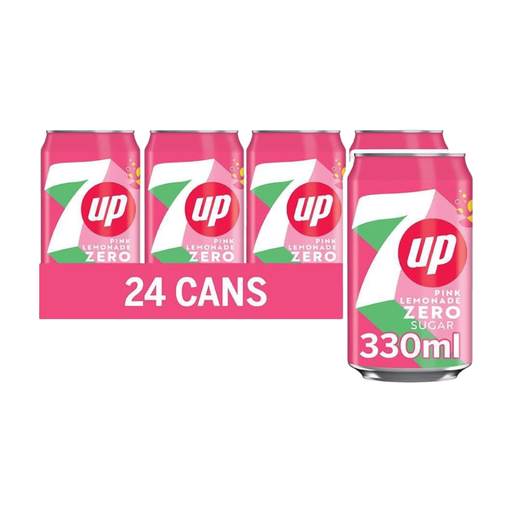 No image available
A zero-sugar lemonade listing for occasions when fuel comes from elsewhere. The title specifies 24 cans of 330ml; compare its pack label with your carbohydrate plan rather than relying on the word “lemonade”.
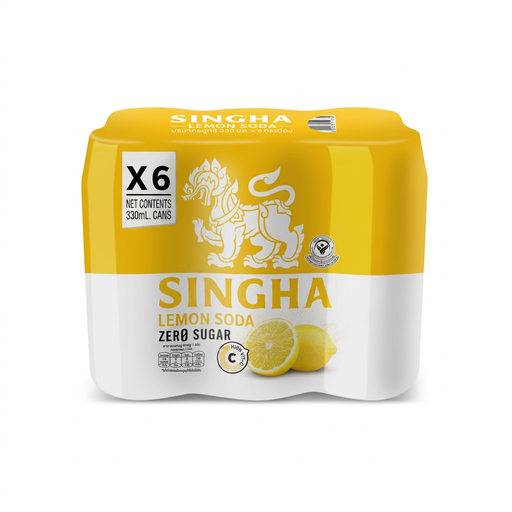 No image available
A zero-sugar lemon soda option when carbohydrate fuel is handled separately. The listing specifies six 330ml cans; check the pack's nutrition measurement basis before comparing it with figures stated per 100ml.
Not as the principal carbohydrate source in the low-carbohydrate examples here. World Athletics describes 30–60g carbohydrate per hour for exercise lasting 1–2.5 hours and up to 90g per hour beyond 2.5 hours, while Tesco lists R. White's Diet Lemonade at 0g per 100ml. Practise a plan that obtains the carbohydrate you need from suitable drinks, foods or gels.
It fits when you want a lemon-flavoured drink without relying on that drink for carbohydrate. If a session calls for fuelling during exercise, check how the rest of your drink-and-food plan supplies it.
Salt on a label does not establish that a lemonade matches a sports-drink formulation. The Australian Institute of Sport describes sports drinks containing 4–8g carbohydrate and 23–69mg sodium per 100ml; check the exact drink's figures and units before using it for that purpose.
Check the ingredients and phenylalanine warning on the exact pack. Tesco lists aspartame in R. White's Diet Lemonade, and The Coca-Cola Company GB identifies Sprite Zero Sugar as a source of phenylalanine; these details are particularly relevant to someone managing PKU.
No. The NHS associates carbonated drinks with dental erosion because of their acid content, so sugar content is not the only consideration when choosing a fizzy lemonade.