
24/7 Customer Support

Free returns

Same-day & Next-day Delivery

Quality Guaranteed

Unlock Your Welcome Offers: FREE Delivery | Up to 80% OFF | Free 30-day JoyPlus trial
Download the APP
Navigating the world of Chinese condiments can be a rewarding journey, but it's easy to get lost. When a recipe calls for the unique flavour of Zhenjiang black vinegar, picking the right bottle is crucial. Many UK home cooks, eager to recreate authentic dishes, find themselves facing a shelf of similar-looking bottles with confusing labels. This can lead to common purchasing mistakes that impact the final taste of your meal.
As the Joybuy Product Recommendation Officer, my role is to help you see past the marketing and focus on what truly matters. Here are a few common pitfalls to be aware of when you set out to buy Zhenjiang vinegar UK.
To ensure you are bringing home a bottle that will elevate your cooking, focus on a few key parameters rather than just the front label.
The most reliable sign of authenticity is the Protected Geographical Indication (PGI) status. True Zhenjiang black vinegar must be produced in the city of Zhenjiang in Jiangsu province, following strict, time-honoured methods. This protection ensures the product's character is tied to its specific origin and traditional craftsmanship. When you see a PGI mark, you can be confident you are getting the genuine article, not just a generic Chinese black vinegar.
The foundation of authentic Zhenjiang vinegar is glutinous rice. This is what gives the vinegar its characteristic malty depth and subtle sweetness. The ingredient list should clearly state glutinous rice as a primary component, often complemented by wheat bran and rice to build its complex flavour. Other types of Chinese black vinegar, such as Shanxi mature vinegar, are primarily made from sorghum, barley and peas, resulting in a different, often smokier and more savoury, flavour profile. Always check the ingredients to understand what you are buying.
A good quality aromatic rice vinegar like Zhenjiang vinegar will have a total acidity of around 5.0g/100ml or higher. However, the number alone doesn't tell the whole story. The flavour should be described as mellow, complex and fragrant. This balance is what makes it so versatile, perfect for cutting through the richness of braised pork, adding a tangy note to soups, or serving as the base for a classic dipping sauce.
To help you make a confident choice, here are some recommendations matched to different cooking needs and preferences.

Why This Fits Their Persona: This is for the cook who demands authenticity. If your recipe specifically calls for Zhenjiang or Chinkiang vinegar, this is the benchmark. Its PGI status guarantees the traditional flavour needed for classic dishes like sweet and sour ribs or the iconic dumpling dip.
As a Protected Geographical Indication (PGI) product, it completely sidesteps the "generic black vinegar" pitfall. You are assured of its origin and production method.
Made from glutinous rice using time-honoured techniques, it delivers a complex, mellow and well-balanced sourness. It is highly versatile for dipping, dressing and braising.
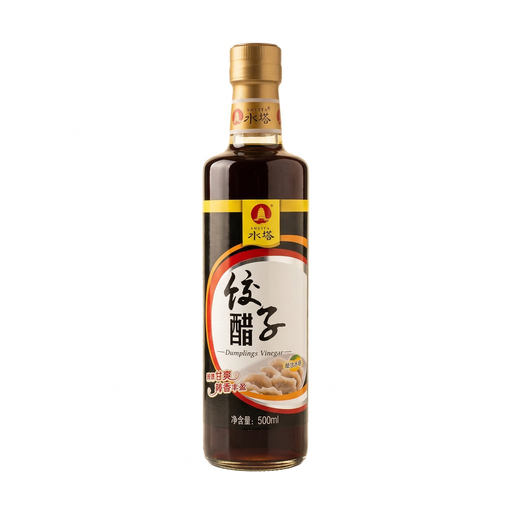
Why This Fits Their Persona: For those whose primary goal is to create the perfect dipping sauce for dumplings, gyoza or other dim sum. This vinegar is specifically formulated to complement fillings rather than overpower them.
It avoids the "unbalanced flavour" pitfall by being purpose-built. Its flavour profile is adjusted for dipping, ensuring it enhances freshness and cuts through richness without being overly aggressive.
Based on Shanxi mature vinegar, it offers a mellow sourness and rich aroma. It's a convenient, ready-to-use solution for a consistently good dipping sauce.
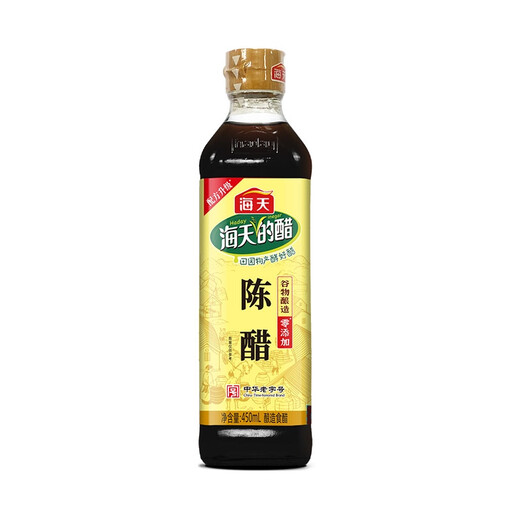
Why This Fits Their Persona: This is a great pantry staple for those who cook a wide variety of Chinese dishes. It provides the rich, dark and tangy character needed for many braises, noodle dishes and sauces, offering reliability from a major condiment brand.
This product avoids the "aged" ambiguity by coming from HADAY, a brand known for consistent quality control. It is clearly positioned as a versatile mature vinegar, not specifically a PGI Zhenjiang product.
Its aged, solid-state fermentation process results in a mellow, lingering sourness ideal for enhancing rich dishes like braised meats and hearty noodle soups.
We have compiled a complete, real-time list of products that fully satisfy these strict selection criteria and UK safety regulations.
The main differences are the primary ingredients and origin. True Zhenjiang vinegar is a PGI product from Zhenjiang made primarily from glutinous rice, giving it a malty, complex and mellow flavour. Other famous black vinegars, like Shanxi mature vinegar, are made from sorghum, barley and peas, which results in a smokier, more savoury and often more acidic profile. They are not interchangeable in recipes where a specific flavour is required.
Chinese black vinegar is very stable. It should be stored in a cool, dark place like a pantry, away from direct sunlight and heat. Ensure the cap is tightly sealed after each use. Due to its high acidity, it has a very long shelf life and does not need to be refrigerated, though some users prefer to do so to maintain optimal flavour over many months.
While they are all vinegars, their flavour profiles are distinct. Zhenjiang vinegar is less sweet than most balsamic vinegars and has a more complex, malty character than the sharp, singular note of malt vinegar. You can experiment, but for best results, it's advisable to use the vinegar specified in the recipe. For example, using Zhenjiang vinegar for fish and chips would not produce the traditional British taste.