For learning virtual pit entries in a compact single-screen cockpit, start with the space available for the monitor, its position in front of the wheelbase and your seated eye-to-screen distance. A 27-inch QHD screen is the narrower route; choose a 34-inch ultrawide if you want more horizontal view and have checked the rig’s width, mounting position and PC performance. In iRacing, enter the installed screen measurements into the monitor setup rather than choosing a field of view from diagonal size alone.
Who each format suits
Single-screen racers with limited rig space
If the monitor must sit close to a wheelbase without taking up much width, a 27-inch QHD screen is a starting point. Measure the position you can actually use: iRacing’s seating-position guidance calls for the distance from your eyes to the screen surface when configuring the display.
Drivers seeking a wider pit-lane view
A 34-inch ultrawide offers more horizontal image area for drivers who want to see more of the approach and surrounding traffic on one screen. Its wider panel makes cockpit clearance, mounting and PC performance part of the decision.
Drivers prioritising high refresh
If smooth motion is a priority, compare the refresh rate available at your chosen resolution with your graphics output and cable. A headline refresh figure alone does not establish which mode your complete setup can use.
What to check before choosing
27-inch QHD screen
Choose it when: cockpit width is tight and you want a narrower single-screen installation.
Allow for: less horizontal image area than a 34-inch 21:9 screen.
34-inch ultrawide
Choose it when: you have room to mount a wider panel and value more side-to-side view.
Allow for: a wider installation and more pixels for the PC to render at 3440 × 1440 than at 2560 × 1440.
| Concern |
Buying check |
Who it matters to |
| Fit and viewing position |
Measure usable rig width, wheelbase clearance and seated eye-to-screen distance; check the stand or mount position. |
I need the screen to clear my wheelbase while sitting where I normally drive, so I can use its installed measurements for field-of-view setup. Around 37% of consumers put fit and viewing position first. |
| Horizontal view and PC load |
Check whether a 34-inch panel fits and how your PC runs the intended simulator settings at 3440 × 1440. |
I want more of the pit approach and nearby traffic in view, but not at the expense of a screen I cannot accommodate or run as intended. Roughly 36% of consumers make this view-versus-PC decision their primary concern. |
| Refresh and connections |
Confirm the refresh available at your chosen resolution through the monitor input, graphics output and cable. |
I care most about motion presentation and need the connection I plan to use to support the selected display mode. Approximately 27% of consumers prioritise refresh and connection compatibility. |
Once the monitor is installed, iRacing advises measuring screen width and the shortest distance from your eyes to its surface for its monitor configuration. The physical mounting position therefore affects the setup you enter in the simulator.
Mistakes to avoid
-
Choosing a diagonal size before measuring the rig
A larger screen may need to sit farther from your normal driving position to clear the wheelbase. That changes the measurements used for field-of-view setup; iRacing bases its configuration guidance on the installed screen width and eye distance.
Measure the available width, eye position, wheelbase clearance and mounting arrangement before ordering. Use the final installed measurements in the simulator.
A stand that obstructs the rig may mean using a compatible arm or cockpit bracket instead.
-
Treating an ultrawide as a fit-only upgrade
According to the resolutions listed by LG UK and ASUS UK for their 2560 × 1440 and 3440 × 1440 examples, the ultrawide resolution has about a third more pixels to render. More horizontal image area does not establish that your PC will maintain the frame rate you want.
Assess performance at 3440 × 1440 using the simulator settings you intend to keep, as well as checking panel width and mounting clearance.
Maintaining your preferred frame rate may require lower in-game settings.
-
Assuming every connection supports the advertised maximum
LG UK states that the 27GS85Q-B runs at 180Hz natively and that its optional 200Hz mode requires a DisplayPort 1.4-capable graphics card and cable. That condition applies to this model’s mode, not to every monitor.
Check the resolution and refresh combination supported by the exact monitor input, graphics output and cable you will use.
Relevant monitor brands
These model lines illustrate different ways to approach the cockpit decision; a brand name alone does not settle screen fit or connection compatibility.
LG UltraGear
LG UK lists both 27-inch QHD models and a larger 31.5-inch QHD model, making individual dimensions important when comparing them for a compact rig.
- The LG 27GS85Q-B offers a 27-inch 2560 × 1440 route with a stated 180Hz native refresh rate.
- Its optional 200Hz mode needs DisplayPort 1.4 support from the graphics card and cable. LG UK lists the 32GS75QN-B as 713.9mm wide without its stand, so check that model’s fit separately.
ASUS TUF Gaming
The ASUS UK-listed VG34VQL3A is an example of a conventional curved ultrawide for drivers considering more horizontal image area.
- ASUS UK specifies a 34-inch, 3440 × 1440, 1500R display with a 180Hz refresh rate for the VG34VQL3A.
- Its wider format calls for a cockpit-width and PC-performance check rather than an assumption that it will suit a compact mount.
Alienware
Dell UK lists the AW3425DW as a 34-inch-class QD-OLED ultrawide for drivers considering a high-refresh display after resolving the physical fit.
- Dell UK specifies 3440 × 1440 resolution and a 240Hz refresh rate for the AW3425DW.
- Its ultrawide size and resolution still require mounting-clearance and PC-performance checks; OLED is not a prerequisite for pit-entry practice.
Joybuy monitors for these setups
These monitors cover the narrower 27-inch route and wider 34-inch options. Compare each one with your measured cockpit space, intended connection and PC settings before choosing.
 No image available
MSI MAG 274QF 27-inch WQHD 180Hz monitor
Consider the narrower 27-inch route when the screen must fit in front of a compact cockpit’s wheelbase.
The product name states WQHD resolution, a 180Hz refresh rate, Rapid IPS and Adaptive Sync. Check the mode available through your intended connection and measure the installed stand or mount clearance.
View on Joybuy
 No image available
HKC G27H2DPro 27-inch QHD 220Hz monitor
This is another 27-inch option to assess if cockpit width makes an ultrawide difficult to position.
Its product name specifies 2560 × 1440 resolution, Fast IPS and a stated 220Hz refresh rate. Confirm the refresh available through your PC connection and check the stand’s position against the wheelbase.
View on Joybuy
 No image available
Dahua 34-inch UWQHD 200Hz curved VA monitor
Consider this wider screen if you want more horizontal view and can place it without obstructing the cockpit.
The product name specifies 3440 × 1440 resolution, a VA panel, a stated 200Hz refresh rate and two DisplayPort 1.4 connections. Confirm the mode available from your PC, its performance at that resolution and the screen’s installed footprint.
View on Joybuy
 No image available
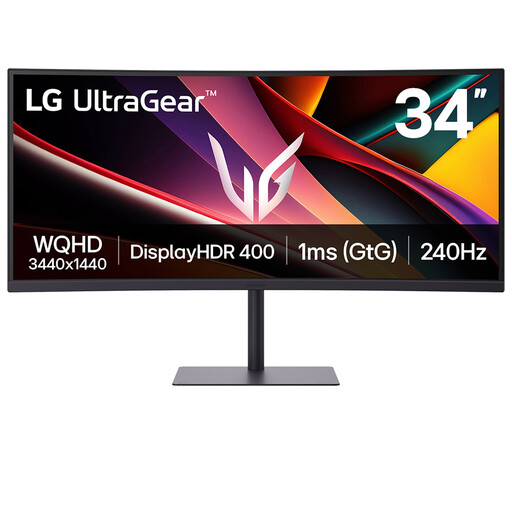
LG UltraGear 34G630A-B 34-inch VA WQHD 240Hz monitor
This wider-screen option suits a cockpit only if the panel and its mounting position leave enough usable space.
The product name states a VA panel, WQHD resolution and a 240Hz refresh rate. Check the exact display mode supported by your graphics output and cable, as well as the stand depth and wheelbase clearance.
View on Joybuy
 No image available
LG UltraGear 34GX900A-B 34-inch OLED WQHD 240Hz monitor
Consider this OLED ultrawide if you have already checked the space and PC requirements for a wider cockpit display.
The product name states a 34-inch OLED panel, WQHD resolution and a 240Hz refresh rate. Check its installed footprint and available PC mode; for long sessions with static simulator interface elements, follow the display’s screen-care guidance and account for burn-in risk.
View on Joybuy
Pit-entry monitor questions
How do I set up a monitor for pit-entry practice in iRacing?
Measure from your eyes to the screen surface while seated in your normal driving position, and measure the monitor width. iRacing’s seating-position guidance says to enter the screen measurements in its monitor settings and use Compute; make those measurements after settling the monitor’s mounting position.
Is a 34-inch ultrawide automatically better than a 27-inch QHD screen?
No: a 34-inch 3440 × 1440 screen gives you more horizontal image area, but it also needs more cockpit width and more rendering capacity than a 2560 × 1440 screen. Choose the wider route if its installed position works for your rig and your PC runs your intended simulator settings satisfactorily; otherwise, assess a 27-inch QHD screen.
What should I check before choosing a high-refresh monitor?
Check the refresh available at the monitor’s intended resolution through your graphics output, cable and chosen monitor input. For the LG 27GS85Q-B specifically, LG UK states that its optional 200Hz mode requires a DisplayPort 1.4-capable graphics card and cable; its native refresh rate is 180Hz.
How should I balance screen position and comfort in a compact cockpit?
Choose a seated position and screen placement that do not interfere with the wheelbase, then configure the simulator using the resulting measurements. The Health and Safety Executive’s general display-screen guidance advises placing the screen top around eye level; adapt the physical arrangement to your rig rather than moving the screen into an obstructed position to follow a single distance rule.


