Management-game multitaskers
If you want a map, game panels and work windows visible together, a 34-inch 21:9 screen offers a wider layout. LG specifies Picture-by-Picture on its 34WR55QK-B for viewing two source devices.


Choose a 27-inch 4K IPS monitor if reading documents, spreadsheets and game statistics on a relatively compact desk matters most. A 34-inch UltraWide gives maps and adjacent work windows more horizontal room; a high-refresh OLED version is worth considering if you also play faster games, provided you review its guidance for prolonged use with static interfaces. Check desk space, computer output, stand positioning and laptop charging requirements before choosing.
If you want a map, game panels and work windows visible together, a 34-inch 21:9 screen offers a wider layout. LG specifies Picture-by-Picture on its 34WR55QK-B for viewing two source devices.
If documents, spreadsheets and game statistics occupy much of your day, consider a conventional 27-inch 4K layout. Dell specifies a 4K IPS panel and height adjustment on its S2725QC.
If management games share your desk time with faster titles, a high-refresh UltraWide OLED is another route. Samsung specifies a 175 Hz refresh rate for its Odyssey OLED G8 G85SD; check its guidance for extended use with static work and game interfaces.
Decide whether horizontal workspace, text-oriented office use or gaming beyond management titles is your primary need. Then check that the screen fits your desk and your computer can drive the resolution and refresh rate you intend to use.
| Concern | What to check | Who this matters to |
|---|---|---|
| Side-by-side workspace | Check desk width and whether your computer supports 3440 × 1440; consider Picture-by-Picture if you use two source devices. | If I keep a game map open beside work windows, I want enough horizontal room without continually switching between them. Around 40% of consumers put that workspace need first. |
| Text and office setup | Check resolution, desk depth and whether the stand or a compatible arm allows a comfortable screen position. | When documents, spreadsheets and game statistics take up most of my screen time, I prioritise reading and positioning the display at my desk. For around 40% of consumers, that is the primary need. |
| Gaming beyond management titles | Check the intended refresh rate against your computer output, and review support and warranty information for prolonged static-interface use on an OLED model. | If I also play faster games, I may value a higher-refresh OLED screen while accepting the need to assess static-interface use. That wider gaming requirement comes first for around 20% of consumers. |
A 34-inch screen needs more horizontal room than a 27-inch screen, and its position still matters during work. The Health and Safety Executive advises placing the screen directly in front of you, about an arm’s length away, with its top around eye level.
Measure usable desk width and depth, including space for the stand or monitor arm, keyboard, laptop and speakers.
Charging capacity depends on the monitor and the connected laptop. LG specifies up to 65 W USB-C power delivery for the 34WR55QK-B, while Samsung’s guidance states up to 65 W for the Odyssey OLED G8 G85SD.
Compare the exact monitor’s charging limit with your laptop’s requirements, and confirm the intended cable and connection support your chosen video mode.
Samsung specifies 175 Hz and a 0.03 ms grey-to-grey response time for the Odyssey OLED G8 G85SD, but the response-time figure is a manufacturer measurement and management games need not make those specifications your priority.
Consider this route if faster games also matter to you, and read the exact model’s support, warranty and screen-care guidance before prolonged use with static work or game interfaces.
Its cited 27-inch models are relevant if you want a conventional office-and-gaming screen rather than a wide 21:9 layout.
The cited 34WR55QK-B is relevant when wide maps and adjacent work windows drive the choice.
The cited Odyssey OLED G8 G85SD is relevant if you want an UltraWide screen for management games and also play faster titles.
These 34-inch UltraWide models suit shoppers considering more room for management-game views and home-office windows. The Samsung OLED model also addresses mixed-genre gaming; check each screen’s desk fit, connections and intended display mode.
 No image available
Consider its wide screen if you want game panels and office windows in view together.
The listed VA panel has 3440 × 1440 resolution, with two HDMI and two DisplayPort 1.4 connections.
If you want the stated 200 Hz mode, check your computer and cable for DisplayPort output; the listed HDMI mode is limited to 100 Hz at 3440 × 1440.
 No image available
Its wide format is worth considering if a broad game view and adjacent work windows are your priority.
Check that your computer supports the monitor’s native 3440 × 1440 resolution and the refresh rate you intend to use.
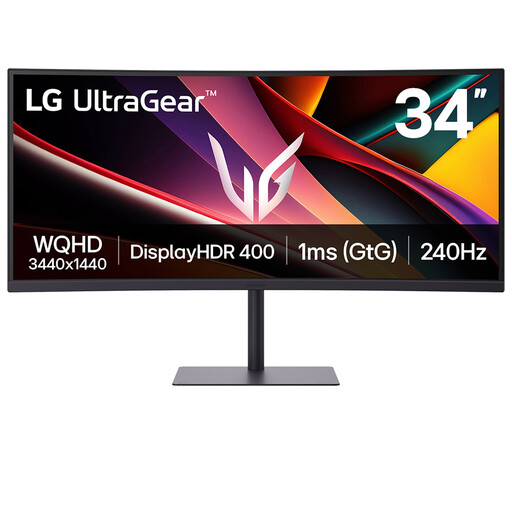 No image available
Consider this UltraWide if you want a wide layout for work and games while also assessing a higher-refresh option.
Its listed screen resolution is 3440 × 1440. If you intend to charge a laptop over USB-C, check whether the stated 15 W power delivery meets its needs.
Confirm your desk clearance and the display mode supported by your computer.
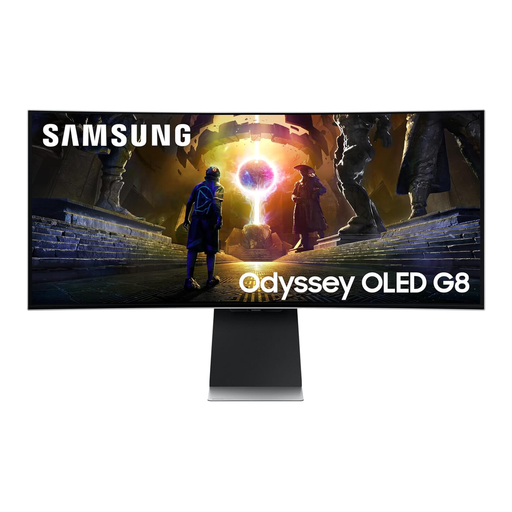 No image available
This model is relevant if you want an UltraWide layout for management games and also play faster titles.
Samsung UK specifies 3440 × 1440 resolution and 175 Hz for this model; its support guidance states USB-C charging up to 65 W.
Check computer output and laptop charging needs, and review the model’s screen-care and warranty guidance for prolonged static-interface use.
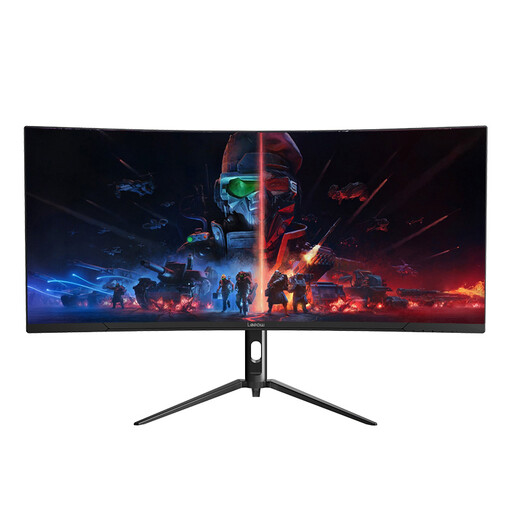 No image available
Consider its wide layout if keeping several game or work windows visible matters most.
The listed refresh rate is 165 Hz. Check that your computer supports the resolution and intended refresh rate, and confirm the stand’s positioning options if adjustment matters at your desk.
Choose a 34-inch UltraWide when keeping game panels and work windows alongside one another is your priority; choose a 27-inch 4K screen when a narrower 16:9 layout and high-resolution, text-oriented work matter more. LG describes its cited 21:9 model as suitable for displaying several programmes, while Dell specifies a 4K panel on the cited 27-inch S2725QC. Check desk space and computer output either way.
An adjustable stand or compatible monitor arm can help you position the screen comfortably, although it is not a universal product requirement for private buyers. The Health and Safety Executive advises placing the top of the screen around eye level and the screen about an arm’s length away; check whether your intended stand and desk allow that arrangement.
The Health and Safety Executive says the UK Display Screen Equipment Regulations cover workers, including home workers, who use display-screen equipment daily for continuous periods of an hour or more. Employers must address relevant workstation risks; the rules do not prescribe a particular specification for every privately purchased gaming monitor.
Use an appropriate electrical-waste collection route rather than assuming an old monitor belongs with ordinary household waste. UK government guidance on waste electrical and electronic equipment describes arrangements intended to encourage recovery, reuse and recycling; check the retailer take-back or local-authority options available where you live.